
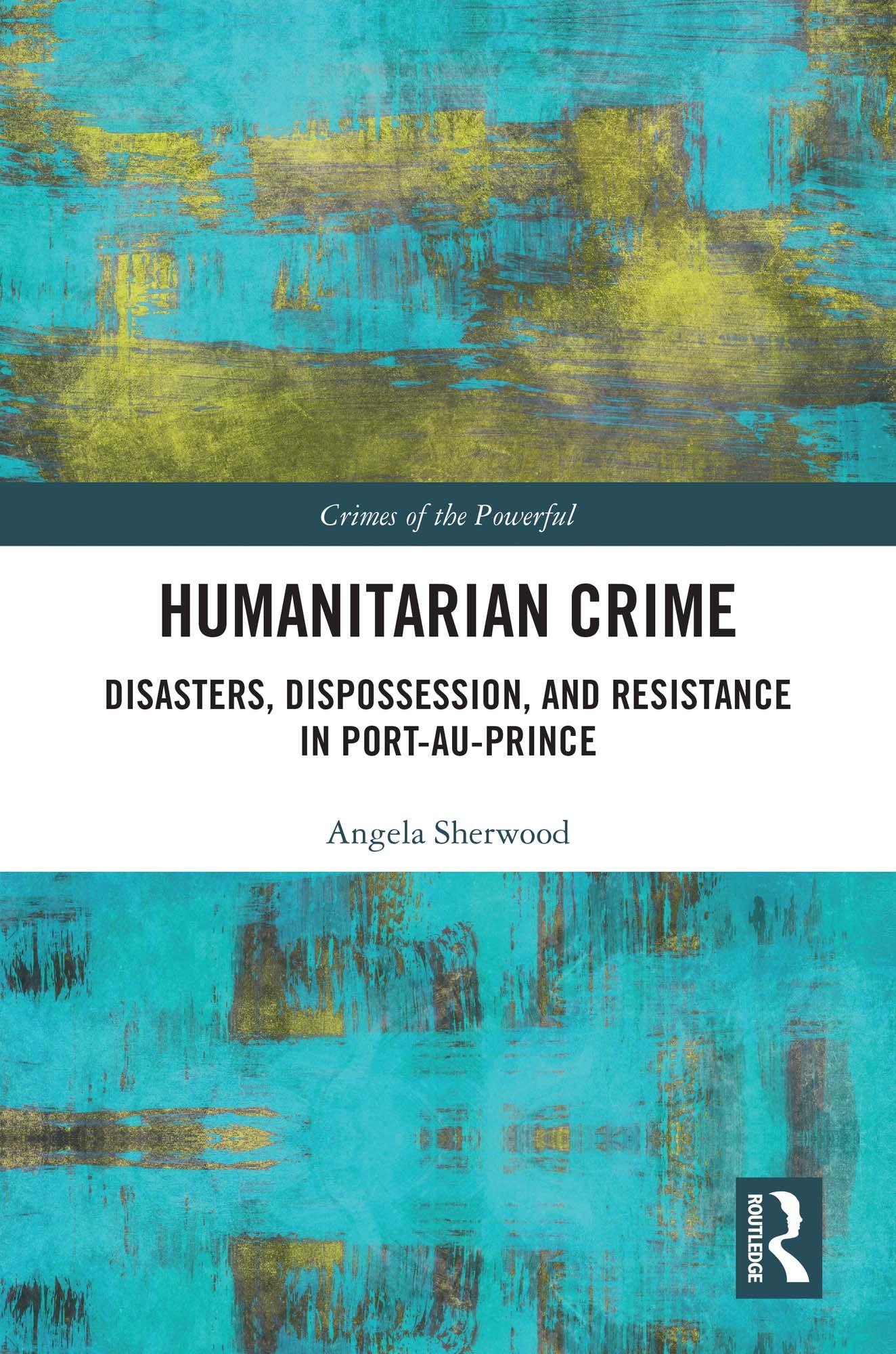
This is the first book to theorise humanitarian power within the crimes of the powerful tradition. It offers a compelling account of the structural forces embedded in humanitarian institutions and the practices and forms of legitimation through which the violent effects of humanitarian intervention are typically produced and obscured.
Focusing on post‑earthquake Haiti, a setting marked by large‑scale international involvement and deep historical and colonial inequalities, this book examines how humanitarian organisations helped shape the city’s post‑disaster
landscape. It shows how humanitarian actors, working alongside the Haitian state, contributed to the reproduction of homelessness, landlessness, and urban exclusion through their management of displacement camps, their
reliance on property‑based models of assistance, and their role in coercive programmes of camp closure.
Drawing on extensive fieldwork, interviews, and archival research, this book develops the concept of humanitarian crime to illuminate the state processes, institutional arrangements, and material structures that underpin violent
outcomes in humanitarian settings. At the same time, it centres the voices of Haitian civil society and affected communities, highlighting how those subjected to state–humanitarian expulsions interpret, contest, and resist the
harms inflicted through humanitarian governance. It foregrounds land occupations and informal urbanisation as key forms of resistance that expose and challenge the dispossession inscribed within the everyday workings of
humanitarian intervention.
By situating humanitarianism within wider relations of sovereignty, accumulation, and control, this book opens new pathways for studying humanitarian power and its role within contemporary global violence. It
also establishes a research agenda for understanding humanitarian crime and for examining how contemporary crises, not least increasingly frequent climate disasters, are being governed in ways that only deepen precarity and dispossession.
This book is essential reading for all those engaged in work on crimes of the powerful, disaster recovery, state and corporate crime, and Caribbean Studies.
Payez facilement par carte, Klarna, Apple Pay ou Google Pay. Pas satisfait ? Vous avez toujours une garantie de remboursement de 14 jours. En savoir plus dans nos conditions. Si vous avez des questions, envoyez-nous un e-mail à hello@memmo.org.
Memmo facilite tes études, où que tu sois dans le monde. On rassemble tes manuels de cours et des outils d'étude intelligents au même endroit : résumés, quiz, podcasts et flashcards. Et il y a Ted, ton compagnon d'étude qui répond à toutes tes questions. Plus de 50 000 étudiants étudient déjà ici – conçu pour t'aider à apprendre plus vite et à moins stresser.