
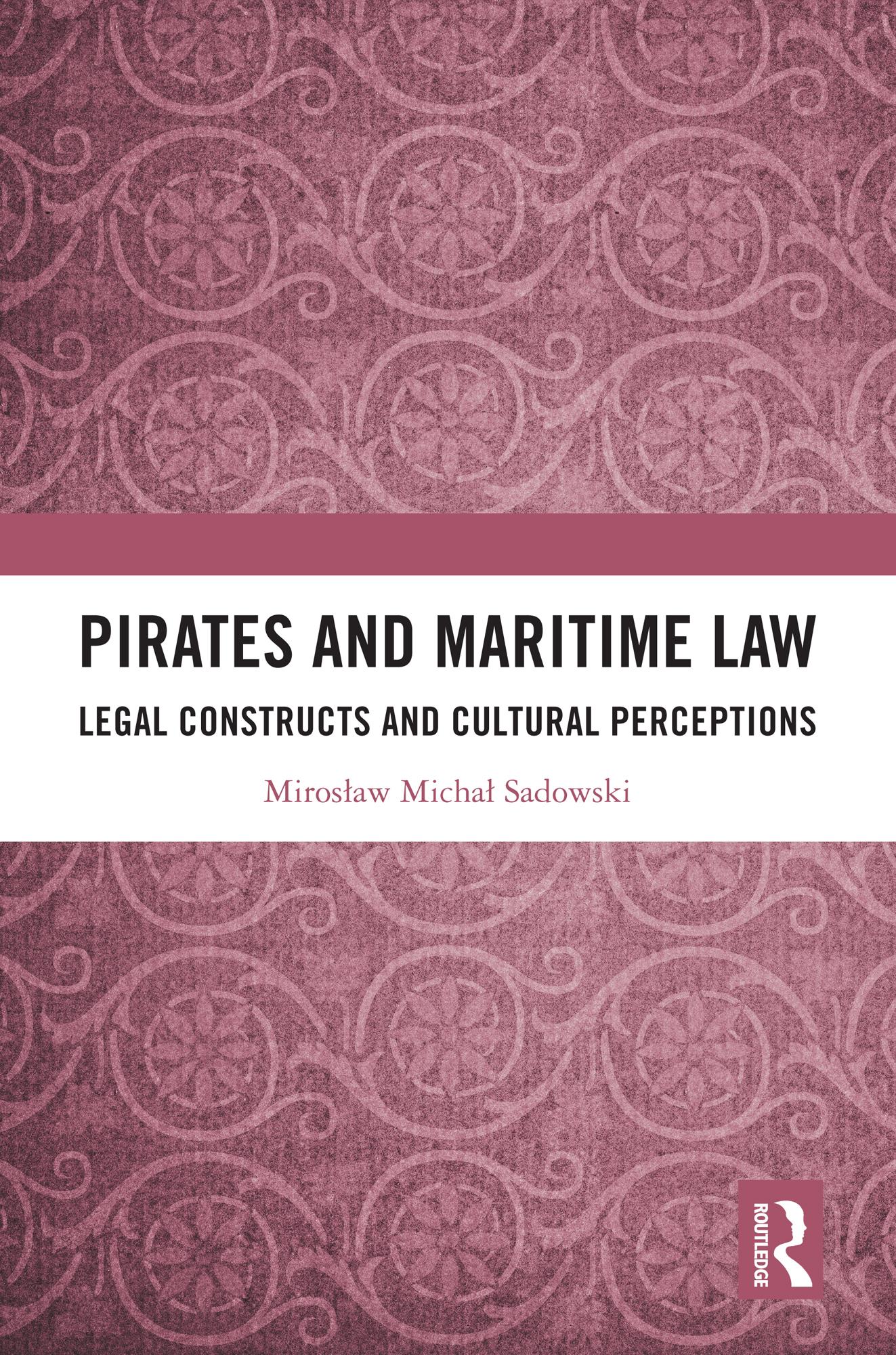
This book examines piracy not just as a historical and contemporary criminal activity but as a complex phenomenon deeply interwoven with legal constructs and cultural perceptions.
Specifically, it studies the intersection of piracy and law through a focus on three cultural images of pirates: As rulers of the seas, freedom fighters, and treasure seekers. The first part of the book, guided by the first image, takes up the historical definition of piracy, distinguishing between pirates, buccaneers, corsairs, and privateers. It then goes on to examine how the definition of piracy has evolved in international maritime law—taking up present-day issues of piracy, from the early-21st century UN resolutions to more recent Houthi attacks. The second part of the book discusses pirate codes as early forms of legal innovation, moving to the societal structures of pirate havens, and then to an analysis of pirate trials. The third and final part of the book investigates the legal aspects of treasure hunting, including the legal status of found treasures and conflicts over ownership and cultural heritage, both on land and under the seas. The book then concludes with a reflection on the nature of piracy's relationship with law, putting forward several observations and suggestions for its better understanding.
This book will be of interest to scholars of maritime law, legal theory, legal history, and international law.
Payez facilement par carte, Klarna, Apple Pay ou Google Pay. Pas satisfait ? Vous avez toujours une garantie de remboursement de 14 jours. En savoir plus dans nos conditions. Si vous avez des questions, envoyez-nous un e-mail à hello@memmo.org.
Memmo facilite tes études, où que tu sois dans le monde. On rassemble tes manuels de cours et des outils d'étude intelligents au même endroit : résumés, quiz, podcasts et flashcards. Et il y a Ted, ton compagnon d'étude qui répond à toutes tes questions. Plus de 50 000 étudiants étudient déjà ici – conçu pour t'aider à apprendre plus vite et à moins stresser.