
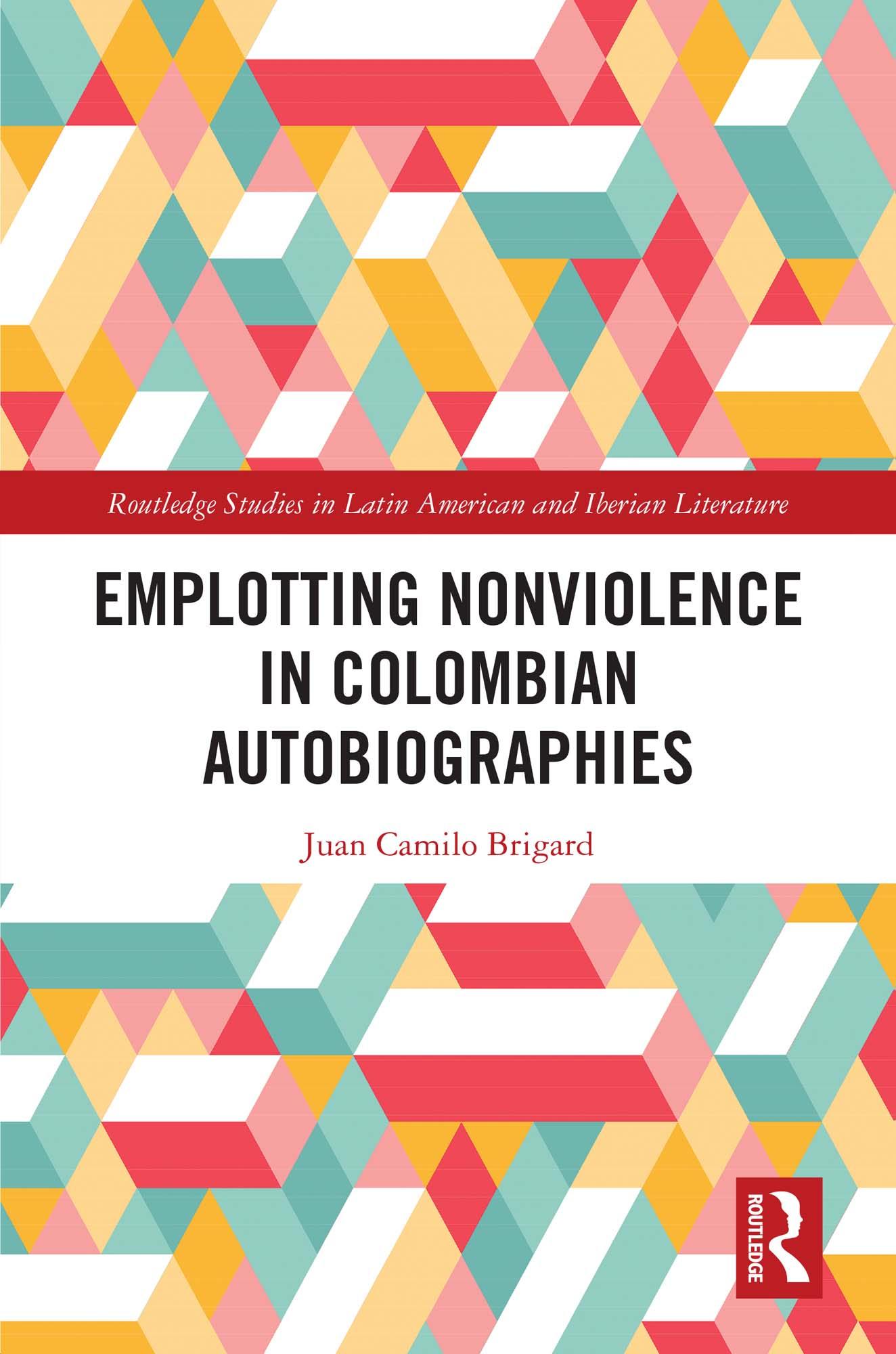
How do individuals upholding an ethos of nonviolence tell their life narratives in places ravaged by armed conflict? With an understanding of violence and nonviolence as socially contingent concepts, Emplotting Nonviolence in Colombian Autobiographies focuses on the life writings of three Colombian social movement leaders (the U’wa Esperanza-Aguablanca’s Tengo los pies en la cabeza, the Afrocolombian Rudecindo Castro’s Calle caliente, and the LGBTQ+ artivist Manuel Antonio Velandia’s De homosexual a marica sujeto de derechos) and contrasts them with the memoirs of a hegemonic ex-president (Álvaro Uribe’s No Lost Causes). These autobiographies are analyzed using a "contextual narratology of contingency". This is a narrative approach that examines "emplotment" —the structuring of storytelling sequences and its narrative devices— in the light of historical literary genres. Moreover, through a context-sensitive literary lens, this approach emphasizes each book’s rhetoric of group-oriented self-representation, or "collective narration" and the way literary genres inflect the representation of nonviolence.
Payez facilement par carte, Klarna, Apple Pay ou Google Pay. Pas satisfait ? Vous avez toujours une garantie de remboursement de 14 jours. En savoir plus dans nos conditions. Si vous avez des questions, envoyez-nous un e-mail à hello@memmo.org.
Memmo facilite tes études, où que tu sois dans le monde. On rassemble tes manuels de cours et des outils d'étude intelligents au même endroit : résumés, quiz, podcasts et flashcards. Et il y a Ted, ton compagnon d'étude qui répond à toutes tes questions. Plus de 50 000 étudiants étudient déjà ici – conçu pour t'aider à apprendre plus vite et à moins stresser.