
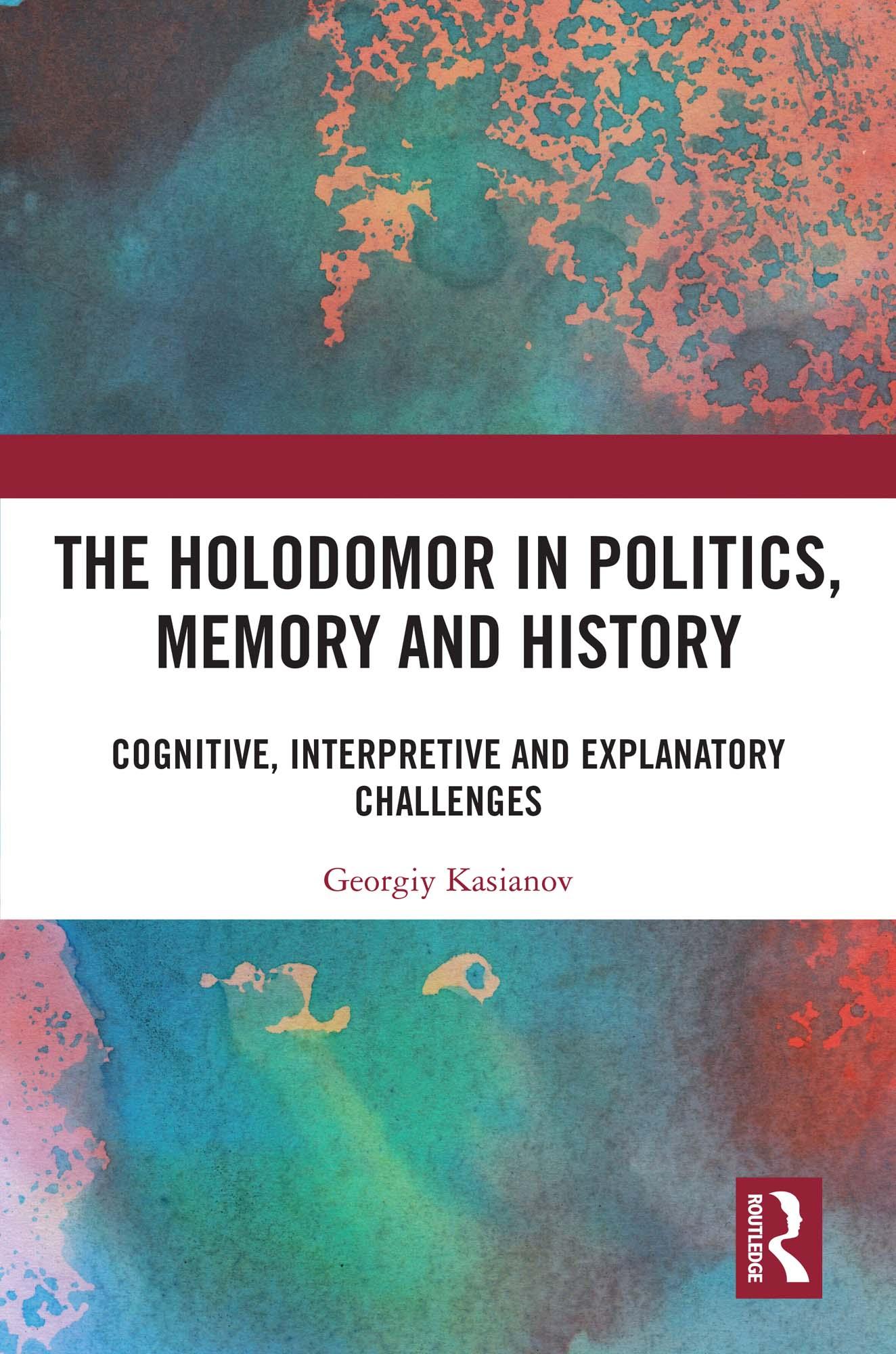
This volume presents the first comprehensive scholarly analysis of the collective memory of the Holodomor—the Ukrainian Great Famine of 1932-1933—examining its construction, evolution, and contestation across nearly a century. Moving beyond historical accounts of the event itself, this book interrogates how memories of this catastrophe have been shaped, mobilized, and interpreted within multiple discursive frameworks.
Drawing on interdisciplinary methodological approaches from memory studies and political science, the author provides a rigorous examination of how the Holodomor has been constructed as social (cultural) memory by actors who challenged Soviet policies of enforced amnesia. This book illuminates the complex interrelationship between memory agents, political institutions, and commemorative practices while critically assessing the securitization of memory and its implications for academic discourse.
This theoretically nuanced contribution to memory studies and Eastern European historiography will be indispensable for researchers and postgraduate students engaged with genocide studies, collective memory, post-Soviet politics, and the intersection of historical narrative and national identity formation.
Payez facilement par carte, Klarna, Apple Pay ou Google Pay. Pas satisfait ? Vous avez toujours une garantie de remboursement de 14 jours. En savoir plus dans nos conditions. Si vous avez des questions, envoyez-nous un e-mail à hello@memmo.org.
Memmo facilite tes études, où que tu sois dans le monde. On rassemble tes manuels de cours et des outils d'étude intelligents au même endroit : résumés, quiz, podcasts et flashcards. Et il y a Ted, ton compagnon d'étude qui répond à toutes tes questions. Plus de 50 000 étudiants étudient déjà ici – conçu pour t'aider à apprendre plus vite et à moins stresser.