
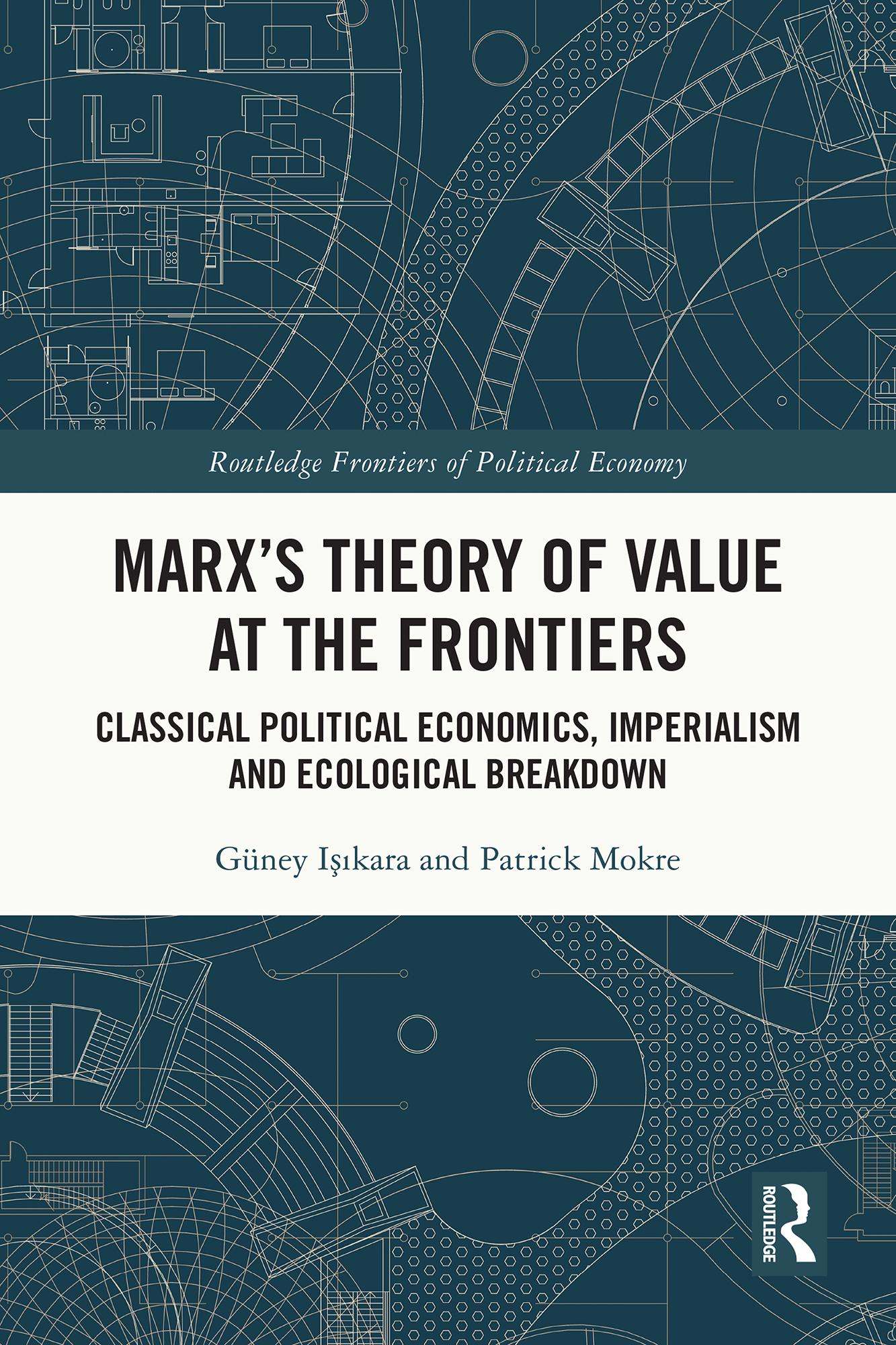
Why do humans produce the things they do, in the way they do it? As this book shows, the classical political economics approach to value and prices has fundamental implications for analyzing the historical trajectory of capitalism.
It demonstrates that the classical political economists’ approach to value and prices, which finds its most advanced formulation in Marx, sheds light on the source of profits, exploitation, whether equivalents are exchanged in trade, dynamics of asymmetric and uneven accumulation, and the relationship of production to non-human natures at large. Understanding these phenomena is key to understanding the economic regularities underlying the key issues facing the world in the twenty-first century: imperialism and ecological breakdown. It argues powerfully that deviations between market prices, production prices, and labor values are central to understanding international value transfers due to differential capital compositions and rates of exploitation, as well as the central role of rent and accumulation in capitalism-induced ecological crisis.
The book is structured to provide an understandable introduction to the classical approach to value and prices, and its modern expression in empirical applications making it of great interest to readers in Economics, Political Economy, Politics and Sociology.
Payez facilement par carte, Klarna, Apple Pay ou Google Pay. Pas satisfait ? Vous avez toujours une garantie de remboursement de 14 jours. En savoir plus dans nos conditions. Si vous avez des questions, envoyez-nous un e-mail à hello@memmo.org.
Memmo facilite tes études, où que tu sois dans le monde. On rassemble tes manuels de cours et des outils d'étude intelligents au même endroit : résumés, quiz, podcasts et flashcards. Et il y a Ted, ton compagnon d'étude qui répond à toutes tes questions. Plus de 50 000 étudiants étudient déjà ici – conçu pour t'aider à apprendre plus vite et à moins stresser.