
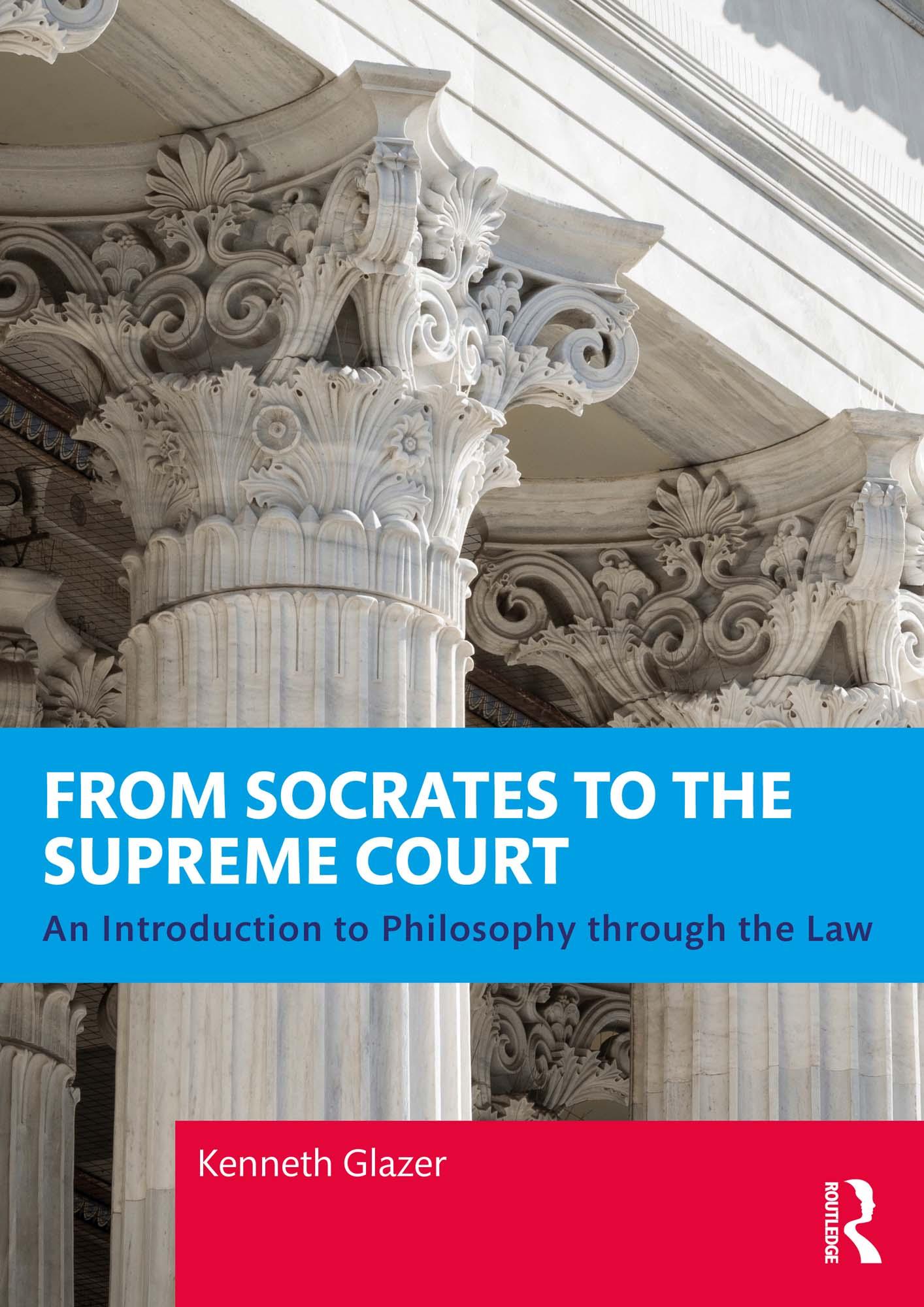
Philosophy and law are separate disciplines, but they deal with many of the same issues—from the meaning of equality and liberty, the nature of knowledge, reasoning, and mental states, to the indeterminacy of language, causation, free will, luck, and personal identity. This textbook introduces philosophy to undergraduates in a new and refreshing way—by using cases, concepts, and doctrines from the law to illustrate philosophical issues. From Socrates to the Supreme Court: An Introduction to Philosophy through the Law introduces the major areas in the discipline—moral and political philosophy, epistemology, metaphysics, philosophy of mind and language—and philosophy’s great thinkers, from Plato, Aristotle, Hume, and Kant to Russell, Wittgenstein, Austin, and Anscombe. It shows how ideas in philosophy are not academic but play out in Supreme Court rulings and other court cases. Through example after example—the concept of mens rea in criminal law, the rules governing the admissibility of evidence in court, statutory interpretation, free speech, perjury, the analogical nature of legal reasoning, the use of the Socratic method in deciding cases, and the laws against discrimination—this book deepens the student’s understanding of philosophy by driving home the fact that philosophical questions matter in the real world.
Payez facilement par carte, Klarna, Apple Pay ou Google Pay. Pas satisfait ? Vous avez toujours une garantie de remboursement de 14 jours. En savoir plus dans nos conditions. Si vous avez des questions, envoyez-nous un e-mail à hello@memmo.org.
Memmo facilite tes études, où que tu sois dans le monde. On rassemble tes manuels de cours et des outils d'étude intelligents au même endroit : résumés, quiz, podcasts et flashcards. Et il y a Ted, ton compagnon d'étude qui répond à toutes tes questions. Plus de 50 000 étudiants étudient déjà ici – conçu pour t'aider à apprendre plus vite et à moins stresser.