
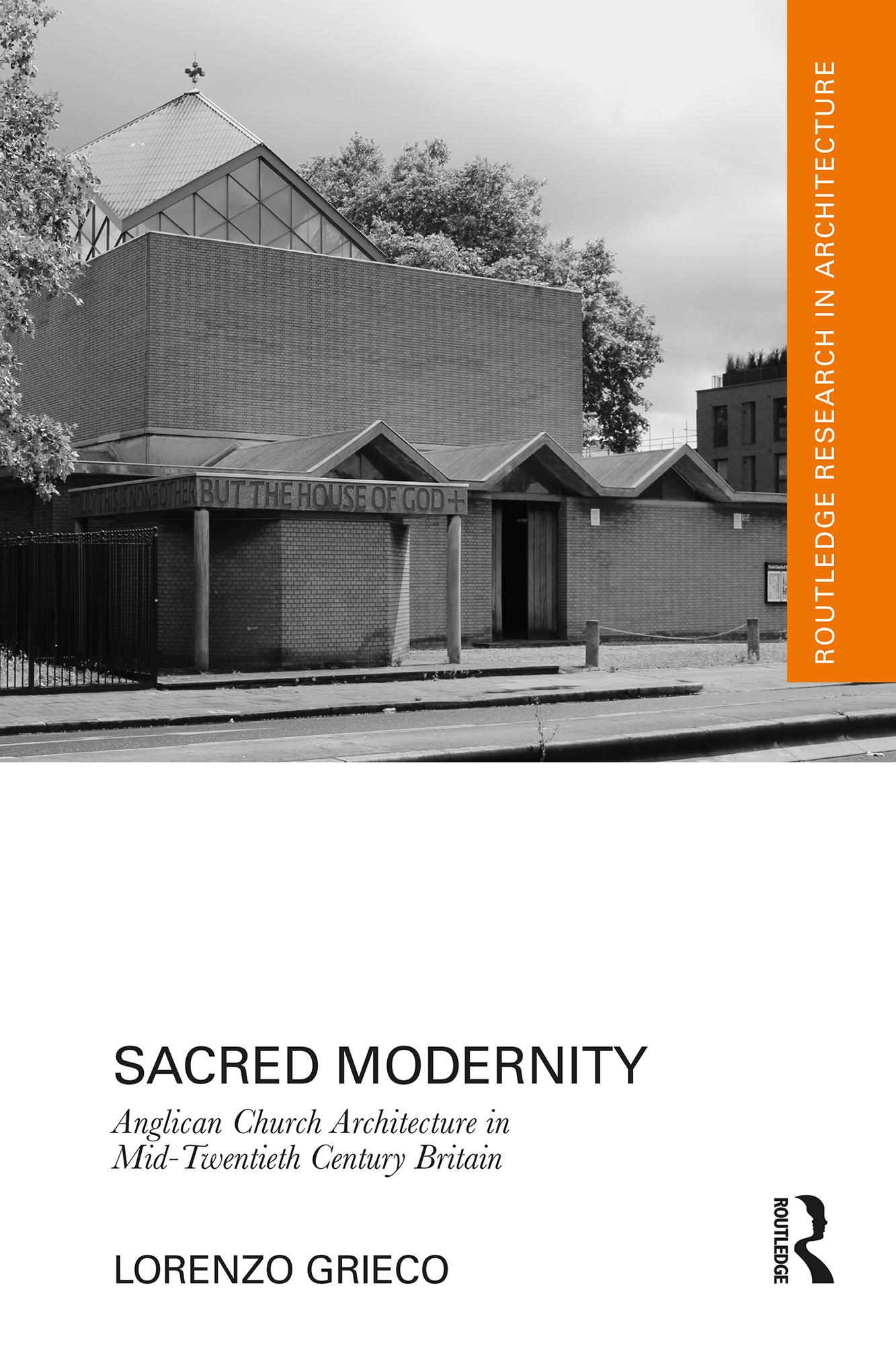
This book examines mid-20th-century Anglican church architecture in Britain, from the 1935 to the 1975, exploring how it was shaped by liturgical changes, social shifts, and artistic influences. It investigates the theoretical foundations of modern Anglican church design and the contributions of various denominations to shared worship spaces.
Amidst the rise of research groups, publications, and photographic documentation, the book highlights the subject’s significance in this period. Inspired by the liturgical reformation within the Church of England, it analyzes churches in their urban contexts and the communities they served, revealing the complex interplay between architects, engineers, artists, local authorities, and clergy.
The book also addresses post-war church reconstruction, the adaptation of existing buildings, and the integration of new construction technologies. It explores how churches accommodated secular functions alongside sacred spaces to reduce maintenance costs and foster communal identity. As secularization grew—particularly affecting the Church of England—it also considers the transformation of redundant churches into secular venues.
Adopting a cross-disciplinary approach, the book situates Anglican church architecture within broader religious, urban, and social contexts, offering a comprehensive perspective for scholars and practitioners alike.
Payez facilement par carte, Klarna, Apple Pay ou Google Pay. Pas satisfait ? Vous avez toujours une garantie de remboursement de 14 jours. En savoir plus dans nos conditions. Si vous avez des questions, envoyez-nous un e-mail à hello@memmo.org.
Memmo facilite tes études, où que tu sois dans le monde. On rassemble tes manuels de cours et des outils d'étude intelligents au même endroit : résumés, quiz, podcasts et flashcards. Et il y a Ted, ton compagnon d'étude qui répond à toutes tes questions. Plus de 50 000 étudiants étudient déjà ici – conçu pour t'aider à apprendre plus vite et à moins stresser.