
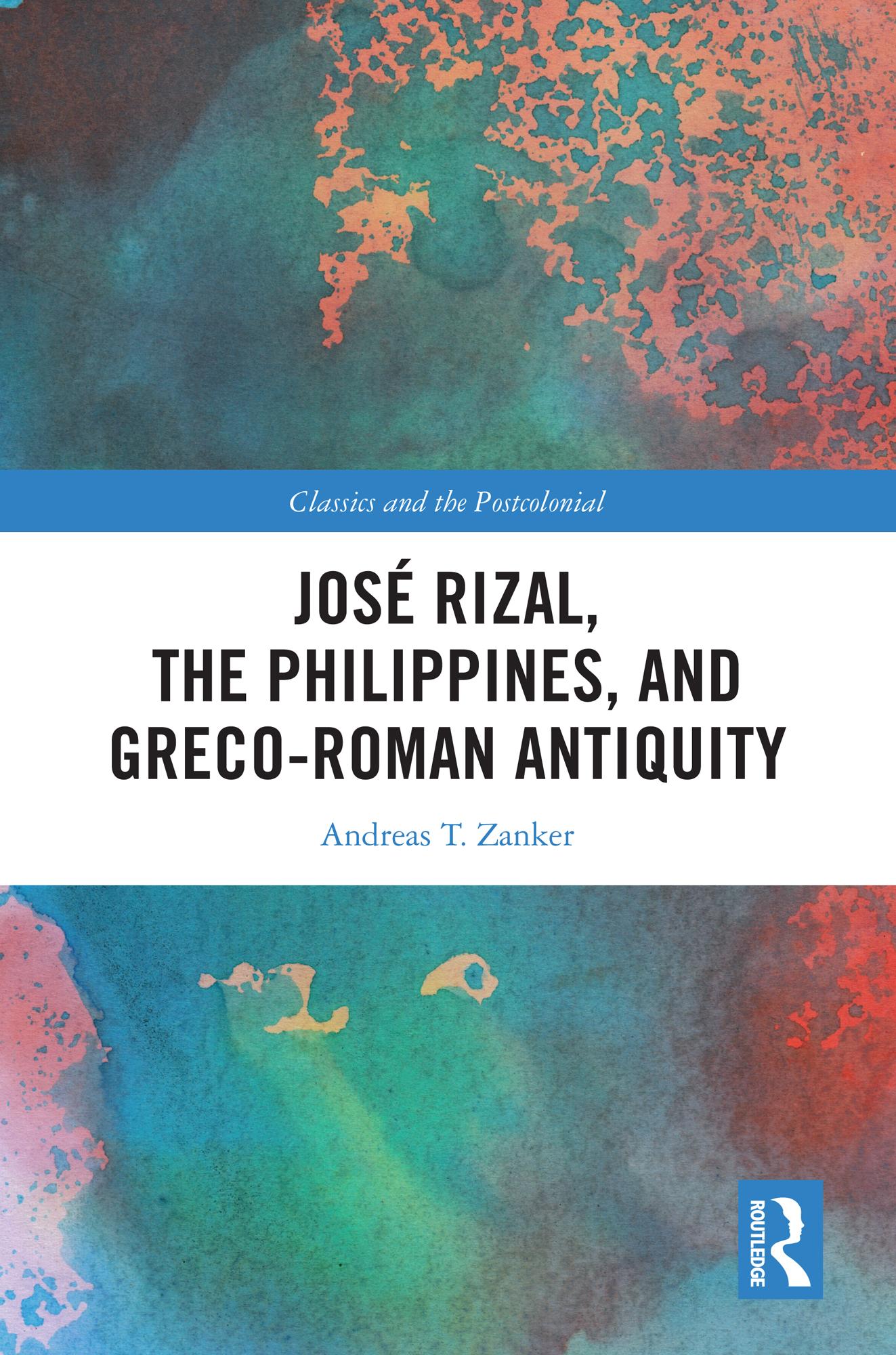
This volume is the first extended investigation of the classicism of José Rizal (1861–1896), the de facto national hero of the Philippines, and explores how Greco-Roman antiquity was harnessed by Rizal and other Philippine artists and thinkers at the end of the Spanish colonial period.
Rizal lived at a crucial juncture in his nation’s history, and Zanker argues that Rizal’s writing and thought represents a rich and evolving example of late-colonial classical reception. The volume illustrates how the forms of knowledge associated with Greco-Roman antiquity were put to creative and powerful new tasks in the attempts of Rizal and his contemporaries to redefine the relationship between Spain and its most distant colony. It not only explores the presence of Greco-Roman antiquity in Rizal’s novels but also his lesser-known works in a roughly chronological order. Besides covering the entirety of Rizal’s surviving works, Zanker considers the role of antiquity in the paintings of Juan Luna and in Rizal’s parsing of his friendship with his Austrian collaborator, Ferdinand Blumentritt.
José Rizal, the Philippines, and Greco-Roman Antiquity is of interest to students and scholars of Classics, particularly Classical Reception, and the colonial-era Philippines, as well as Latin American Studies, Southeast Asian Studies, and Postcolonial Studies more broadly.
Payez facilement par carte, Klarna, Apple Pay ou Google Pay. Pas satisfait ? Vous avez toujours une garantie de remboursement de 14 jours. En savoir plus dans nos conditions. Si vous avez des questions, envoyez-nous un e-mail à hello@memmo.org.
Memmo facilite tes études, où que tu sois dans le monde. On rassemble tes manuels de cours et des outils d'étude intelligents au même endroit : résumés, quiz, podcasts et flashcards. Et il y a Ted, ton compagnon d'étude qui répond à toutes tes questions. Plus de 50 000 étudiants étudient déjà ici – conçu pour t'aider à apprendre plus vite et à moins stresser.