
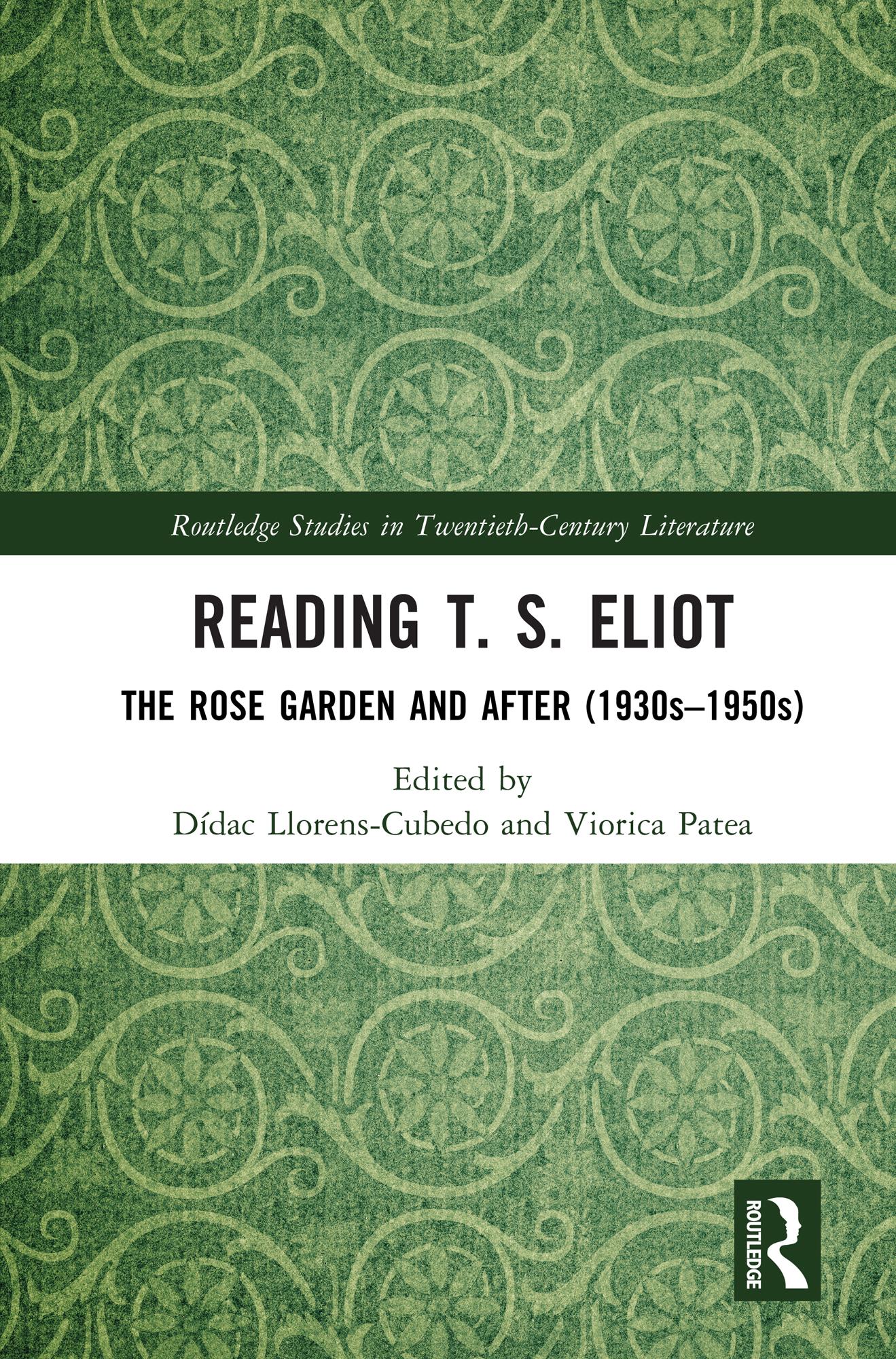
In “Burnt Norton,” the poetic speaker enters a rose garden, a space of envisioned timeless illumination. This experience sets in motion a spiritual quest, which will confer unity upon Four Quartets. For the poet himself, it inaugurates a creative phase (mid-1930s to late-1950s) that strengthens his sense of faith and community. Eliot, increasingly interested in playwriting, completed his meditative masterpiece (Four Quartets) while undertaking his ambitious project to revive verse drama. Devotion to drama reflects Eliot’s stronger social awareness, leading him to adopt popular forms: the pageant (The Rock), drawing-room comedy (The Cocktail Party, The Confidential Clerk, and The Elder Statesman), and children’s literature (Old Possum’s Book of Practical Cats). As a critic, he widened his scope to write about social issues (The Idea of a Christian Society, Notes Towards a Definition of Culture). These aspects of Eliot’s career are influenced by concrete historical and biographical circumstances such as the impact of war and his ongoing relationship with Emily Hale, who played a decisive role as his muse, guide, and mentor in his newfound passion for the stage. Reading T. S. Eliot: The Rose Garden and After (1930s-1950s) presents original work by numerous scholars addressing these facets of Eliot’s writing.
Payez facilement par carte, Klarna, Apple Pay ou Google Pay. Pas satisfait ? Vous avez toujours une garantie de remboursement de 14 jours. En savoir plus dans nos conditions. Si vous avez des questions, envoyez-nous un e-mail à hello@memmo.org.
Memmo facilite tes études, où que tu sois dans le monde. On rassemble tes manuels de cours et des outils d'étude intelligents au même endroit : résumés, quiz, podcasts et flashcards. Et il y a Ted, ton compagnon d'étude qui répond à toutes tes questions. Plus de 50 000 étudiants étudient déjà ici – conçu pour t'aider à apprendre plus vite et à moins stresser.