
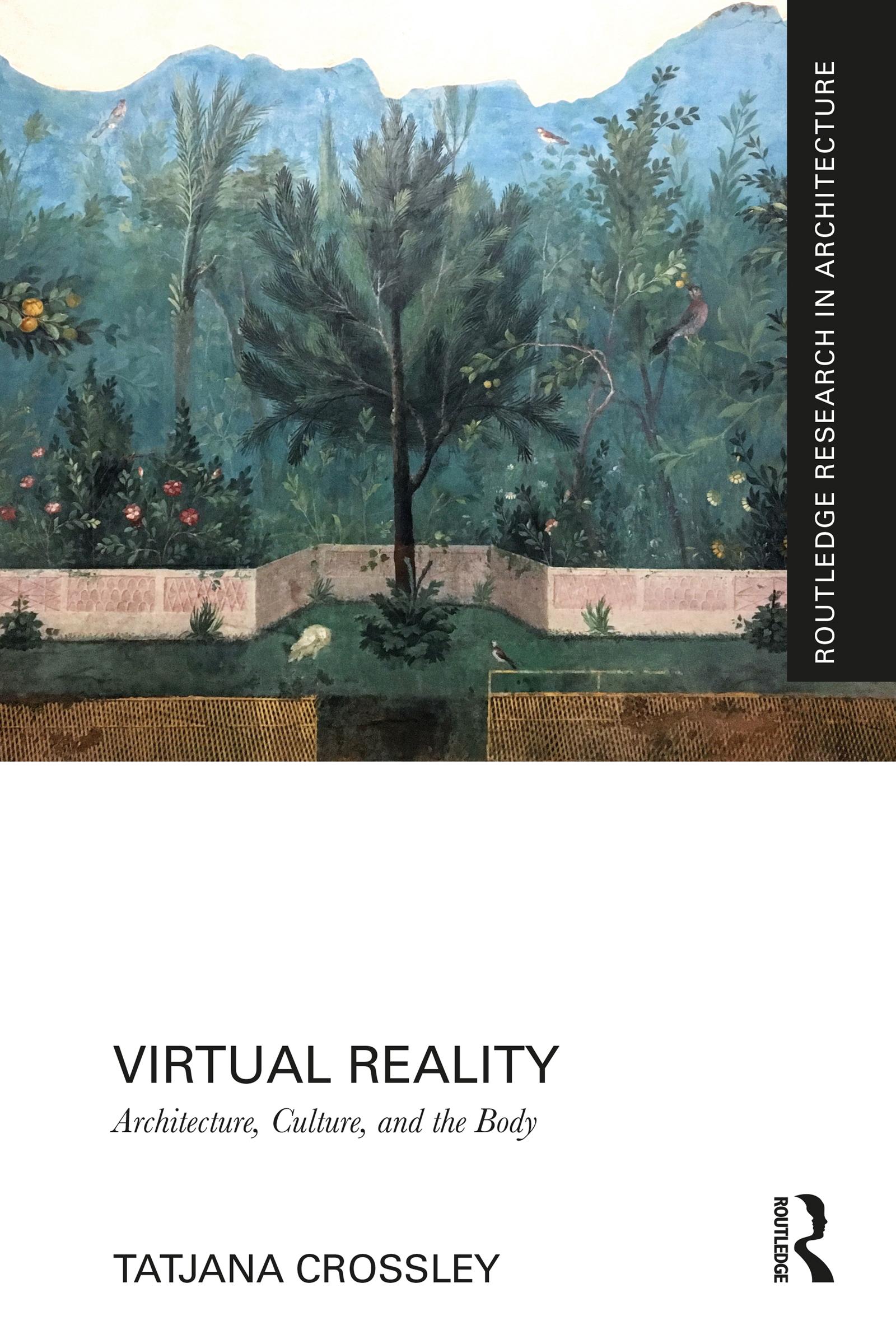
This book investigates how immersive environments, across architecture, art, and media, shape spatial perception, cultural identity, and the construction of reality. It offers a spatial-psychoanalytical reading of virtual reality (VR), examining how architecture and representation engage with the body, sensorial experience, and subjectivity.
Redefining VR as an experiential and spatial condition rather than simply a digital construct, the book traces its lineage from ancient fresco rooms to contemporary digital landscapes. Grounded in theoretical frameworks from psychoanalysis, phenomenology, and media theory, it explores how immersive environments function as extensions of the body and reflect a collective identity. Case studies, from Pompeii to the Metaverse, illustrate how architecture and representation shape our virtual experience. Rather than viewing VR as a new phenomenon, the book positions it as part of a longer trajectory in design and representation, shaped by evolving tools and technologies. It argues that the virtual spaces we create and the artifacts we choose to represent encode insights about identity, memory, and social conditions.
This book is written for theorists, practitioners, academics, and students of architecture, art, and design. It situates architectural practice within the unfolding discourse on virtuality, identity, and the cultural implications of space-making.
Payez facilement par carte, Klarna, Apple Pay ou Google Pay. Pas satisfait ? Vous avez toujours une garantie de remboursement de 14 jours. En savoir plus dans nos conditions. Si vous avez des questions, envoyez-nous un e-mail à hello@memmo.org.
Memmo facilite tes études, où que tu sois dans le monde. On rassemble tes manuels de cours et des outils d'étude intelligents au même endroit : résumés, quiz, podcasts et flashcards. Et il y a Ted, ton compagnon d'étude qui répond à toutes tes questions. Plus de 50 000 étudiants étudient déjà ici – conçu pour t'aider à apprendre plus vite et à moins stresser.