
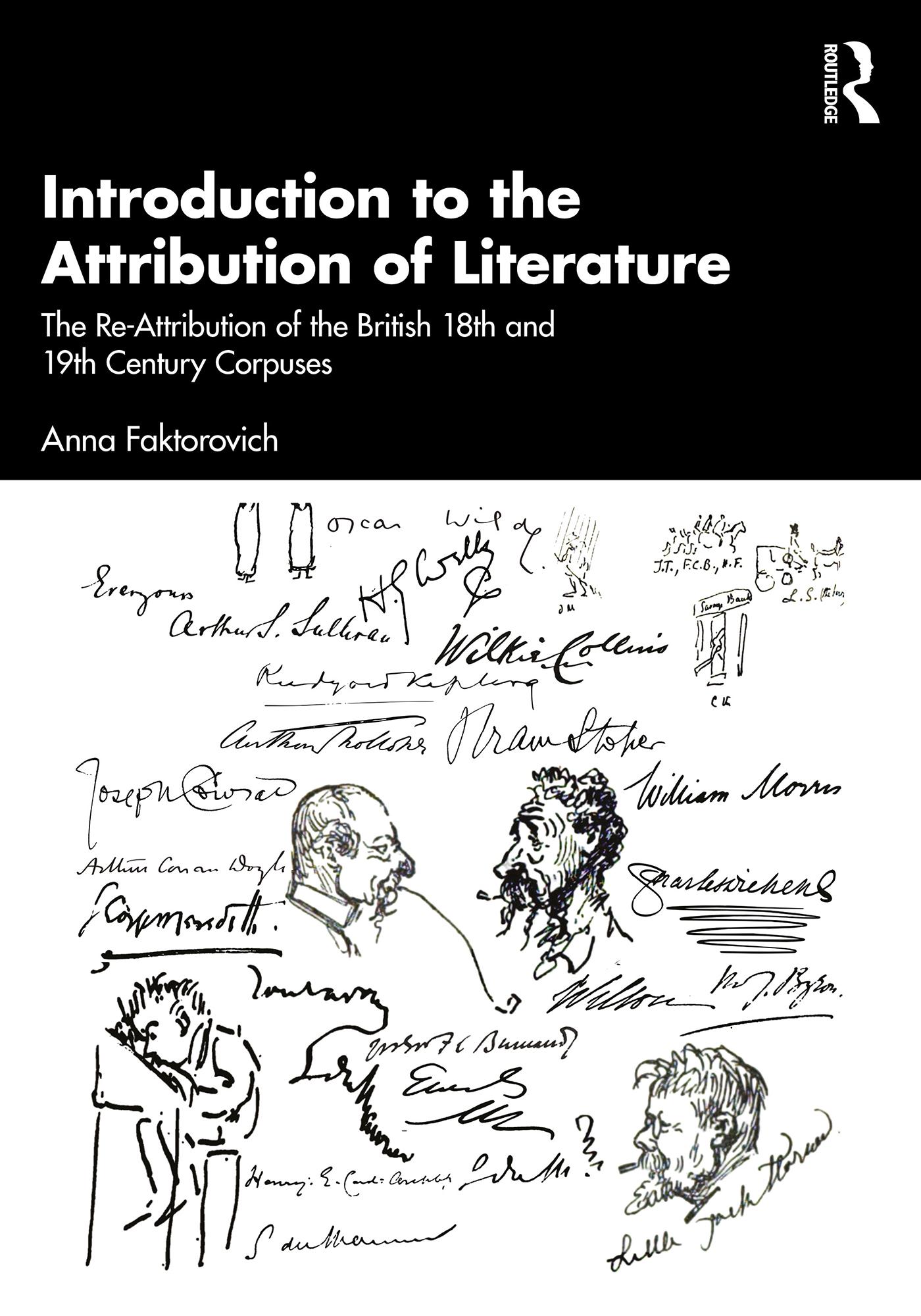
Introduction to the Attribution of Literature describes the first unbiased and accessible authorship attribution method, and uses it to present the first accurate re-attribution of 311 canonical texts from the 18th century to only 10 ghostwriters, and 323 texts from the 19th century to 11 ghostwriters. For example, the little-known Sir Francis Cowley Burnand is chronologically, stylometrically, and with handwriting analysis, proven to be the ghostwriter behind 55 canonical tested texts, including "Emily Bronte's" Wuthering Heights, "Collins'" Woman in White, "Doyle's" Sherlock Holmes, "Kipling's" Captain Courageous, "Stoker's" Dracula, "Anthony Trollope's" American Senator, "Wells'" Island of Doctor Moreau, "Wilde's" Picture of Dorian Gray, and "Dickens'" Great Expectations. This method applies a combination of 23 to 28 different types of punctuation, parts-of-speech, and lexical linguistic tests. Parts of this book offer extensive statistical evidence in support of why this method’s findings are quantitatively reliable. If preceding attribution methods had been equally reliable; then, they would have also concluded canonical British texts have been overwhelmingly ghostwritten. A section in this book explains the methodological flaws of these preceding attribution approaches, because of which they have incorrectly reaffirmed their canonically-accepted bylines. It includes definitions of central stylometric terminology, and explains how readers can apply the described strategies to their own attribution research at any academic level.
Payez facilement par carte, Klarna, Apple Pay ou Google Pay. Pas satisfait ? Vous avez toujours une garantie de remboursement de 14 jours. En savoir plus dans nos conditions. Si vous avez des questions, envoyez-nous un e-mail à hello@memmo.org.
Memmo facilite tes études, où que tu sois dans le monde. On rassemble tes manuels de cours et des outils d'étude intelligents au même endroit : résumés, quiz, podcasts et flashcards. Et il y a Ted, ton compagnon d'étude qui répond à toutes tes questions. Plus de 50 000 étudiants étudient déjà ici – conçu pour t'aider à apprendre plus vite et à moins stresser.