
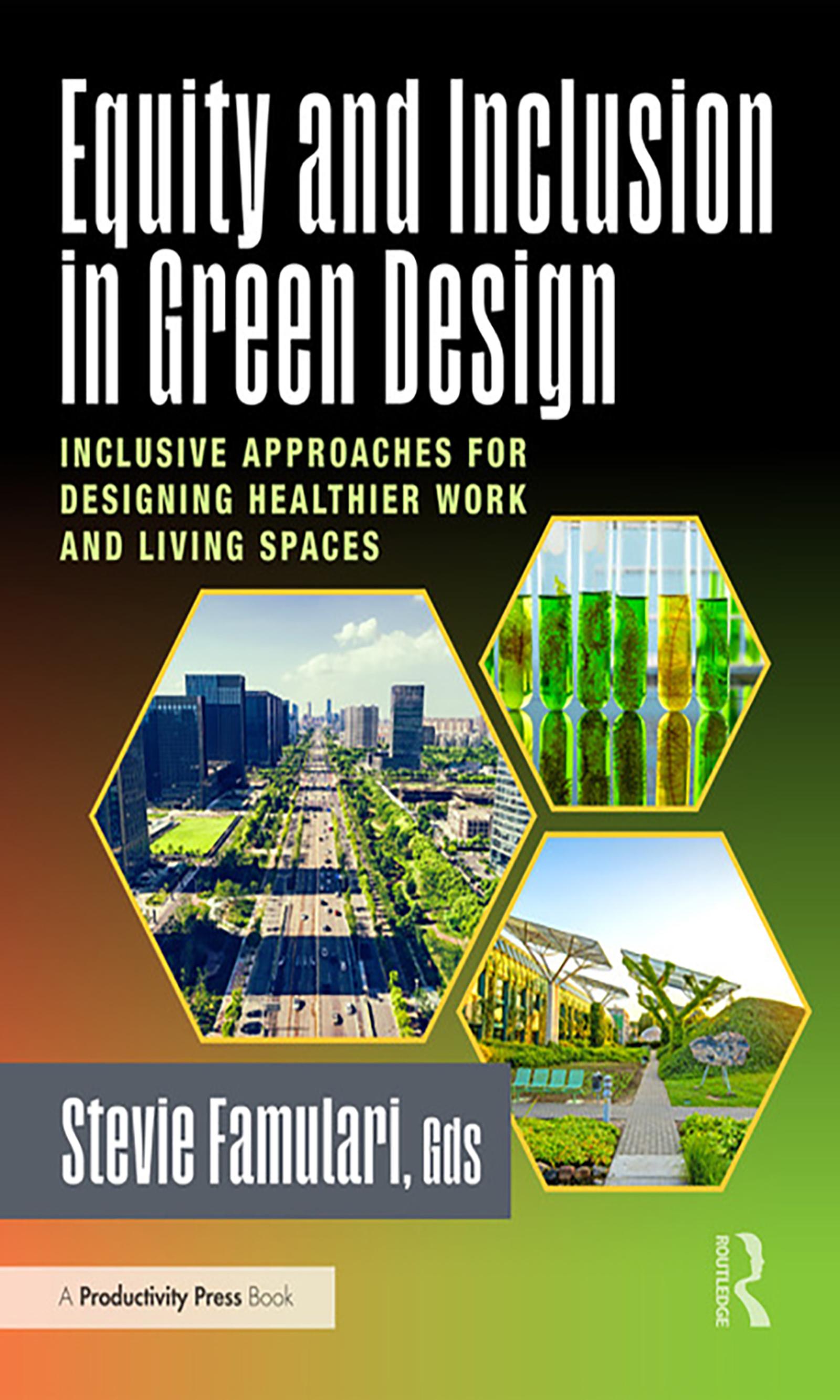
This book focuses on seeing how inequity and lack of inclusion presently shows in existing spaces, how to retrofit existing spaces to correct inequity and lack of inclusion through green design, as well as design new green spaces with a focus of equity and inclusion. This includes addressing equity and inclusion focusing on people’s health, abilities, sexuality, gender, age, race, language, income, and culture which show in public and private site design, more so in the lack of equality and inclusion in green design.
The effects of equity and inclusion show in multiple ways, including the lack of:
- Ease of access to affordable healthy food and agriculture.
- Community green design for people with different health and abilities.
- Ease of access in public and private spaces for people with different visual, walking, hearing, mobile, and learning abilities.
- Safe and equitable public green design for womxn and people in the LGBTQIA+ community.
- Green design in areas with a focus for people who are Black, Brown, and from underserved communities.
- Ease of access in public and private spaces for people who do not fluently understand English or the native language of the site.
- Green spaces in areas of people with lower economic means.
- Community green design for immigrants to celebrate their culture.
Addressing equity and inclusion can be designed directly into sites as integral in the design process through retrofitting existing sites, as well as new site design. Exploring healthy approaches to the important topic of equality is an important step in acknowledging the lack of equity and inclusion and exploring new designs. This involves listening to people; and creatively exploring design for diversity and inclusion for health, abilities, sexuality, gender, age, race, language, income range, and cultures.
This book gives readers a way to not only understand equity and inclusion in greening but also to understand how to develop inclusive approaches for design. The two basic site types in this book are: existing spaces, which greening design is applied to afterwards; and upcoming spaces, which greening design is integral to the built into the space. Retrofitting greening into existing space can also be combined with new designs. There are examples of both types throughout the book.
Payez facilement par carte, Klarna, Apple Pay ou Google Pay. Pas satisfait ? Vous avez toujours une garantie de remboursement de 14 jours. En savoir plus dans nos conditions. Si vous avez des questions, envoyez-nous un e-mail à hello@memmo.org.
Memmo facilite tes études, où que tu sois dans le monde. On rassemble tes manuels de cours et des outils d'étude intelligents au même endroit : résumés, quiz, podcasts et flashcards. Et il y a Ted, ton compagnon d'étude qui répond à toutes tes questions. Plus de 50 000 étudiants étudient déjà ici – conçu pour t'aider à apprendre plus vite et à moins stresser.