
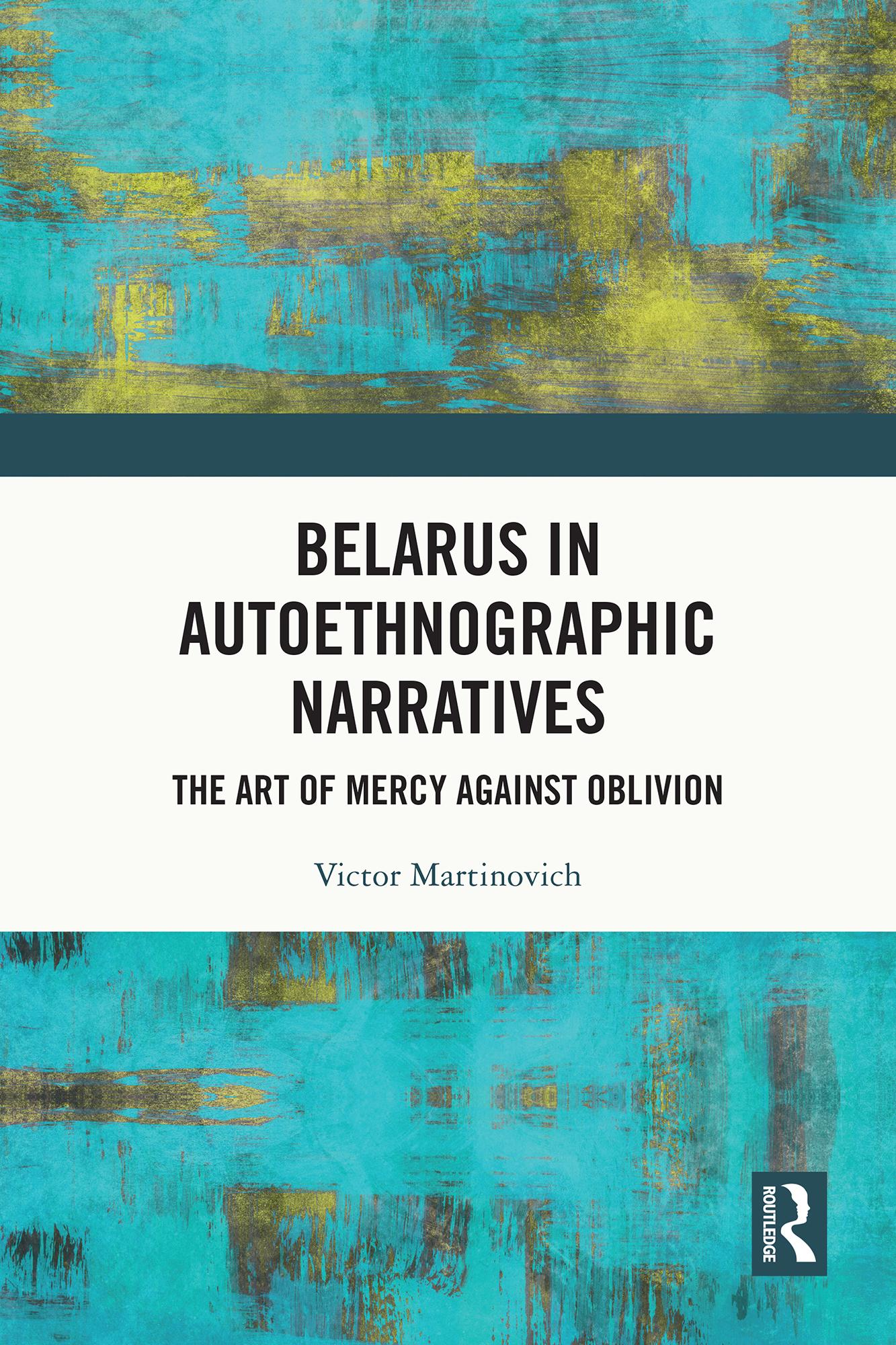
This book offers an autoethnographic exploration of the interplay of art, memory, and resilience in Eastern Europe, weaving together the personal and collective histories of Belarusians – those who survived two World Wars and their contemporaries, who are now looking for a way out of a political crisis in the region.
Set against the history of Belarus, it recounts the story of the author’s greatgrandfather Amyalyan, a Belarusian peasant executed by the Nazis after saving a Jewish man during World War II, along with reflections on artists like Chaïm Soutine and Marc Chagall, whose journeys reflect the region’s cultural endurance. Combining autoethnography and art history, this book presents art as a medium of empathy, challenging readers to engage with paintings emotionally rather than through a purely analytical lens. Each chapter functions as both a historical reflection and an invitation to see art as a means of reclaiming personal narratives, making historical traumas accessible and relatable. Themes of compassion, forgiveness, and the humanizing power of art emerge as essential elements, guiding readers through the complex intersections of personal and collective memory.
This book is a valuable addition for researchers and students interested in ethnography and autoethnography, Eastern European studies, art history, cultural studies, and memory studies.
Payez facilement par carte, Klarna, Apple Pay ou Google Pay. Pas satisfait ? Vous avez toujours une garantie de remboursement de 14 jours. En savoir plus dans nos conditions. Si vous avez des questions, envoyez-nous un e-mail à hello@memmo.org.
Memmo facilite tes études, où que tu sois dans le monde. On rassemble tes manuels de cours et des outils d'étude intelligents au même endroit : résumés, quiz, podcasts et flashcards. Et il y a Ted, ton compagnon d'étude qui répond à toutes tes questions. Plus de 50 000 étudiants étudient déjà ici – conçu pour t'aider à apprendre plus vite et à moins stresser.