
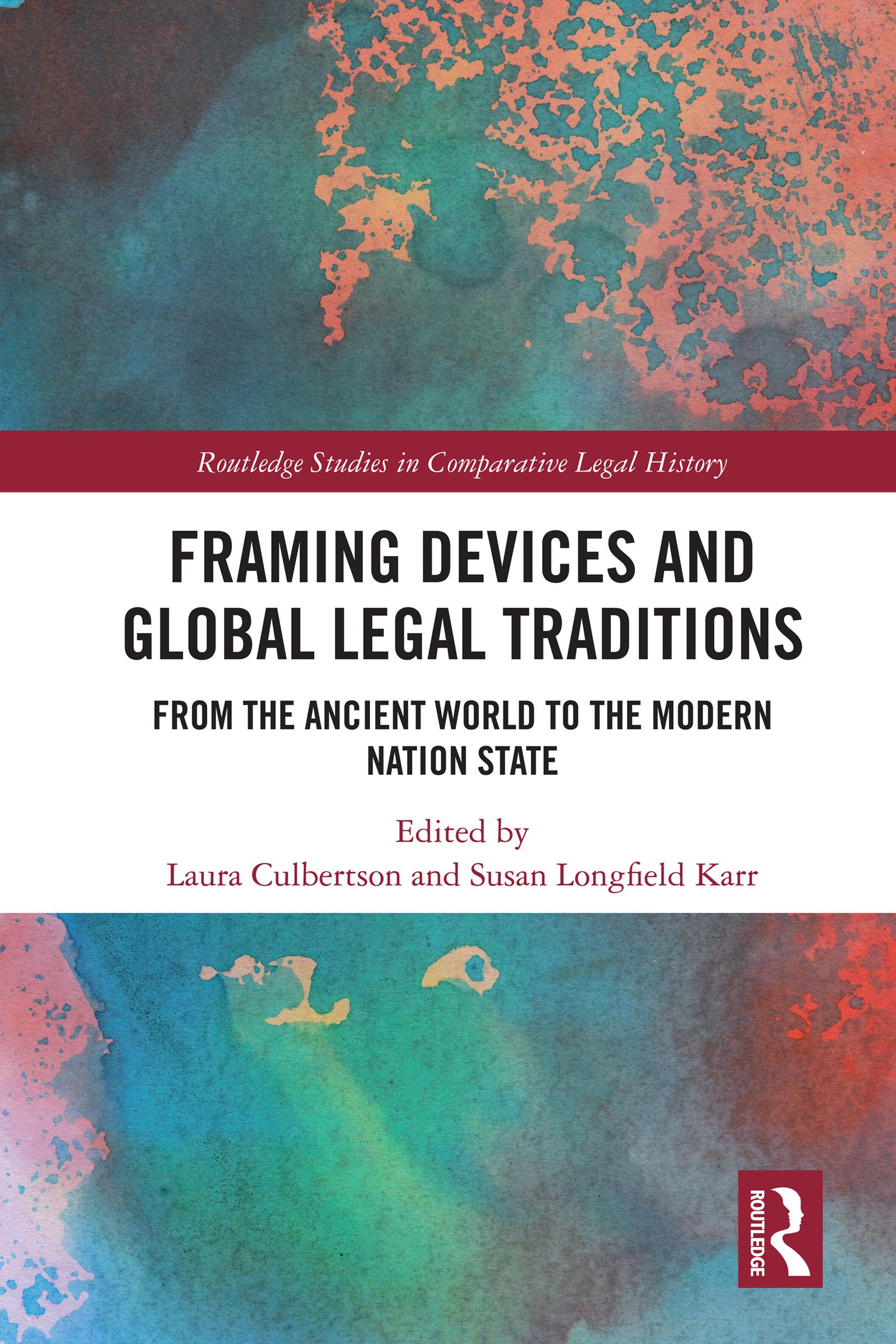
This collection explores prefaces, prologues, paratexts, and other types of framing devices. Across world history, these devices have introduced the law, articulated its context and audience, identified the basis of legal and moral authority, critiqued existing conditions, or even tried to "restore" something that never was. Scribes, lawmakers, and legal theorists also used frames to position the law in time and space, purporting to define populations and their identities. Despite the ubiquity and complexity of these phenomena, few studies have drawn out methods for studying their role in constructing, fortifying, or reimagining legal frameworks within legal cultures or traditions. This volume offers new ways to consider the significance of framing apparatuses regarding how and why they are created, remembered, forgotten, utilized, and recovered within legal traditions. The studies range from the ancient world to the modern nation-state system, aiming to explore the intersections and collisions between juridical and political interpretation practices.
The book will be of interest to academics and researchers in the areas of legal history, comparative law, legal cultures and traditions, legal theory, jurisprudence, constitutional law and legislative drafting.
Payez facilement par carte, Klarna, Apple Pay ou Google Pay. Pas satisfait ? Vous avez toujours une garantie de remboursement de 14 jours. En savoir plus dans nos conditions. Si vous avez des questions, envoyez-nous un e-mail à hello@memmo.org.
Memmo facilite tes études, où que tu sois dans le monde. On rassemble tes manuels de cours et des outils d'étude intelligents au même endroit : résumés, quiz, podcasts et flashcards. Et il y a Ted, ton compagnon d'étude qui répond à toutes tes questions. Plus de 50 000 étudiants étudient déjà ici – conçu pour t'aider à apprendre plus vite et à moins stresser.