
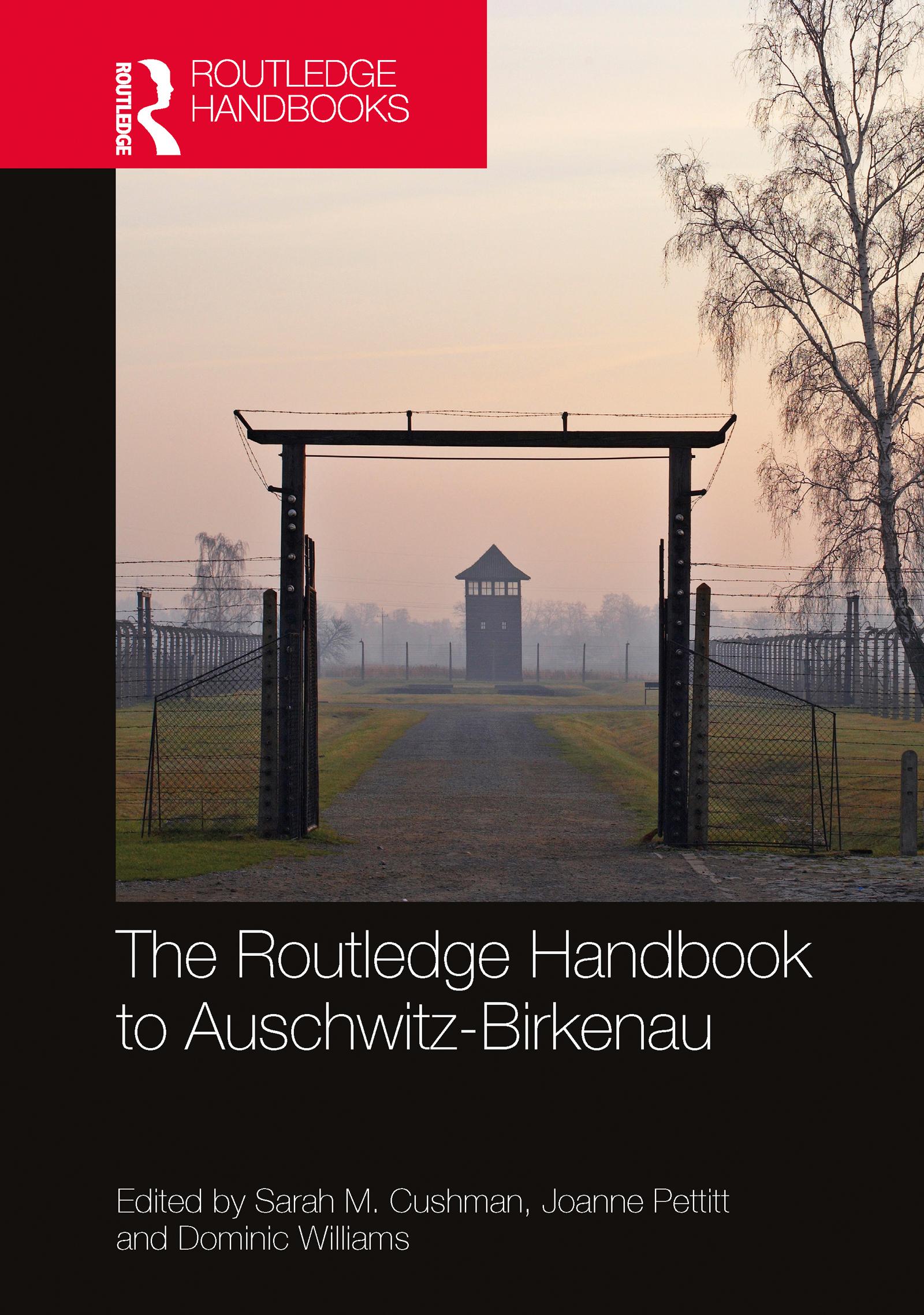
This handbook examines Auschwitz-Birkenau as both a site and a symbol of Nazi genocide. Scholars from a range of disciplinary perspectives consider Auschwitz’s history by engaging with Holocaust historiography and its place in Holocaust memory and representation, illustrating their mutual influence.
The chapters bring new insights to topics that other studies of Auschwitz have explored before, such as the Sonderkommando, the Czech family camp, and literary representations of Auschwitz. Other chapters cover recent developments and more neglected areas, such as the experience and memory of Romani prisoners, the fate of Soviet prisoners of war, and Auschwitz’s presence on social media. The handbook also responds to a number of recent trends and new paradigms in Holocaust Studies, including contributions from the fields of Environmental Studies, Spatial Studies, and Gender Studies.
As a crucial overview of the topic of Auschwitz-Birkenau and an introduction to its most recent and fruitful scholarly approaches, this handbook will be a valuable resource for undergraduates from second year and up, as well as for graduate students and researchers seeking a survey of the field.
Payez facilement par carte, Klarna, Apple Pay ou Google Pay. Pas satisfait ? Vous avez toujours une garantie de remboursement de 14 jours. En savoir plus dans nos conditions. Si vous avez des questions, envoyez-nous un e-mail à hello@memmo.org.
Memmo facilite tes études, où que tu sois dans le monde. On rassemble tes manuels de cours et des outils d'étude intelligents au même endroit : résumés, quiz, podcasts et flashcards. Et il y a Ted, ton compagnon d'étude qui répond à toutes tes questions. Plus de 50 000 étudiants étudient déjà ici – conçu pour t'aider à apprendre plus vite et à moins stresser.