
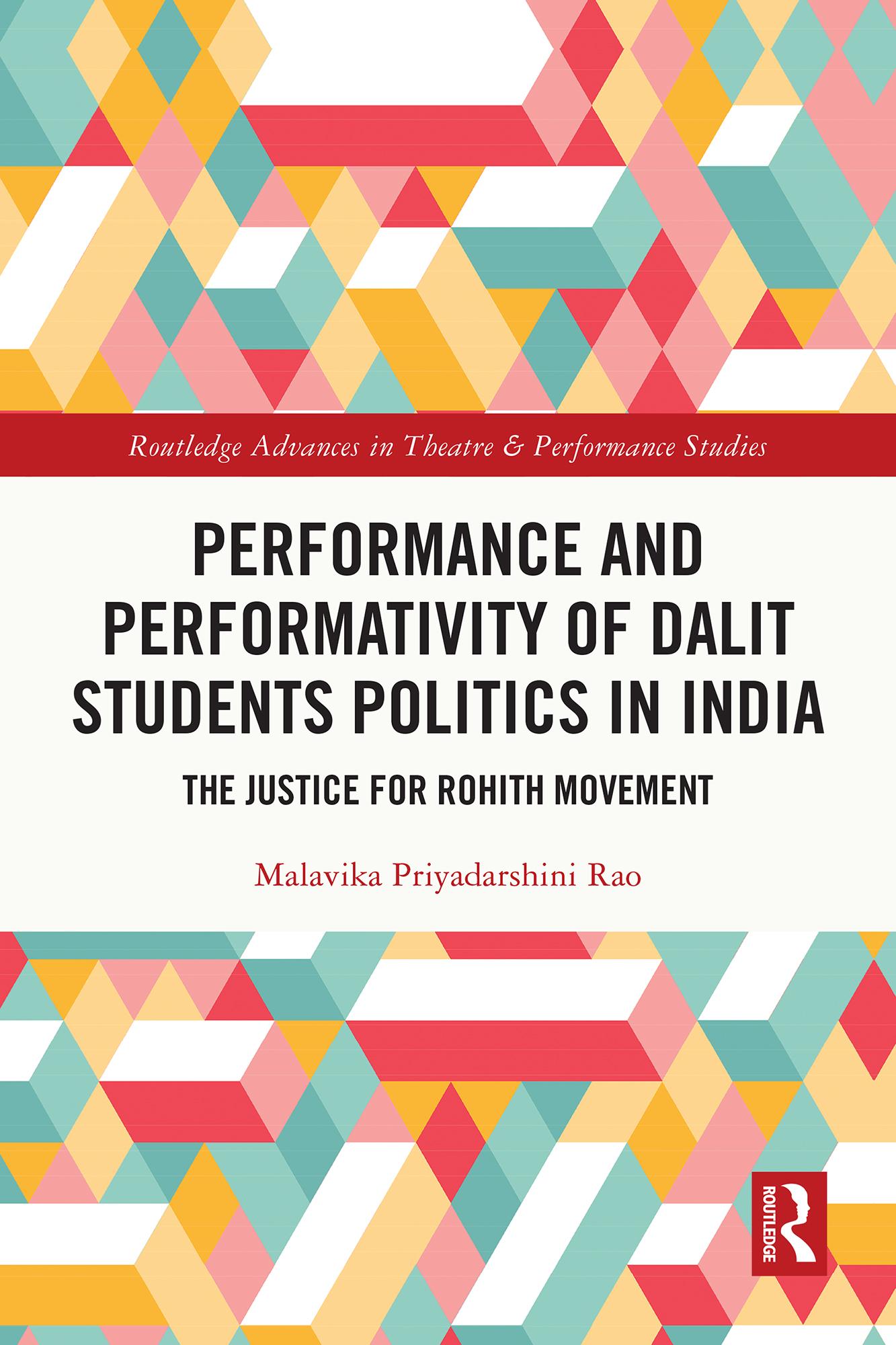
This book examines the significance of body, space, sound/voice/music and objects of resistance in everyday performance of Dalit student protests, focusing on the protests which erupted after Rohith Vemula, a Dalit PhD student, died,by suicide in Hyderabad Central University on 17 January 2016 in Hyderabad, India.
Rohith’s death sparked national and international outrage and led to the shutdown of the University for over a month and gave rise to the ‘Justice for Rohith movement’, which continued for over a year. Rohith’s death became a symbolic representation of other Dalit deaths due to systemic caste violence; the symbolism of his death expanded to include other marginalised groups who have faced systemic violence historically. The author highlights five distinct aesthetics prominent in Dalit student activist performance practices: (1) folk performance traditions; (2) counter-interpretation and representation of Hindu mythology and Hinduism; (3) inspiration from Ambedkar and Buddhist iconography; (4) Christian church hymns; and (5) the text of Rohith’s last letter.
In each chapter, the book explores how protesters draw on aesthetics and strategies from other political movements. This book will be of great interest to students and scholars in theatre and performance studies.
Payez facilement par carte, Klarna, Apple Pay ou Google Pay. Pas satisfait ? Vous avez toujours une garantie de remboursement de 14 jours. En savoir plus dans nos conditions. Si vous avez des questions, envoyez-nous un e-mail à hello@memmo.org.
Memmo facilite tes études, où que tu sois dans le monde. On rassemble tes manuels de cours et des outils d'étude intelligents au même endroit : résumés, quiz, podcasts et flashcards. Et il y a Ted, ton compagnon d'étude qui répond à toutes tes questions. Plus de 50 000 étudiants étudient déjà ici – conçu pour t'aider à apprendre plus vite et à moins stresser.