
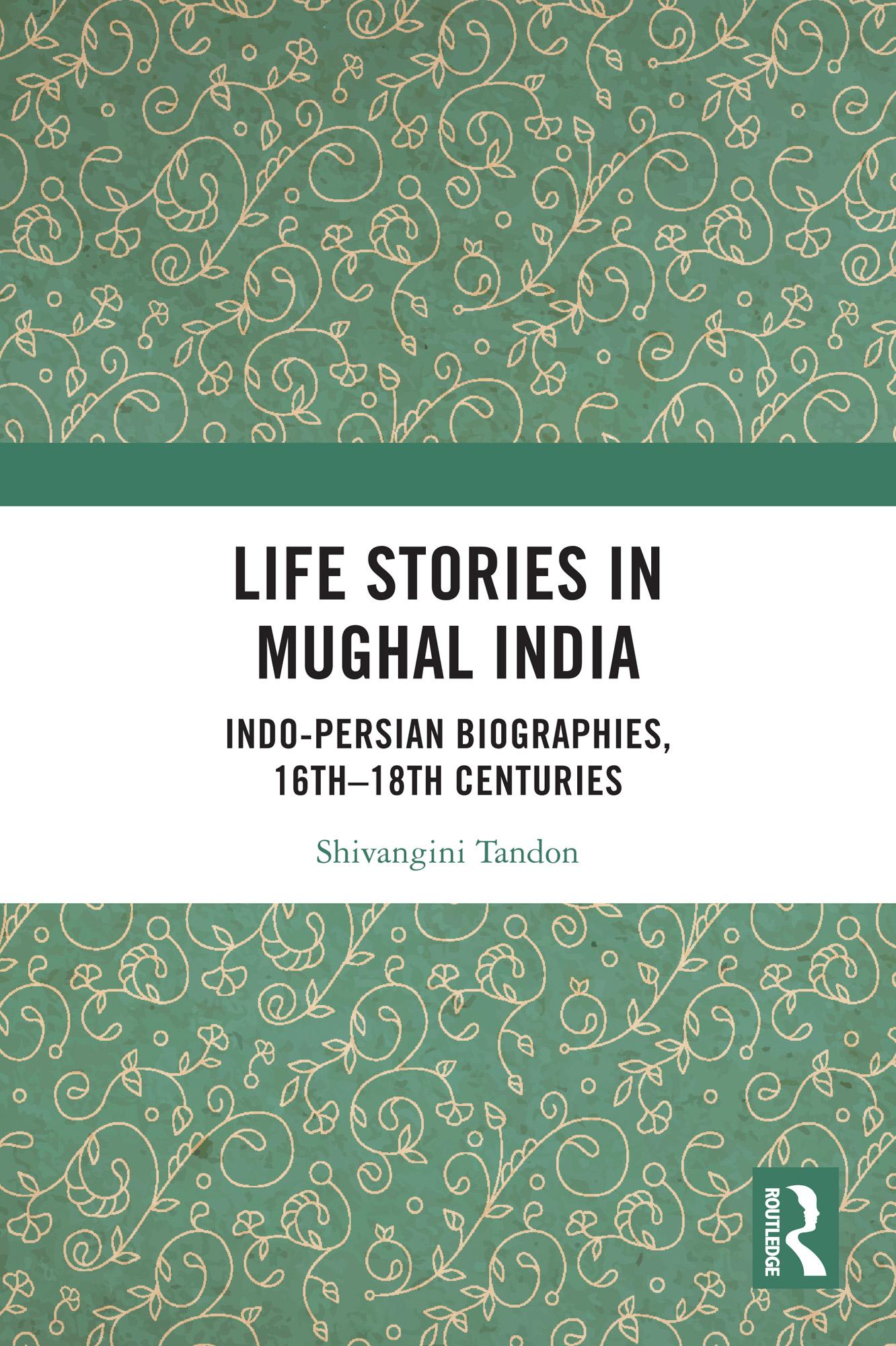
Situated at the intersections between history and literature, the book explores the life-stories written in the Mughal period to recover socio-cultural developments in the period. It focuses on the genre of life-stories and looks at the complex interactions between agency and the ruling structure in shaping historical formations.
The biographical dictionaries explored in this book highlight the significance of the agency of political actors, and the strategies through which the aristocrats and the elites reproduced the political system. At the same time, these texts are also quite helpful in recovering processes through which the ordinary people, in routine, everyday forms negotiated with and contested the political system. Delving into the life-narratives preserved in the tazkiras or biographical compendia, this book looks at the household as a political formation and positions the aristocratic households as integral to the reproduction of imperial sovereignty. The work also delves into the world of emotions and argues for the need to draw linkages between political developments and shifts in emotions and affect.
This book will be an essential resource for scholars and researchers of history especially early modern history, cultural studies, literature, sociology, South Asian history. It will also be of interest to those studying gender and political discourse in early modern South Asia.
Payez facilement par carte, Klarna, Apple Pay ou Google Pay. Pas satisfait ? Vous avez toujours une garantie de remboursement de 14 jours. En savoir plus dans nos conditions. Si vous avez des questions, envoyez-nous un e-mail à hello@memmo.org.
Memmo facilite tes études, où que tu sois dans le monde. On rassemble tes manuels de cours et des outils d'étude intelligents au même endroit : résumés, quiz, podcasts et flashcards. Et il y a Ted, ton compagnon d'étude qui répond à toutes tes questions. Plus de 50 000 étudiants étudient déjà ici – conçu pour t'aider à apprendre plus vite et à moins stresser.