
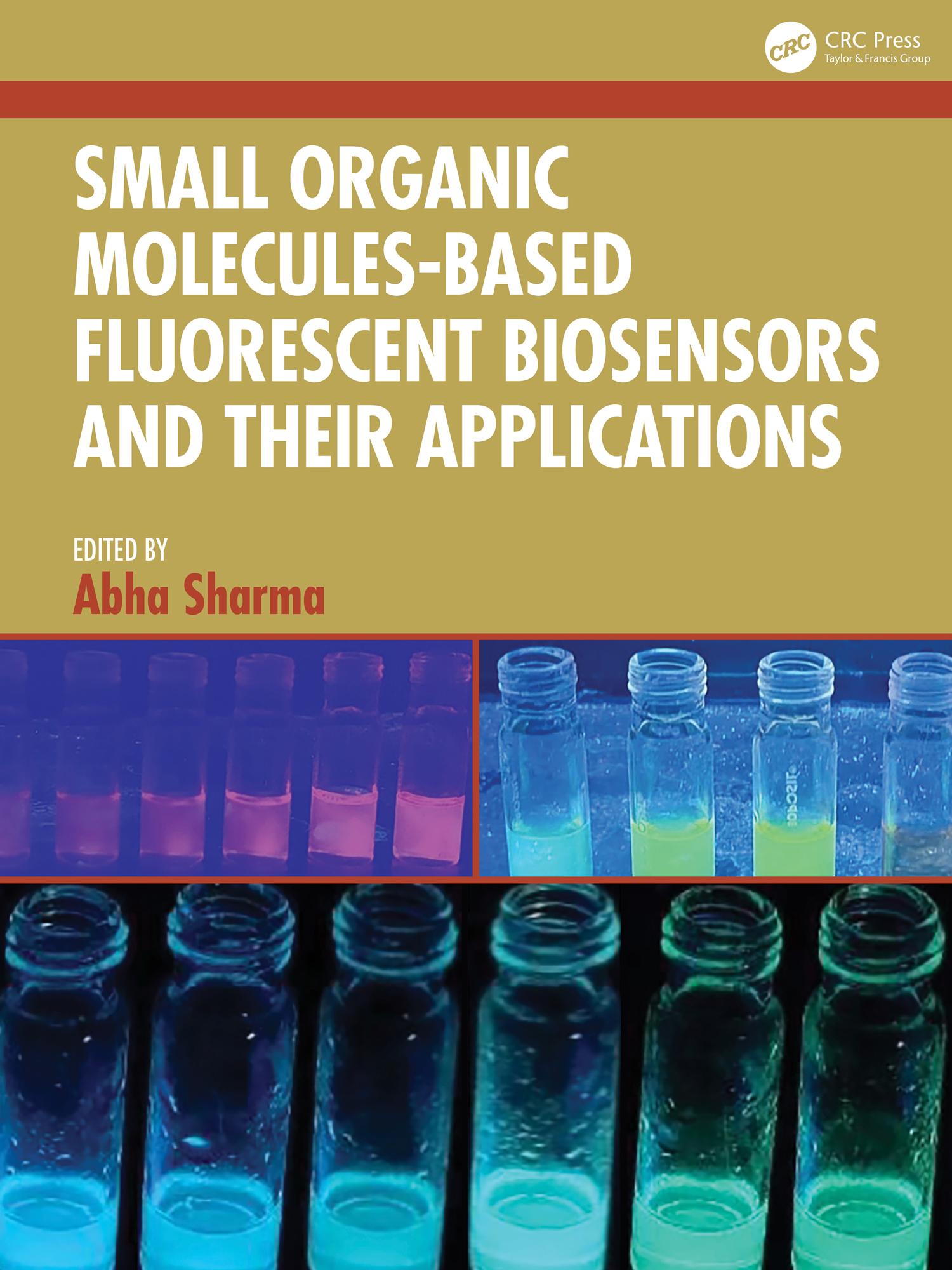
This book provides an overview of organic molecule-based fluorescent compounds and their applications as sensors and biosensors. The initial chapter introduces fundamental fluorescence concepts and their significance in biosensing. The book, in turn, details the synthesis of various scaffolds including xanthene, BODIPY, julolidine, cyanine, quinoline, phenanthiridine, acridine, rhodamine, benzothiazole, coumarin, perylene, and carbazole. The subsequent section covers the use of these organic fluorescent molecules in sensing proteins and DNA through selective binding, ion indicators for real-time tracking, and receptor-specific ligands for interaction studies. It also explores cellular component visualization using organelle markers and membrane probes. Additionally, the book delves into the application of fluorescent organic molecules for sensing lipids, carbohydrates, and other biological molecules, fostering interdisciplinary understanding. Addressing environmental concerns, the book highlights the use of fluorescent probes for analyte analysis, providing insights into pollution monitoring and water quality assessment. This book is useful for researchers, students, and professionals seeking to understand and harness the potential of these innovative biosensing technologies.
Key features
- Provides a comprehensive overview of the synthesis and development of organic molecule-based fluorescent compounds
- Presents applications of organic molecule-based fluorescent compounds in various aspects of biological and environmental analysis
- Discusses the applications of fluorescent compounds in sensing of lipids, carbohydrates, and other biological molecules
- Reviews the role of fluorescent probes in monitoring pollution and assessment of water quality
- Examines the role of biosensors as ion indicators for real-time tracking, and receptor-specific ligands for interaction studies
- Explores cellular component visualization using organelle markers and membrane probes
Payez facilement par carte, Klarna, Apple Pay ou Google Pay. Pas satisfait ? Vous avez toujours une garantie de remboursement de 14 jours. En savoir plus dans nos conditions. Si vous avez des questions, envoyez-nous un e-mail à hello@memmo.org.
Memmo facilite tes études, où que tu sois dans le monde. On rassemble tes manuels de cours et des outils d'étude intelligents au même endroit : résumés, quiz, podcasts et flashcards. Et il y a Ted, ton compagnon d'étude qui répond à toutes tes questions. Plus de 50 000 étudiants étudient déjà ici – conçu pour t'aider à apprendre plus vite et à moins stresser.