
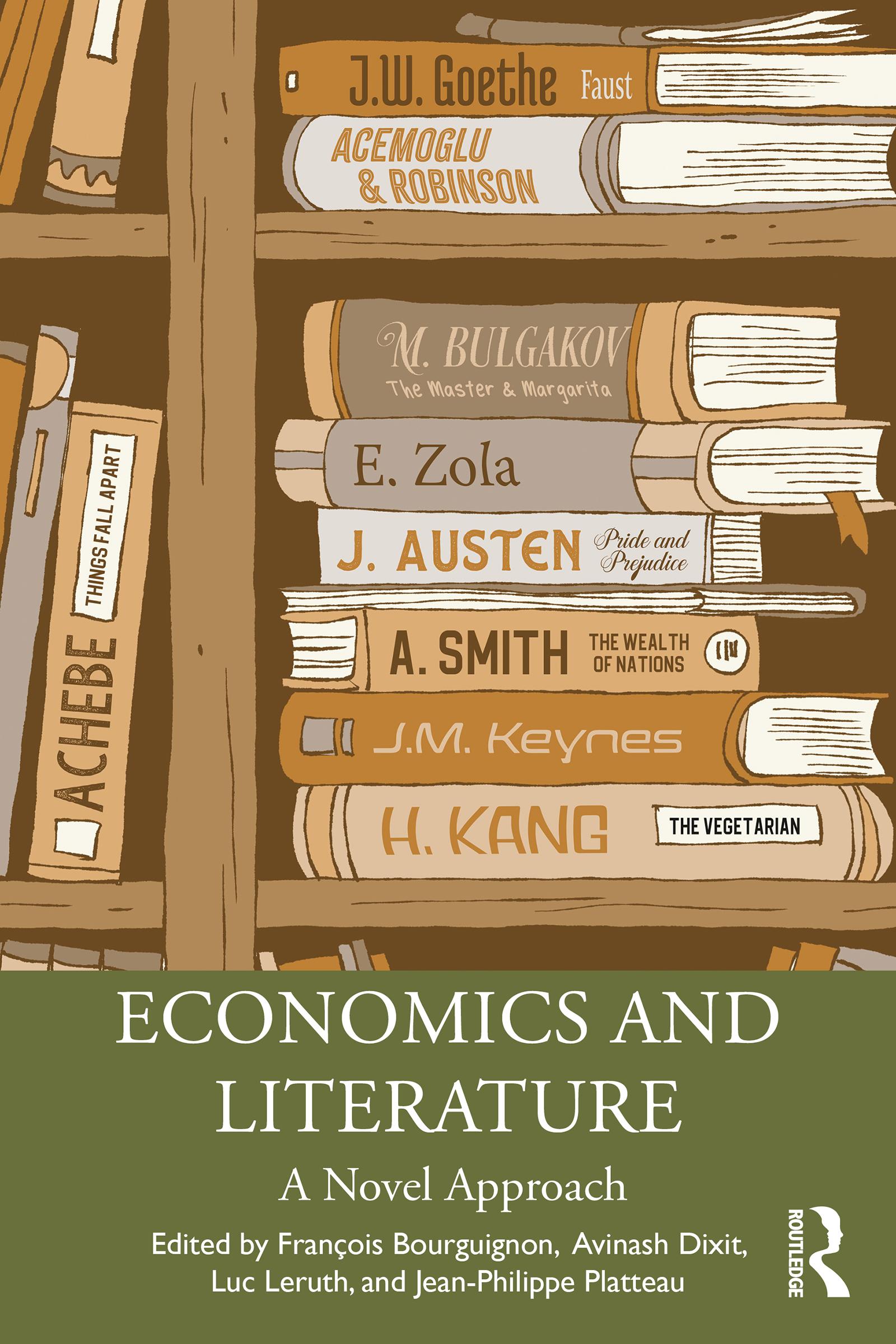
Economics and fiction often pursue parallel objectives. Economists analyze human decisions and interactions in markets and other institutions. Fiction writers also provide keen insights into individual minds and motives, examining how their characters respond to conflict and tensions in varied situations. This book explores the insights to be gained from developing this parallel.
In each chapter, economists discuss classic or contemporary literary creations, exploring economic incentives that motivate the characters, the economic mechanisms that tie them together, and/or the economic context in which they live and develop. Exploring the synergy across economics and literature offers new understandings of themes, including capitalism and colonialism, marriage and markets, gender norms, inheritance and estates, and the political economy of poverty. The broad and deep range of literary works includes writers from Shakespeare and Goethe, through Chekov and Steinbeck, to recent Nobelists Abdulrazak Gurnah and Han Kang. By offering new understandings of both economics and literature, readers will gain deeper insights into people’s thought processes, choices, and consequences.
This book will captivate readers in economics, social sciences, and the humanities and open their minds to the viewing of economic ideas and concepts through the prism of great works of literature.
Payez facilement par carte, Klarna, Apple Pay ou Google Pay. Pas satisfait ? Vous avez toujours une garantie de remboursement de 14 jours. En savoir plus dans nos conditions. Si vous avez des questions, envoyez-nous un e-mail à hello@memmo.org.
Memmo facilite tes études, où que tu sois dans le monde. On rassemble tes manuels de cours et des outils d'étude intelligents au même endroit : résumés, quiz, podcasts et flashcards. Et il y a Ted, ton compagnon d'étude qui répond à toutes tes questions. Plus de 50 000 étudiants étudient déjà ici – conçu pour t'aider à apprendre plus vite et à moins stresser.