
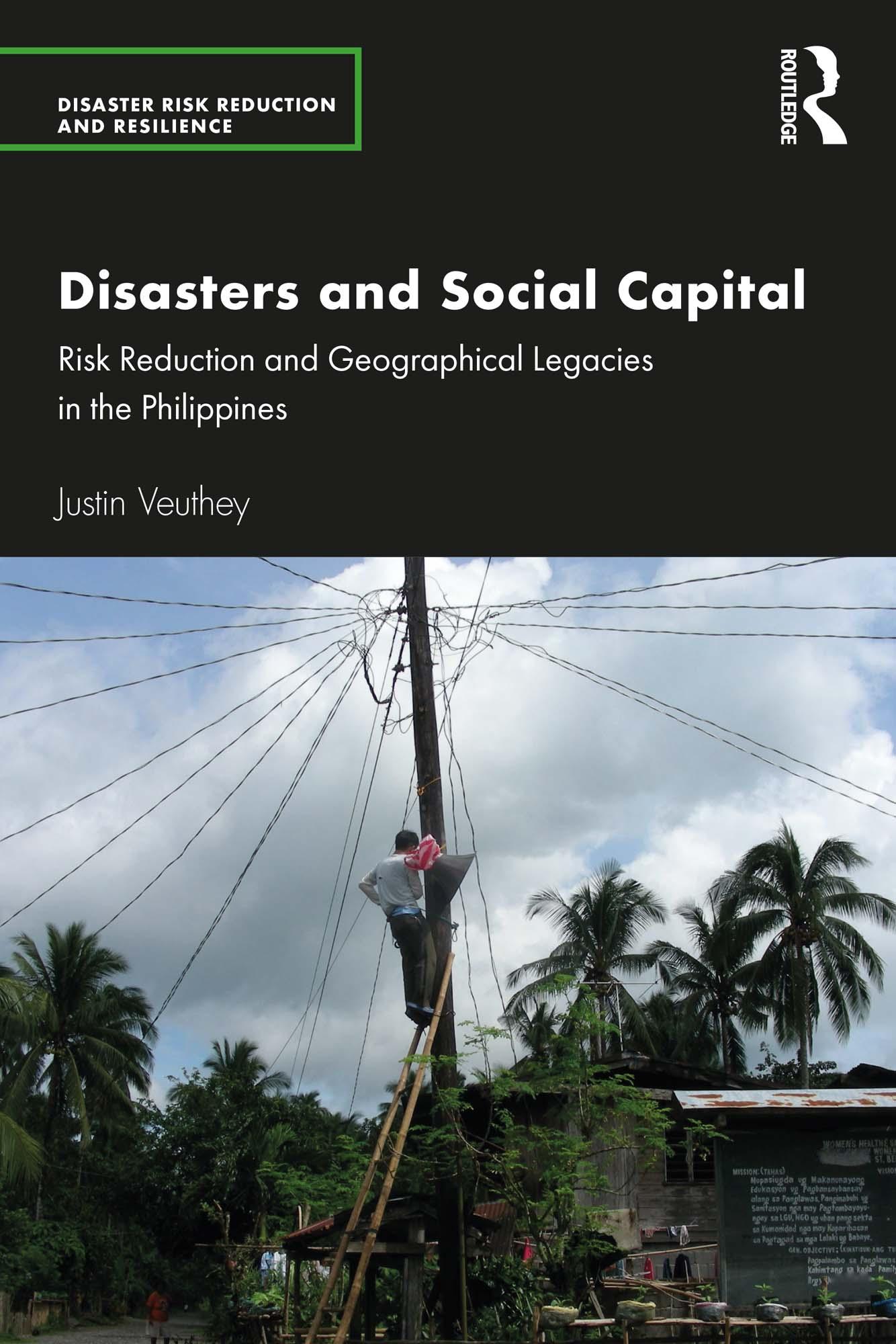
This book analyzes social capital and preparations for natural hazards in the Philippines. It emphasizes the importance of inequalities, contextualization, and scale, while also underlining the significance of historical and political contexts to better understand social dynamics. Social capital continues to be a debated concept, but it can be useful for thinking about how human societies interact with natural hazards. This book contributes to the growing scientific inquiries which have begun to address the connections between social capital and “natural” disasters. Chapters explore the links between these two fields of knowledge by analyzing the Filipino situation in general, as well as detailing a specific case study of a rural municipality in the Eastern Visayas region. The book’s central argument is that economic inequality is detrimental to social capital which then has negative repercussions on preparing for natural hazards. In an analysis at several geographical scales, Justin shows how inequality, via social capital, makes societies more at risk of having natural hazards turn into disasters. The book argues that a cautious use of the concept of social capital, which is cognizant of the historical and geographical complexities of the context it is applied to, has the potential to improve the way people collectively prevent hazards from turning into disasters. It is essential reading for students, scholars, disaster risk management practitioners, policymakers, and anyone seeking to understand the complexities of climate change, inequality, and crisis resilience.
Payez facilement par carte, Klarna, Apple Pay ou Google Pay. Pas satisfait ? Vous avez toujours une garantie de remboursement de 14 jours. En savoir plus dans nos conditions. Si vous avez des questions, envoyez-nous un e-mail à hello@memmo.org.
Memmo facilite tes études, où que tu sois dans le monde. On rassemble tes manuels de cours et des outils d'étude intelligents au même endroit : résumés, quiz, podcasts et flashcards. Et il y a Ted, ton compagnon d'étude qui répond à toutes tes questions. Plus de 50 000 étudiants étudient déjà ici – conçu pour t'aider à apprendre plus vite et à moins stresser.