
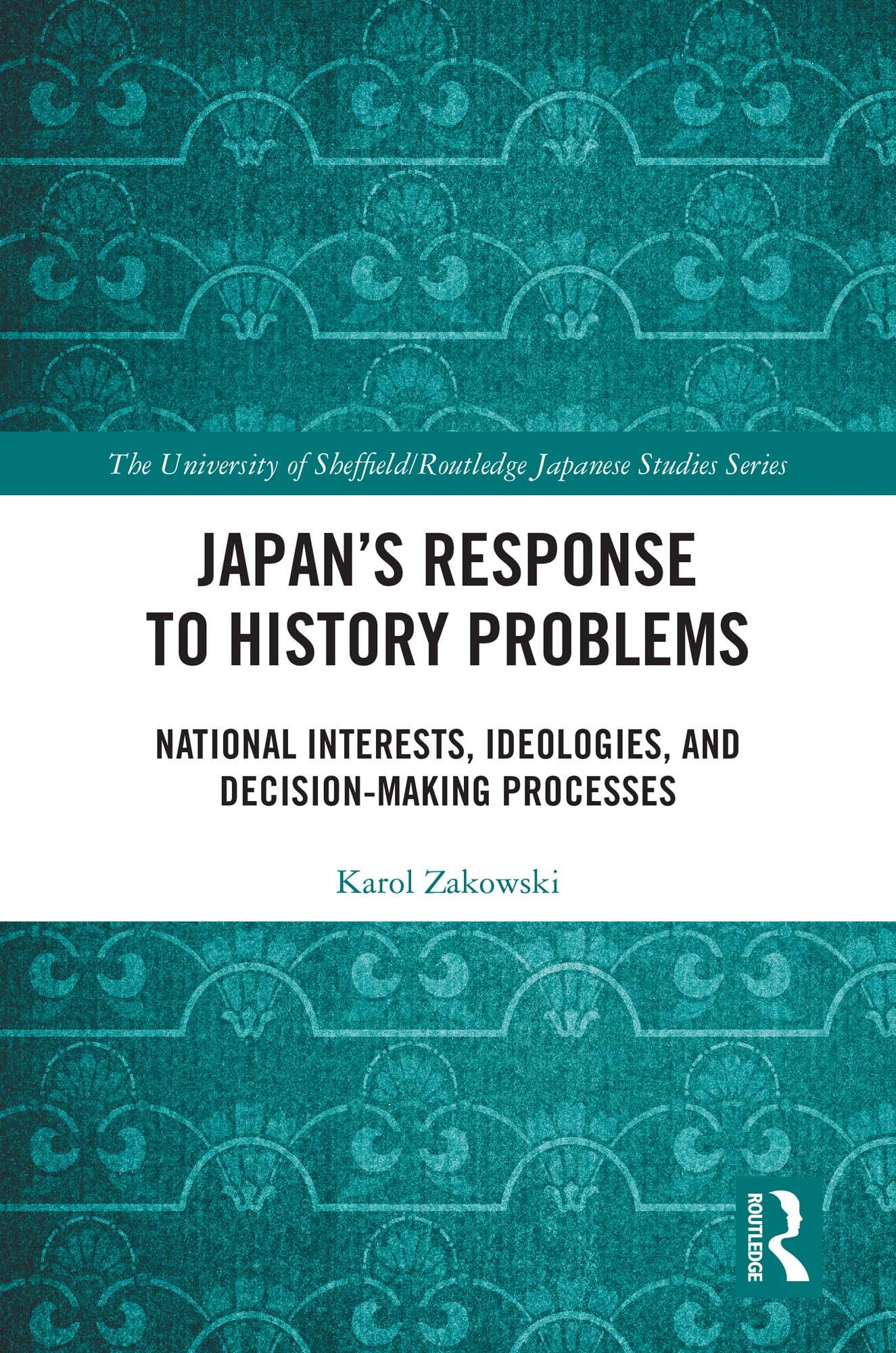
This book examines the decision-making processes behind the formulation and evolution of the Japanese government’s official stance regarding diplomatic problems connected with the history of Japan’s territorial expansionism in East Asia.
Based on neoclassical realism and historical institutionalism, this book analyzes to what extent Japan’s reaction to history problems complied with external pressures and to what extent it was modified by domestic-level variables. Particular attention is paid to the ideological leanings of key decision makers as well as their position against veto players, such as ruling party decision-making bodies, Liberal Democratic Party (LDP) factions, cabinet members, coalition parties, and ministerial bureaucrats. Through four case studies – apologies for the war of aggression, a history textbook screening system, prime ministerial visits to the Yasukuni Shrine, and the “comfort women” issue – it reveals which institutional actors formulated an initial response to issues of history, under what political circumstances Japan’s official stance on history problems was shaped and institutionalized, and what methods were utilized by the revisionists to challenge the status quo.
Exploring path-dependent processes that led to the formulation of a compromise in the Japanese government, this book will appeal to students and scholars of Japanese Politics, Asian Studies, International Studies, and Political Science.
Payez facilement par carte, Klarna, Apple Pay ou Google Pay. Pas satisfait ? Vous avez toujours une garantie de remboursement de 14 jours. En savoir plus dans nos conditions. Si vous avez des questions, envoyez-nous un e-mail à hello@memmo.org.
Memmo facilite tes études, où que tu sois dans le monde. On rassemble tes manuels de cours et des outils d'étude intelligents au même endroit : résumés, quiz, podcasts et flashcards. Et il y a Ted, ton compagnon d'étude qui répond à toutes tes questions. Plus de 50 000 étudiants étudient déjà ici – conçu pour t'aider à apprendre plus vite et à moins stresser.