
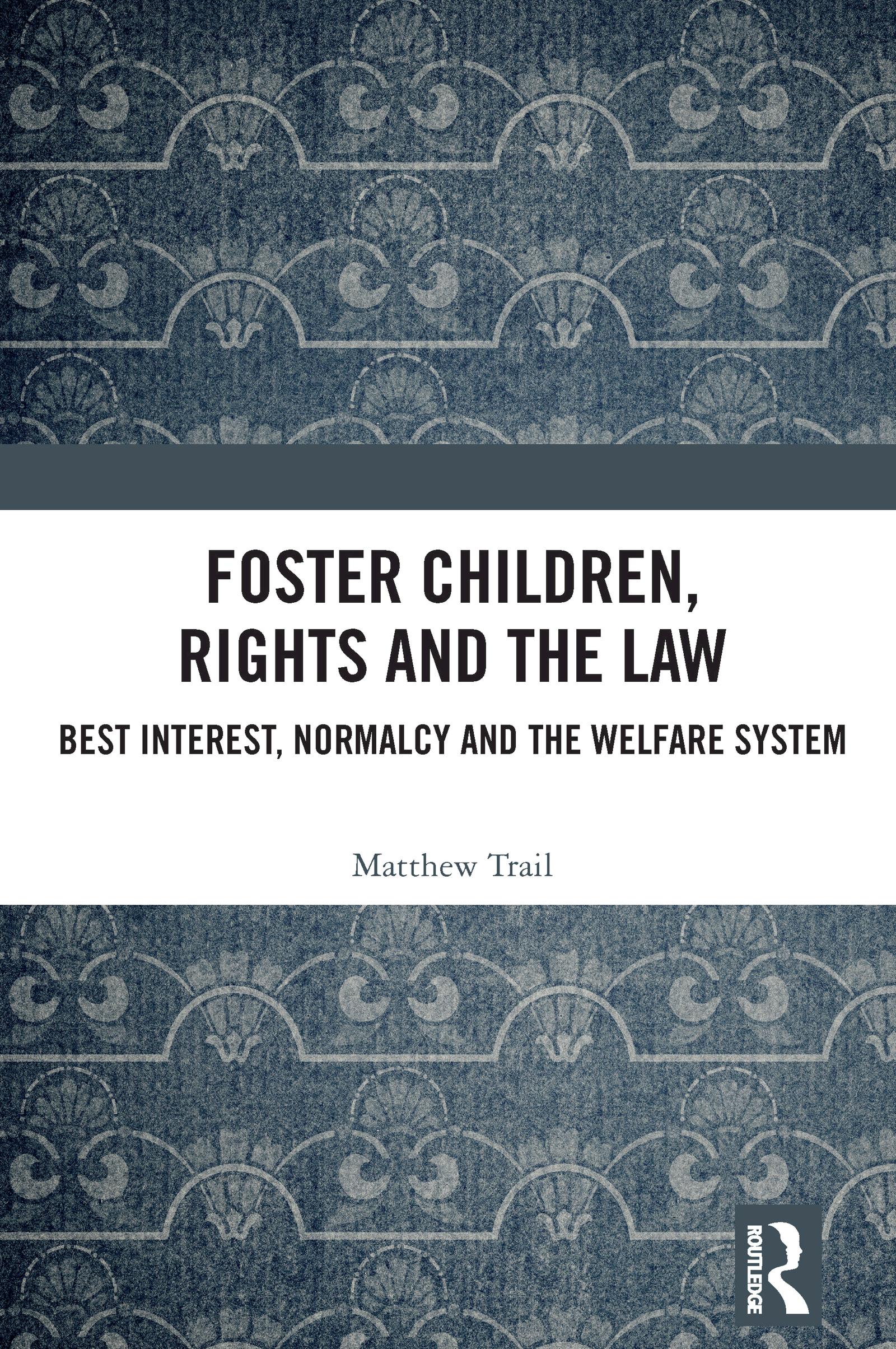
This book discusses child wishes, rights and participation in the foster care system. Making decisions in a foster child’s best interest is a widely used, but also widely criticized international legal doctrine. This work discusses the two major legal frameworks, best interest and normalcy, for which foster care decisions are made and how those frameworks might shape how child welfare professionals view and interpret children’s rights and participation. Normalcy, the idea that decisions should promote a “normal” life, is a separate legal doctrine which can be in conflict with best interest determinations. However, the concept of normalcy is also theoretically built into best interest decisions and therefore also plays a role in most child welfare systems. Mixing both empirical legal and child welfare research, the book demonstrates the ways in which risk aversion and fear drive best interest decision-making to the detriment of both practitioners and the children they aim to serve. It argues that a children’s rights framework starting with normalcy is a better tool for promoting child participation and centering the child within the dependency process. The book will be of interest to academics, researchers and policymakers working in the areas of children’s rights law, child welfare and international human rights law.
Payez facilement par carte, Klarna, Apple Pay ou Google Pay. Pas satisfait ? Vous avez toujours une garantie de remboursement de 14 jours. En savoir plus dans nos conditions. Si vous avez des questions, envoyez-nous un e-mail à hello@memmo.org.
Memmo facilite tes études, où que tu sois dans le monde. On rassemble tes manuels de cours et des outils d'étude intelligents au même endroit : résumés, quiz, podcasts et flashcards. Et il y a Ted, ton compagnon d'étude qui répond à toutes tes questions. Plus de 50 000 étudiants étudient déjà ici – conçu pour t'aider à apprendre plus vite et à moins stresser.