
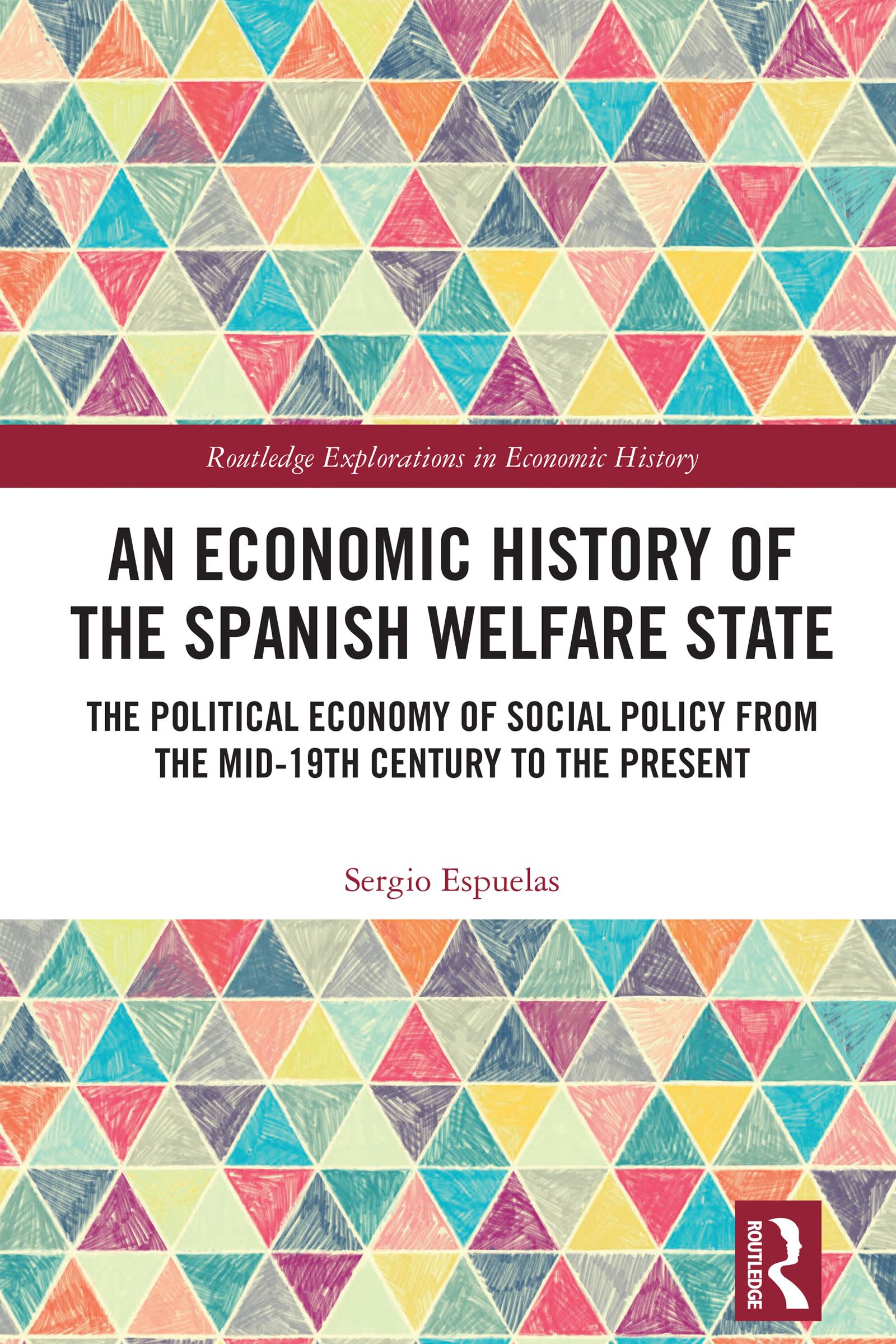
This monograph analyses the evolution of the welfare state in Spain from qualitative and quantitative perspectives. It basically relies on estimates of public social spending from 1850 to the present and offers comparisons with the rest of Europe.
As a whole, the volume sheds light on the historical, political, and economic conditions at play during the relatively late development of the Spanish welfare state. Three key driving factors are explored: the political regime, social inequality, and Spain’s exposure to international markets. While economic backwardness and demographic factors explain part of the story, Espuelas demonstrates that inequality explains much of the pre-1936 gap; the lack of democracy and the Franco dictatorship were crucial up to the 1970s, and globalization, rather than having a clear positive or negative effect, has mainly influenced the way social policy is financed.
This volume will be of interest to advanced students and researchers of economic history, welfare states, European history, and social policy.
Payez facilement par carte, Klarna, Apple Pay ou Google Pay. Pas satisfait ? Vous avez toujours une garantie de remboursement de 14 jours. En savoir plus dans nos conditions. Si vous avez des questions, envoyez-nous un e-mail à hello@memmo.org.
Memmo facilite tes études, où que tu sois dans le monde. On rassemble tes manuels de cours et des outils d'étude intelligents au même endroit : résumés, quiz, podcasts et flashcards. Et il y a Ted, ton compagnon d'étude qui répond à toutes tes questions. Plus de 50 000 étudiants étudient déjà ici – conçu pour t'aider à apprendre plus vite et à moins stresser.