
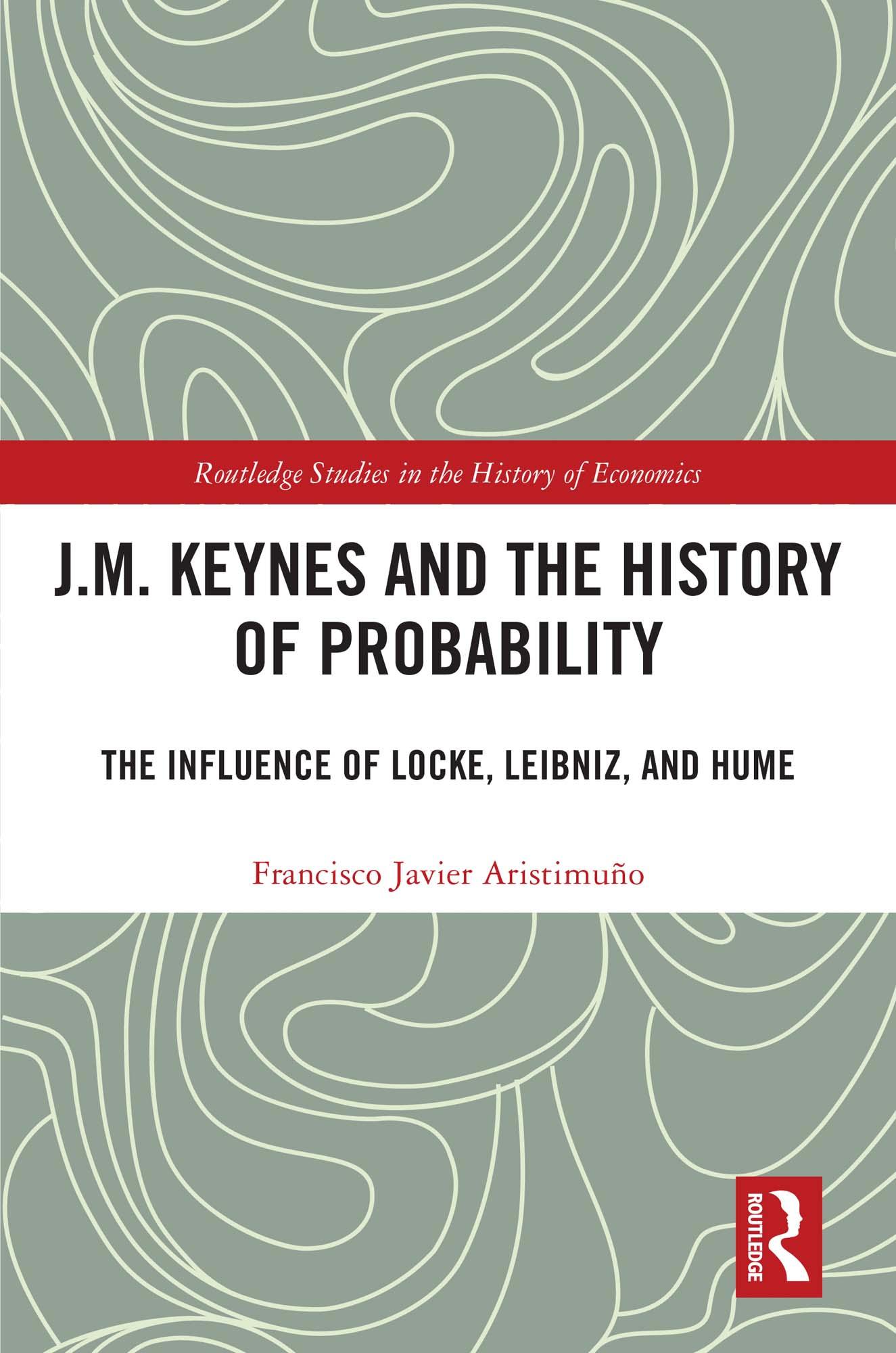
John Maynard Keynes is best known for his contributions to economics, yet he spent nearly two decades exploring the concept of probability. His extensive work culminated in A Treatise on Probability (1921), in which he developed a unique notion of probability that continues to divide scholars regarding its relevance to economic theory.
This book delves into the connections between Keynes’s ideas on probability and those of early Enlightenment philosophers, such as Locke, Leibniz, and Hume, who worked on probability before mathematicians claimed ownership over the subject. These authors framed probability as a substitute for knowledge when it is not available. Keynes extended these ideas and engaged directly with Hume on inductive reasoning, placing his concept of probability within a broader philosophical tradition. By tracing these Enlightenment roots, this book provides deeper insight into Keynes’s understanding of probability, clarifying some of the key differences with the subjective approach due to Ramsey and De Finetti. It also summarises the aspects on which probability theory and its corresponding notion of uncertainty are crucial for Keynes’s economic thought, particularly in his General Theory of Employment, Interest and Money.
This book is addressed to readers interested in the philosophy of probability and offers economists a fuller understanding of Keynes’s intellectual framework.
Payez facilement par carte, Klarna, Apple Pay ou Google Pay. Pas satisfait ? Vous avez toujours une garantie de remboursement de 14 jours. En savoir plus dans nos conditions. Si vous avez des questions, envoyez-nous un e-mail à hello@memmo.org.
Memmo facilite tes études, où que tu sois dans le monde. On rassemble tes manuels de cours et des outils d'étude intelligents au même endroit : résumés, quiz, podcasts et flashcards. Et il y a Ted, ton compagnon d'étude qui répond à toutes tes questions. Plus de 50 000 étudiants étudient déjà ici – conçu pour t'aider à apprendre plus vite et à moins stresser.