
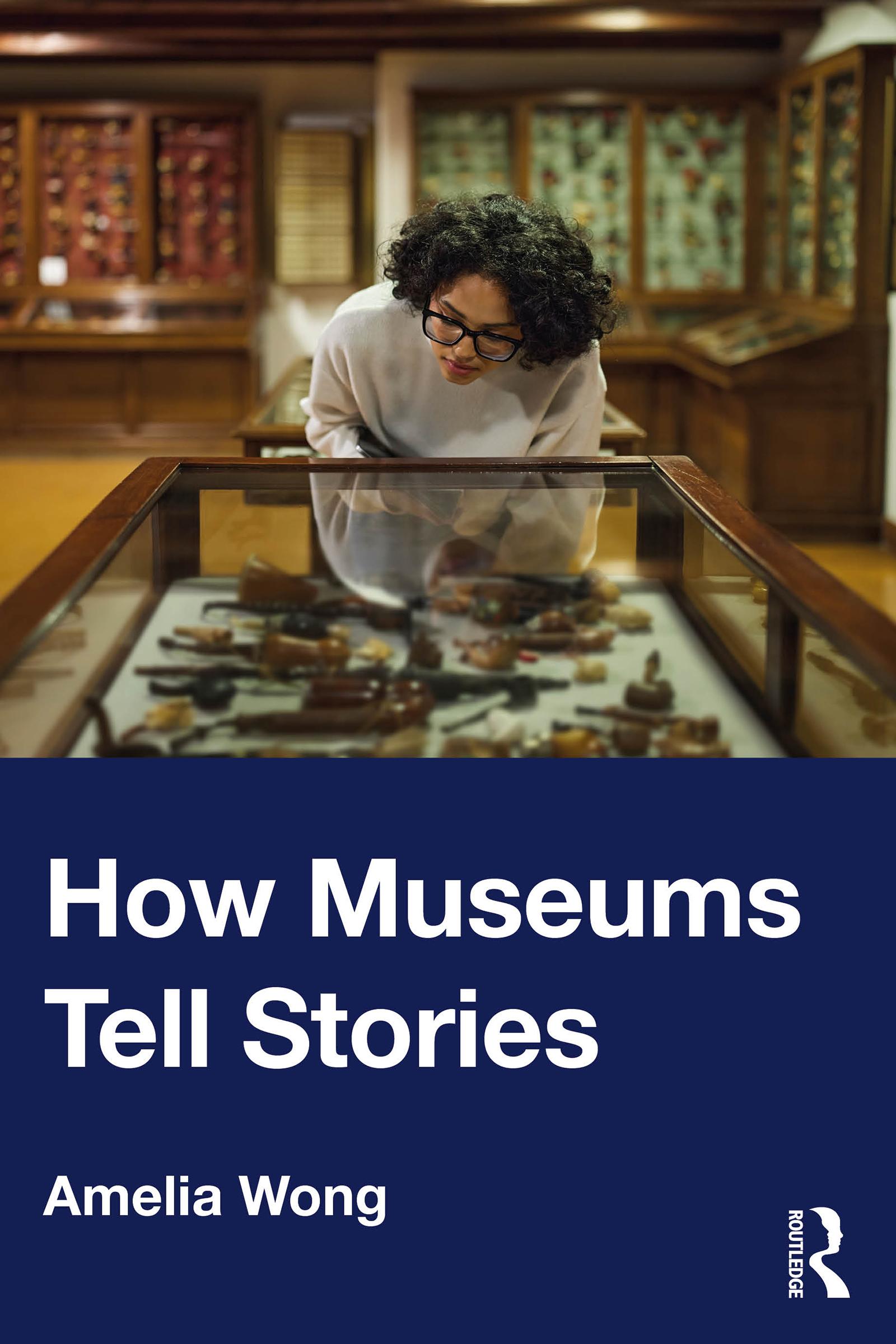
How Museums Tell Stories explains how museums “work” as a form of media that narrates stories intentionally and unintentionally.
Story—in life and in museums—is a phenomenon that emerges as people perceive, represent, and interpret the qualities of tellability and narrativity in relation to stimuli. Tellability is noteworthiness: it attracts our attention. Narrativity is a set of elements that enables us to perceive a story is being or could be told. The book discusses how and why these qualities are so present in museums, and how they enable physical institutions to tell stories in many forms, at many scales, in many styles of representation, and to varying degrees. Drawing on conceptions of narrative from literary theory, film, psychology, and cognitive science, Wong offers a shared vocabulary for understanding and analyzing how story manifests in museums at the level of objects, collections, exhibitions, and space.
How Museums Tell Stories will be essential reading for researchers and students interested in how and why museums engage audiences, as well as museum and cultural heritage practitioners seeking concepts and analytical tools for approaching and evaluating their work more critically and conscientiously.
Payez facilement par carte, Klarna, Apple Pay ou Google Pay. Pas satisfait ? Vous avez toujours une garantie de remboursement de 14 jours. En savoir plus dans nos conditions. Si vous avez des questions, envoyez-nous un e-mail à hello@memmo.org.
Memmo facilite tes études, où que tu sois dans le monde. On rassemble tes manuels de cours et des outils d'étude intelligents au même endroit : résumés, quiz, podcasts et flashcards. Et il y a Ted, ton compagnon d'étude qui répond à toutes tes questions. Plus de 50 000 étudiants étudient déjà ici – conçu pour t'aider à apprendre plus vite et à moins stresser.