
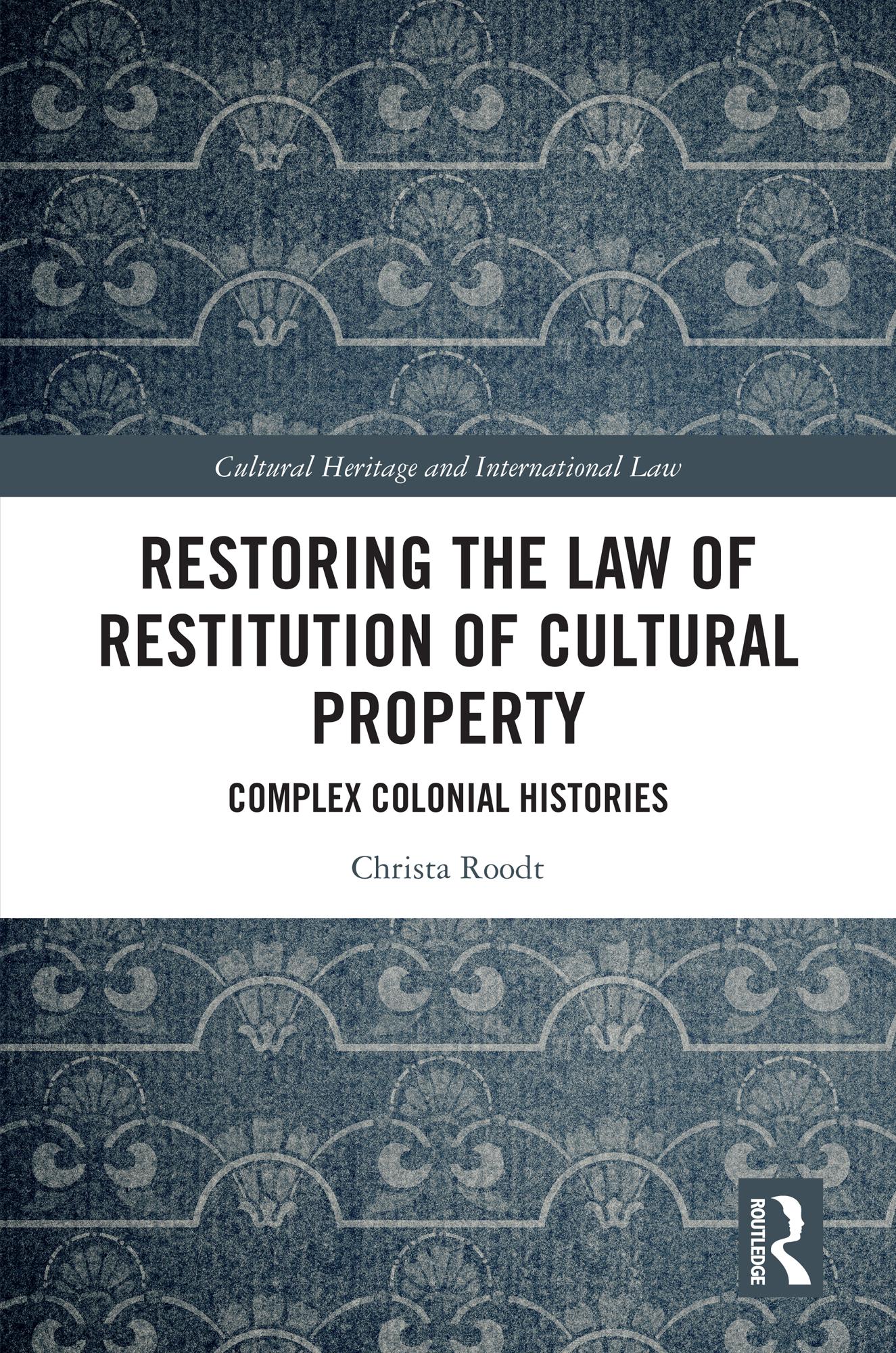
This groundbreaking book covers the restoration of the law of restitution of cultural property, matching the time, space, and depth dimensions of the law with the time, space, and ontology of events that violated persons and desecrated their heritage in the colonial era.
Using the contested ownership of the Parthenon Sculptures and the Zhanggong Zushi mummy encased in a Buddha statue as the main points of orientation, the book shows how the law of restitution could be ‘defragmented’ and ‘restored’ in respect of claims for the return of colonial-era and Indigenous cultural property disputes. The study argues that the secondary legal norms and common arguments of Private International Law can unlock governance functions and strategies that counter the effects of the narrow definition of the ‘sacred’ and the consistent refusal to consider an alternative chronosophy in restitution claims. When called upon to resist the detrimental effects of the mimetic dynamic in complex colonial contexts, the law stands to benefit from a legal-theoretical perspective that views law in relation to ethics and considers Private International Law, a model of ethics.
The book will be of interest to researchers in the field of cultural property law, heritage studies, Indigenous law, provenance, and applied ethics.
Payez facilement par carte, Klarna, Apple Pay ou Google Pay. Pas satisfait ? Vous avez toujours une garantie de remboursement de 14 jours. En savoir plus dans nos conditions. Si vous avez des questions, envoyez-nous un e-mail à hello@memmo.org.
Memmo facilite tes études, où que tu sois dans le monde. On rassemble tes manuels de cours et des outils d'étude intelligents au même endroit : résumés, quiz, podcasts et flashcards. Et il y a Ted, ton compagnon d'étude qui répond à toutes tes questions. Plus de 50 000 étudiants étudient déjà ici – conçu pour t'aider à apprendre plus vite et à moins stresser.