
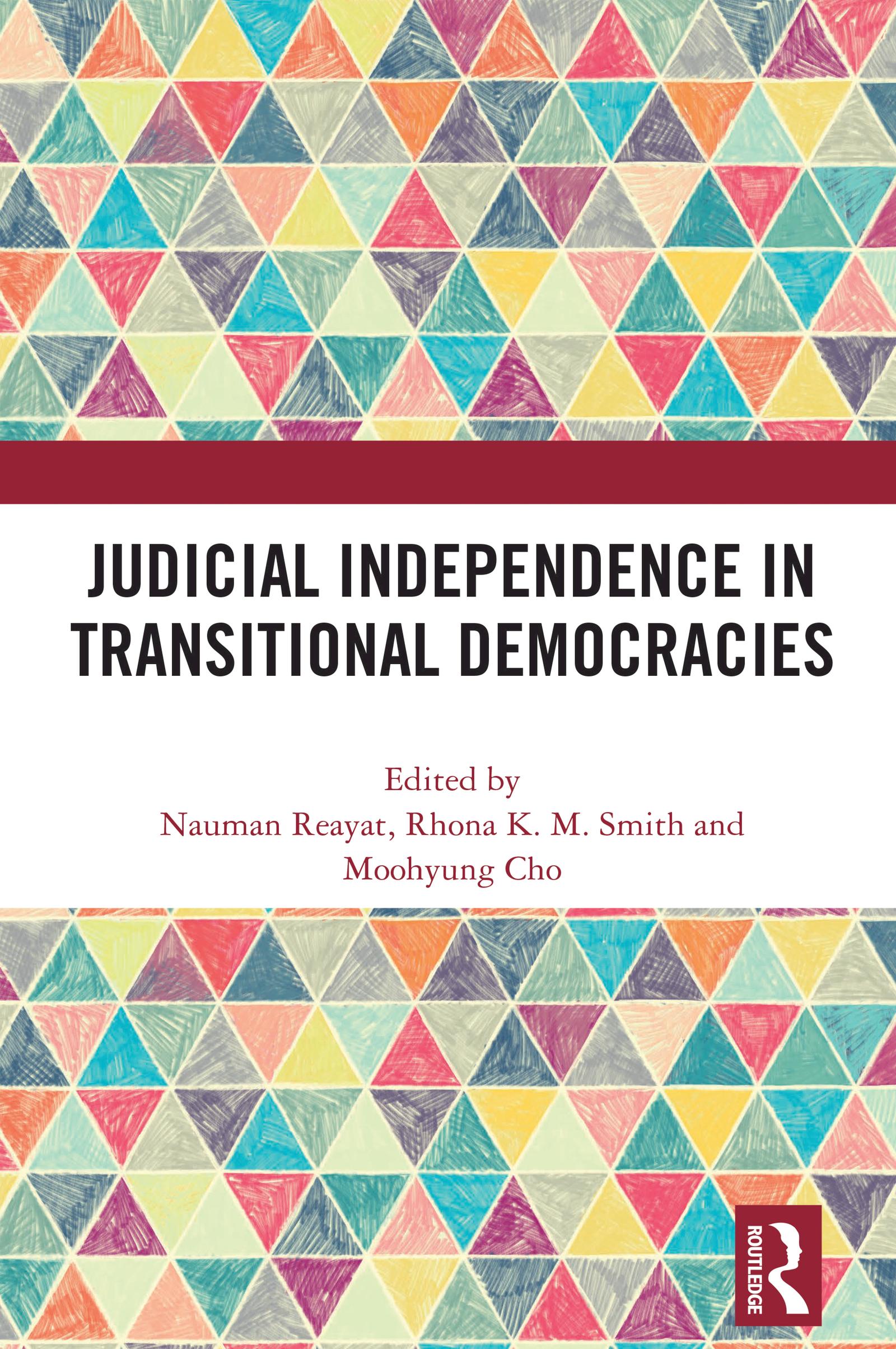
This book presents interdisciplinary and comparative analyses of judicial independence in transitional democracies across Asia, Latin America, Eastern Europe, the Middle East, and Africa. Although judicial empowerment and independence in transitional democracies have gained both academic and real-world prominence in recent decades, an ongoing debate persists regarding the nature, scope, and determinants of judicial independence in transitional settings. Some transitional democracies successfully develop democracy and the rule of law with the sustained growth of judicial independence, whereas others grapple with substantial challenges and move more towards authoritarianism. This book examines factors that drive de jure and de facto judicial independence in transitional democracies and evaluates their relationship. In doing so, it identifies challenges and opportunities associated with developing judicial independence in transitional democracies. At the intersection of political science and law, the work will be a valuable resource for academics, researchers, and policymakers in constitutional law, constitutional politics, and human rights law.
Payez facilement par carte, Klarna, Apple Pay ou Google Pay. Pas satisfait ? Vous avez toujours une garantie de remboursement de 14 jours. En savoir plus dans nos conditions. Si vous avez des questions, envoyez-nous un e-mail à hello@memmo.org.
Memmo facilite tes études, où que tu sois dans le monde. On rassemble tes manuels de cours et des outils d'étude intelligents au même endroit : résumés, quiz, podcasts et flashcards. Et il y a Ted, ton compagnon d'étude qui répond à toutes tes questions. Plus de 50 000 étudiants étudient déjà ici – conçu pour t'aider à apprendre plus vite et à moins stresser.