
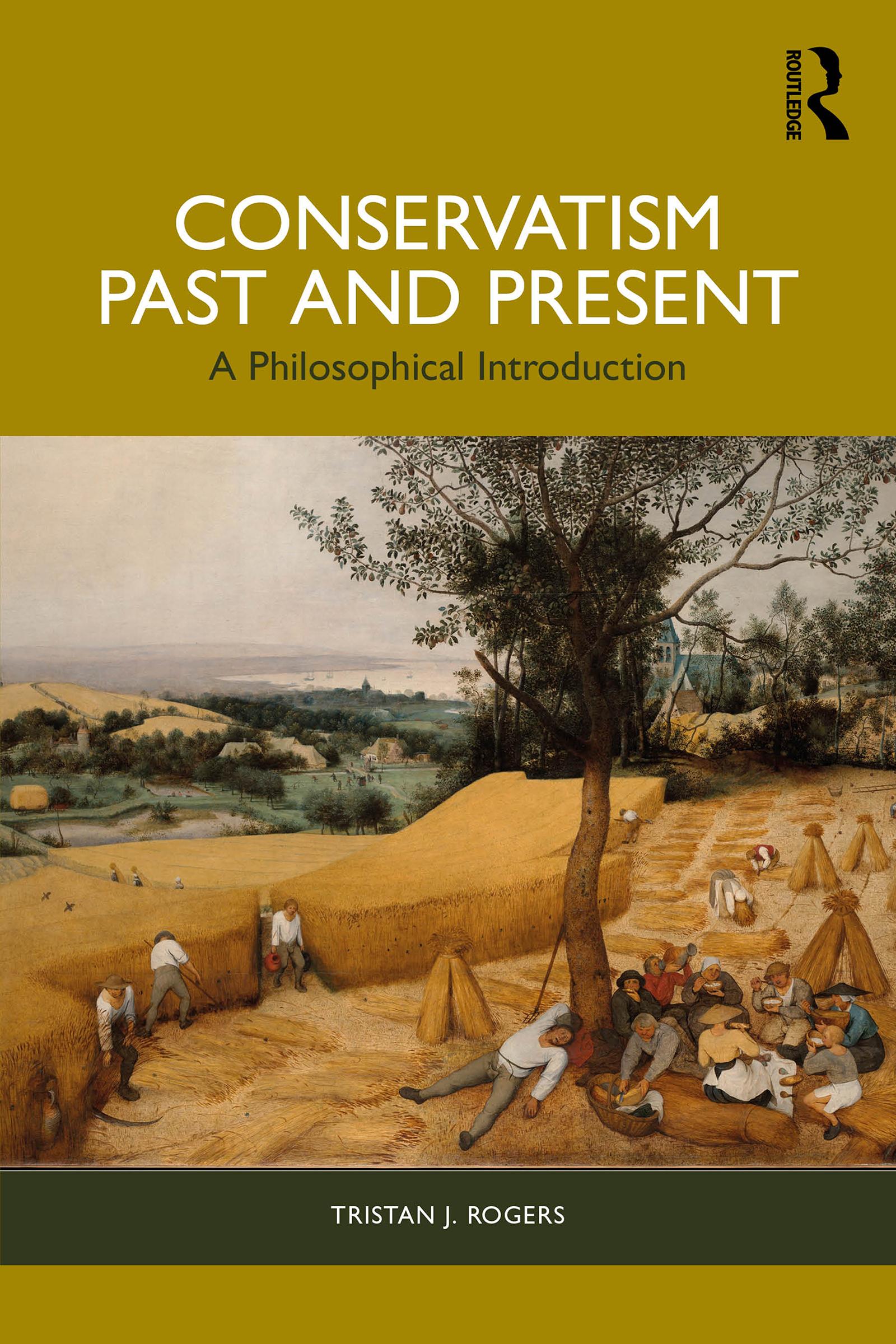
In Conservatism, Past and Present: A Philosophical Introduction, Tristan J. Rogers argues that philosophical conservatism is a coherent and compelling set of historically rooted ideas about conserving and promoting the human good. Part I, “Conservatism Past,” presents a history of conservative ideas, exploring themes, such as the search for wisdom, the limits of philosophy, reform in preference to revolution, the relationship between authority and freedom, and liberty as a living tradition. Major figures include Aristotle, Saint Thomas Aquinas, Edmund Burke, G.W.F. Hegel, and Roger Scruton. Part II, “Conservatism Present,” applies philosophical conservatism to contemporary conservative politics, focusing on issues such as nationalism, populism, the family, education, and responsibility.
Rogers shows that conservatism has been defined differently at different times: as a loose set of connected ideas reacting against the French Revolution; as a kind of disposition or instinct in favor of the status quo; and more recently as any ideas opposed to the political left. But he also allows a set of questions to guide his argument for conservatism’s merits: What is conservatism? Is it a coherent and attractive philosophy? What are conservatives for? And how is today’s conservatism related to its past? In his answers, Rogers paints a compelling and coherent picture of an aligned and attractive set of ideas.
Payez facilement par carte, Klarna, Apple Pay ou Google Pay. Pas satisfait ? Vous avez toujours une garantie de remboursement de 14 jours. En savoir plus dans nos conditions. Si vous avez des questions, envoyez-nous un e-mail à hello@memmo.org.
Memmo facilite tes études, où que tu sois dans le monde. On rassemble tes manuels de cours et des outils d'étude intelligents au même endroit : résumés, quiz, podcasts et flashcards. Et il y a Ted, ton compagnon d'étude qui répond à toutes tes questions. Plus de 50 000 étudiants étudient déjà ici – conçu pour t'aider à apprendre plus vite et à moins stresser.