
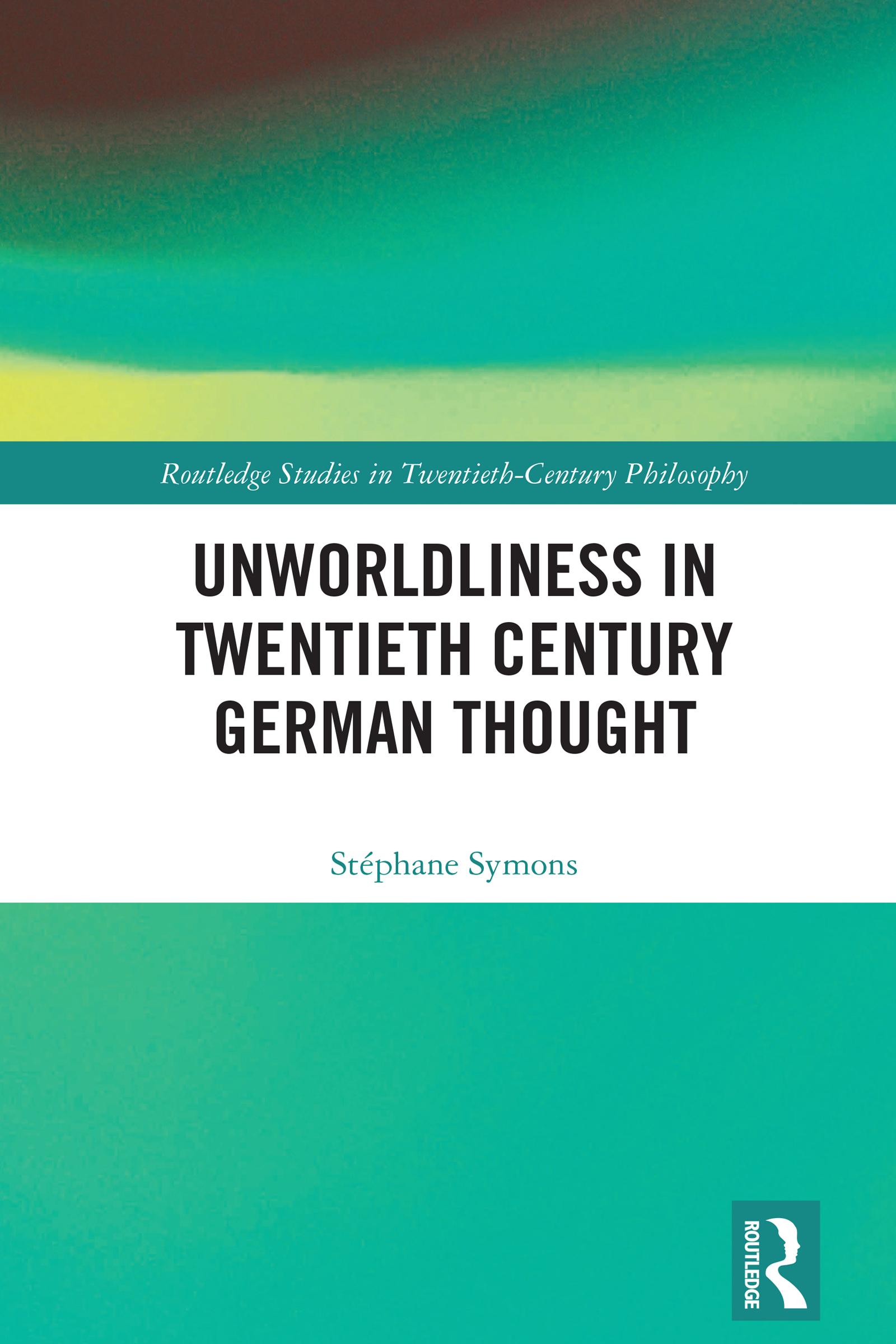
What happens when the world around us feels fragmented? How can a person continue to respond positively to their environment when it seems to have lost its internal coherence? These questions lie at the heart of this innovative interpretation of some of the most influential German philosophers of the twentieth century. The key figures in this study are the young Georg Lukács (1885–1971), Ernst Jünger (1895–1998), Ernst Bloch (1885–1977), Theodor Adorno (1903–1969), Max Kommerell (1902–1944), and Siegfried Kracauer (1889–1966).
By establishing an intellectual dialogue among these otherwise diverse thinkers, this study identifies a common interest: the question whether an unworldly, fragmented universe can nonetheless elicit a creative response from individuals. Together, these authors offer an alternative to what is considered the dominant trend in twentieth-century German philosophy: the phenomenological emphasis on humans' lived interactions with a shared and unified lifeworld. Special attention is given to six distinct interpretations of Miguel de Cervantes's novel Don Quixote and the unworldly actions of its main character.
Unworldliness in Twentieth Century German Thought will appeal to researchers and advanced students interested in twentieth-century continental philosophy, German intellectual history, critical theory, and literature and philosophy.
Payez facilement par carte, Klarna, Apple Pay ou Google Pay. Pas satisfait ? Vous avez toujours une garantie de remboursement de 14 jours. En savoir plus dans nos conditions. Si vous avez des questions, envoyez-nous un e-mail à hello@memmo.org.
Memmo facilite tes études, où que tu sois dans le monde. On rassemble tes manuels de cours et des outils d'étude intelligents au même endroit : résumés, quiz, podcasts et flashcards. Et il y a Ted, ton compagnon d'étude qui répond à toutes tes questions. Plus de 50 000 étudiants étudient déjà ici – conçu pour t'aider à apprendre plus vite et à moins stresser.