
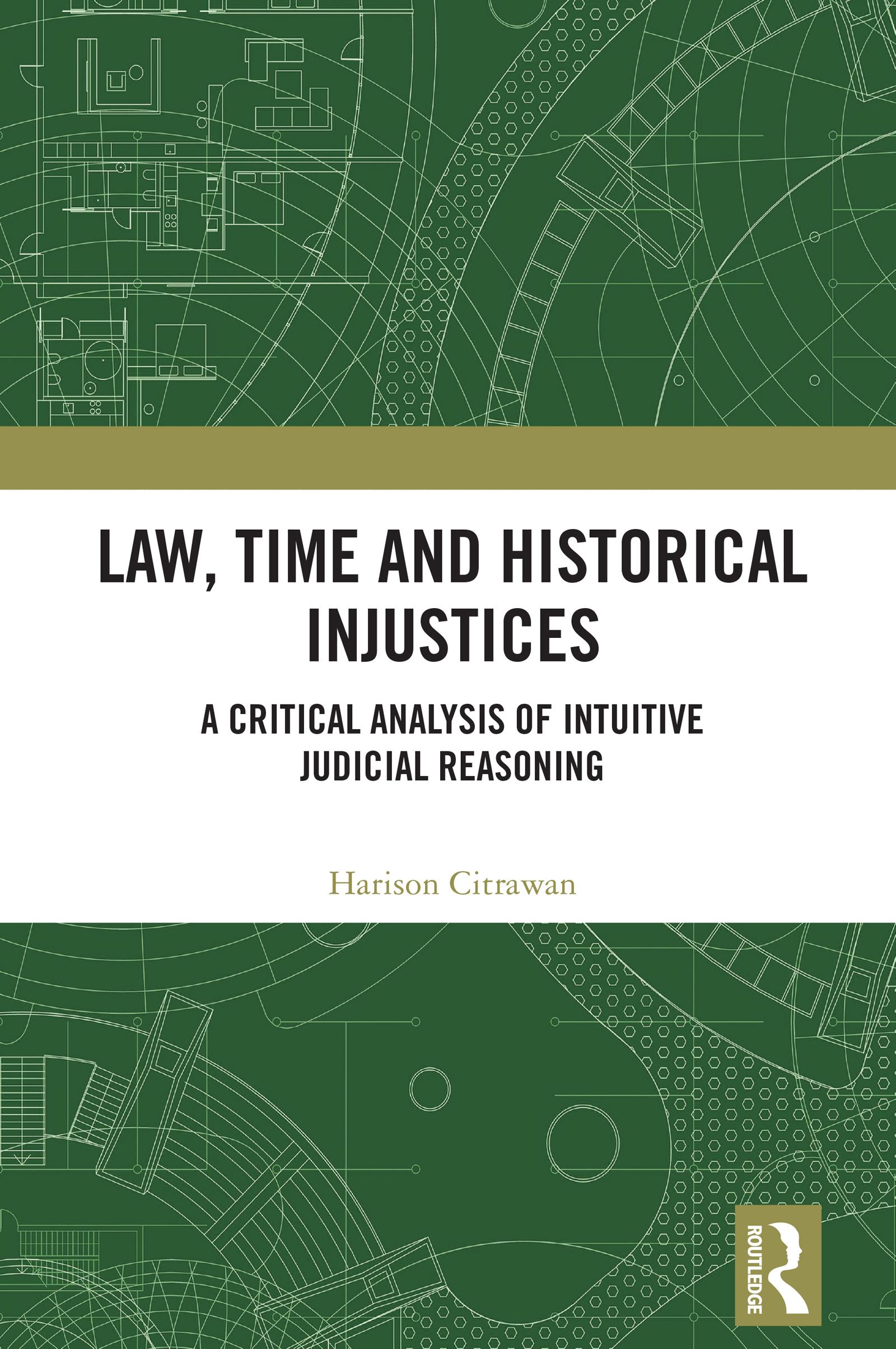
This book provides a critical assessment of how judges reason in the adjudication of historical injustices.
The practice of adjudication in historical cases of injustice require that, in determining collective responsibility, judges impart meaning to past injuries. This book analyses the narrative mechanisms through which this meaning is produced. Focusing on three areas of adjudication–racial discrimination, post-colonial extractivism and the climate crisis–the book’s analysis focuses on the issue of time. It considers the interplay of how historical injustice adjudication is shaped by temporal presuppositions and how it enacts a particular idea of temporality. As experiences of injustice are narrated, the book demonstrates how some of those experiences are included and others are excluded within the process of adjudication. Drawing on legal theory, legal epistemology and the philosophy of time, the book thus offers an instructive, and provocative, account of how collective responsibility is determined in cases of historical injustice.
This book will appeal to scholars working in the fields of legal theory, legal reasoning, socio-legal studies, comparative jurisprudence and transitional justice.
Payez facilement par carte, Klarna, Apple Pay ou Google Pay. Pas satisfait ? Vous avez toujours une garantie de remboursement de 14 jours. En savoir plus dans nos conditions. Si vous avez des questions, envoyez-nous un e-mail à hello@memmo.org.
Memmo facilite tes études, où que tu sois dans le monde. On rassemble tes manuels de cours et des outils d'étude intelligents au même endroit : résumés, quiz, podcasts et flashcards. Et il y a Ted, ton compagnon d'étude qui répond à toutes tes questions. Plus de 50 000 étudiants étudient déjà ici – conçu pour t'aider à apprendre plus vite et à moins stresser.