
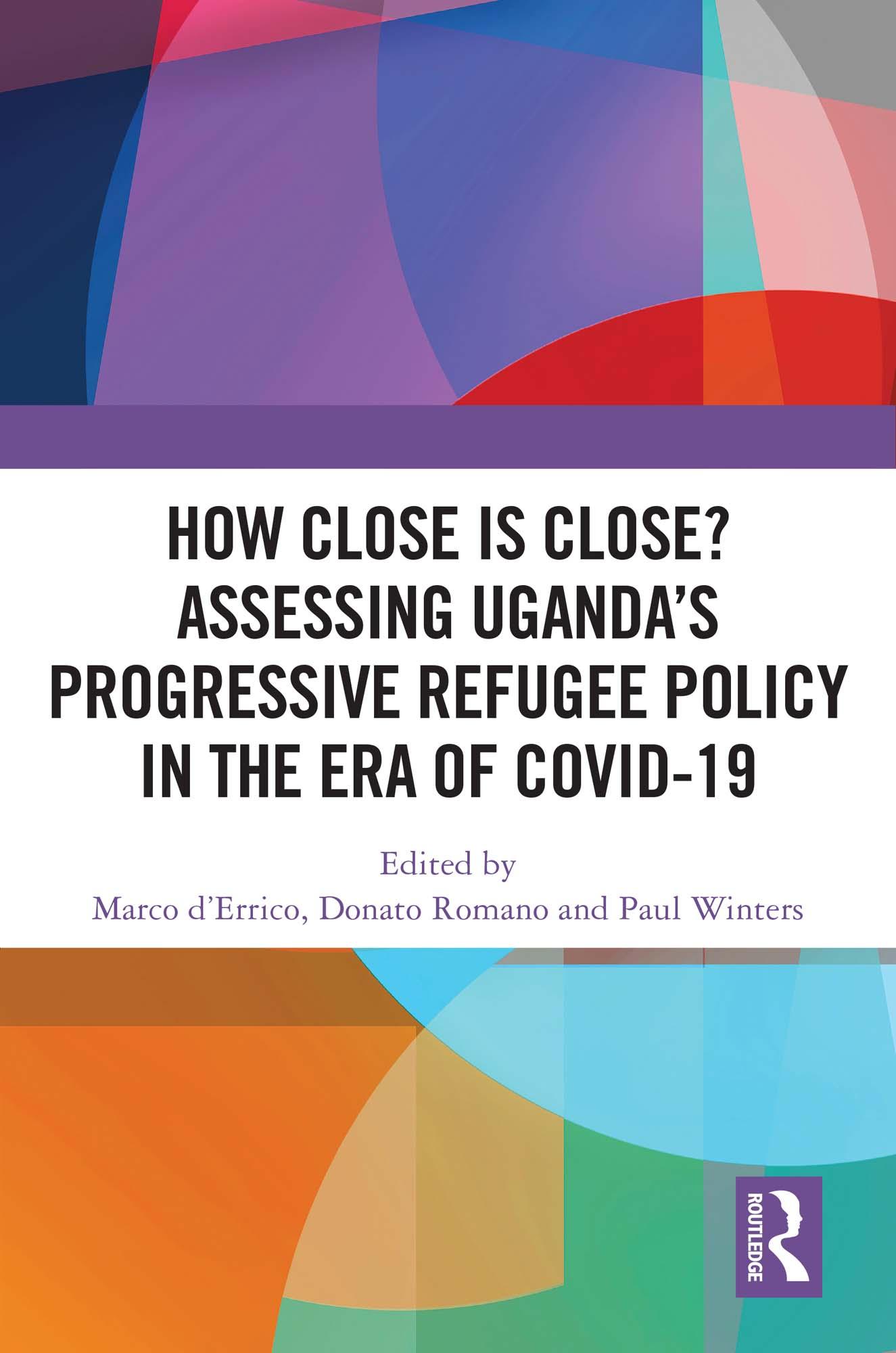
Uganda is home to 1.5 million refugees from DRC, Burundi, South Sudan and other countries. The Uganda political framework is one of the most progressive and inclusive toward refugees. Only a fraction of the refugees is likely to go back to their home countries. This book assesses Uganda’s progressive refugee policy with reference to how it functioned in the era of COVID-19 using a unique panel data collected between 2017 and 2021.
The Uganda Refugee Policy (2006) and the Refugee Regulations (2010) grant refugees wide-ranging rights that include allocating land for agriculture purposes, freedom of movement, and the right to seek employment. However, the magnitude and the speed of influx of refugees in recent years have posed critical challenges to the sustainability of these progressive policies. On top of this, unpredictable and unprecedented crises have emerged, such as COVID-19 and the Ukraine war, that have threatened food security and the resilience of livelihoods, value chains and food systems. The chapters in this book assess Uganda’s progressive refugee policy with reference to how it functioned in the era of COVID-19. They focus on the following three main areas: (i) the economic relationship and coexistence between host and refugees’ communities; (ii) the success and sustainability of the current model of assistance; and (iii) the response to COVID-19 on communities’ welfare and long-term prospects. Addressing these issues is possible due to a unique panel dataset of thirteen refugee settlements and neighbouring host communities specifically collected for these purposes.
Investigating the economic consequences of the integration between host and refugees’ communities and offering new evidence with specific reference to Uganda, this book will be a key resource for scholars, researchers and practitioners of development studies, African studies, economics, and sociology. It was originally published as a special issue of The Journal of Development Studies.
Payez facilement par carte, Klarna, Apple Pay ou Google Pay. Pas satisfait ? Vous avez toujours une garantie de remboursement de 14 jours. En savoir plus dans nos conditions. Si vous avez des questions, envoyez-nous un e-mail à hello@memmo.org.
Memmo facilite tes études, où que tu sois dans le monde. On rassemble tes manuels de cours et des outils d'étude intelligents au même endroit : résumés, quiz, podcasts et flashcards. Et il y a Ted, ton compagnon d'étude qui répond à toutes tes questions. Plus de 50 000 étudiants étudient déjà ici – conçu pour t'aider à apprendre plus vite et à moins stresser.