
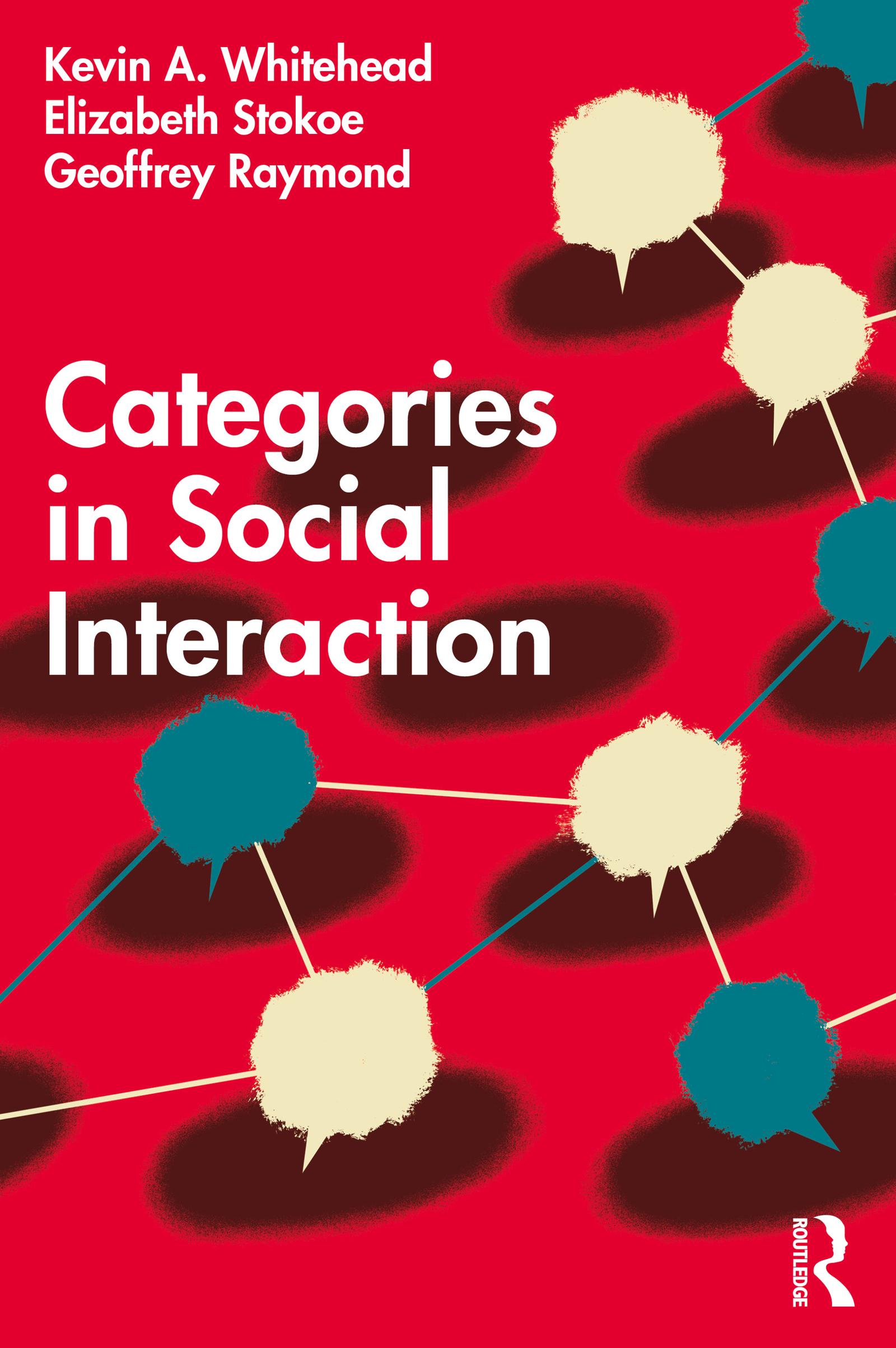
This book investigates the situated (re)production of categories, from the most mundane and unremarkable to those most strongly associated with power and privilege. By examining the reciprocal relationships between categorial phenomena and the basic structures and practices of social interaction, the book provides a new framework for integrating conversation analysis and membership categorization analysis.
Across its ten chapters, the book describes a conversation analytic approach to studying categories and categorization, charts the development and history of membership categorization analysis, and addresses core methodological challenges and practices associated with using this approach. After mapping out the new framework developed in the book, each chapter describes intersections between categorial phenomena and the domains that comprise the infrastructure of social interaction. The book concludes by exploring applications, interventions, and impacts of understanding categories in ways examined across the preceding chapters, and by considering future avenues for excavating categorial practices in the ordinary, institutional, and technological settings of human social life.
Categories in Social Interaction is essential reading for social scientists with an interest in categories of people and categorizing practices, and especially for practitioners and students of conversation analysis, membership categorization, ethnomethodology, and discursive psychology.
Payez facilement par carte, Klarna, Apple Pay ou Google Pay. Pas satisfait ? Vous avez toujours une garantie de remboursement de 14 jours. En savoir plus dans nos conditions. Si vous avez des questions, envoyez-nous un e-mail à hello@memmo.org.
Memmo facilite tes études, où que tu sois dans le monde. On rassemble tes manuels de cours et des outils d'étude intelligents au même endroit : résumés, quiz, podcasts et flashcards. Et il y a Ted, ton compagnon d'étude qui répond à toutes tes questions. Plus de 50 000 étudiants étudient déjà ici – conçu pour t'aider à apprendre plus vite et à moins stresser.