
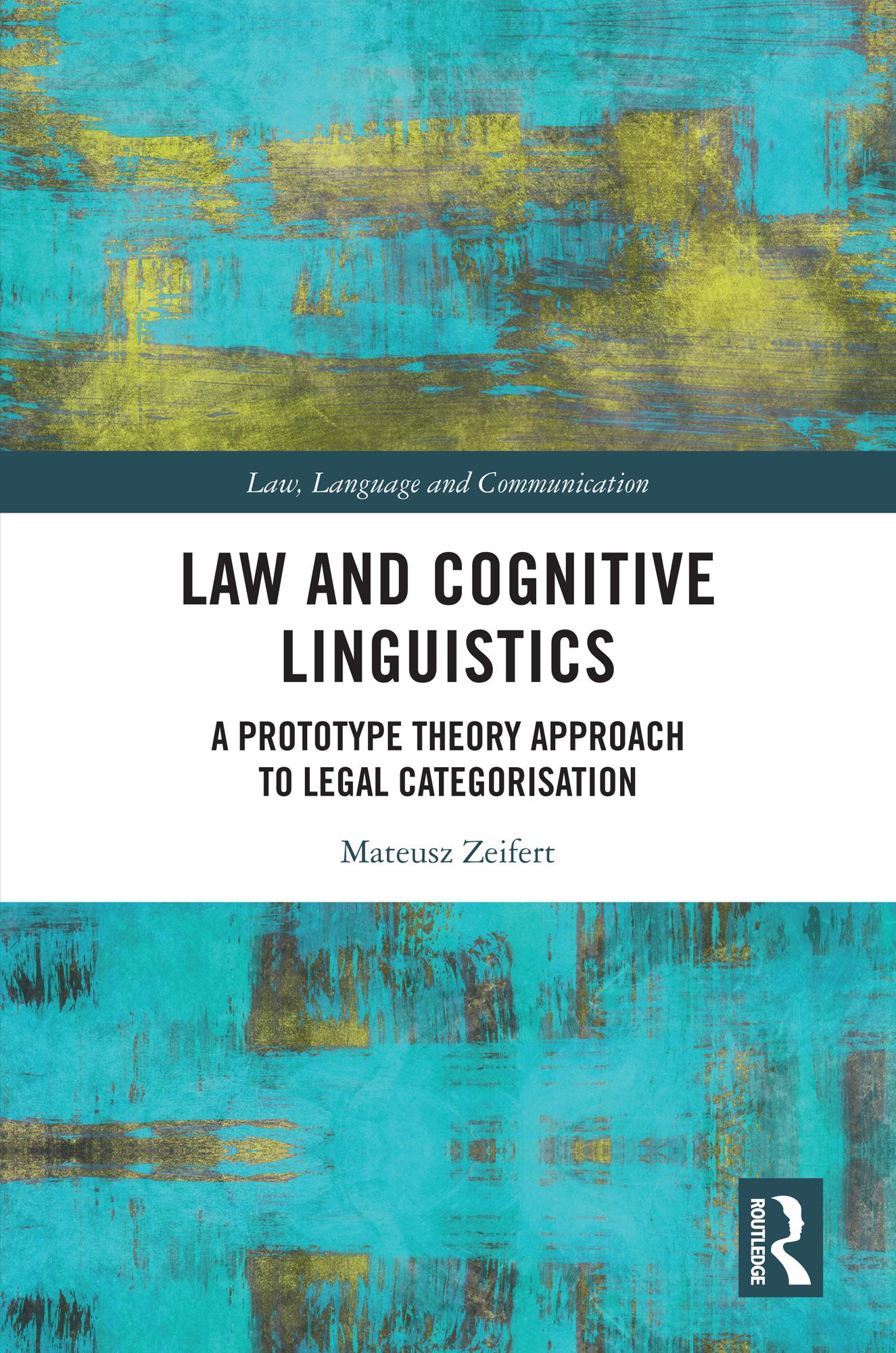
This book advances the prototype theory of categorisation within a legal context. The work adopts a multidisciplinary approach and draws on insights from cognitive psychology, cognitive linguistics, and analytic philosophy to discuss semantic problems present in law. Designed as a bridge between cognitive linguistics and legal theory, it argues that categorisation is a crucial cognitive operation for the application of law and that theories of categorisation are relevant to legal theory. It makes the case that the prototype approach is better suited than more formal approaches usually utilised in jurisprudence to explaining many familiar linguistic problems found in law, such as vagueness, polysemy, the flexibility of meaning, the generality of language, context dependence of meaning, linguistic indeterminacy, and so on. The book focuses on problems of semantic analysis in law, both in concrete cases, that is, particular cases before courts, and, at the theoretical level, on methods of statutory interpretation. It will be a valuable resource for academics and researchers working in the areas of Law and Language, Legal Theory, Legal Philosophy, and Legal Linguistics.
Payez facilement par carte, Klarna, Apple Pay ou Google Pay. Pas satisfait ? Vous avez toujours une garantie de remboursement de 14 jours. En savoir plus dans nos conditions. Si vous avez des questions, envoyez-nous un e-mail à hello@memmo.org.
Memmo facilite tes études, où que tu sois dans le monde. On rassemble tes manuels de cours et des outils d'étude intelligents au même endroit : résumés, quiz, podcasts et flashcards. Et il y a Ted, ton compagnon d'étude qui répond à toutes tes questions. Plus de 50 000 étudiants étudient déjà ici – conçu pour t'aider à apprendre plus vite et à moins stresser.