
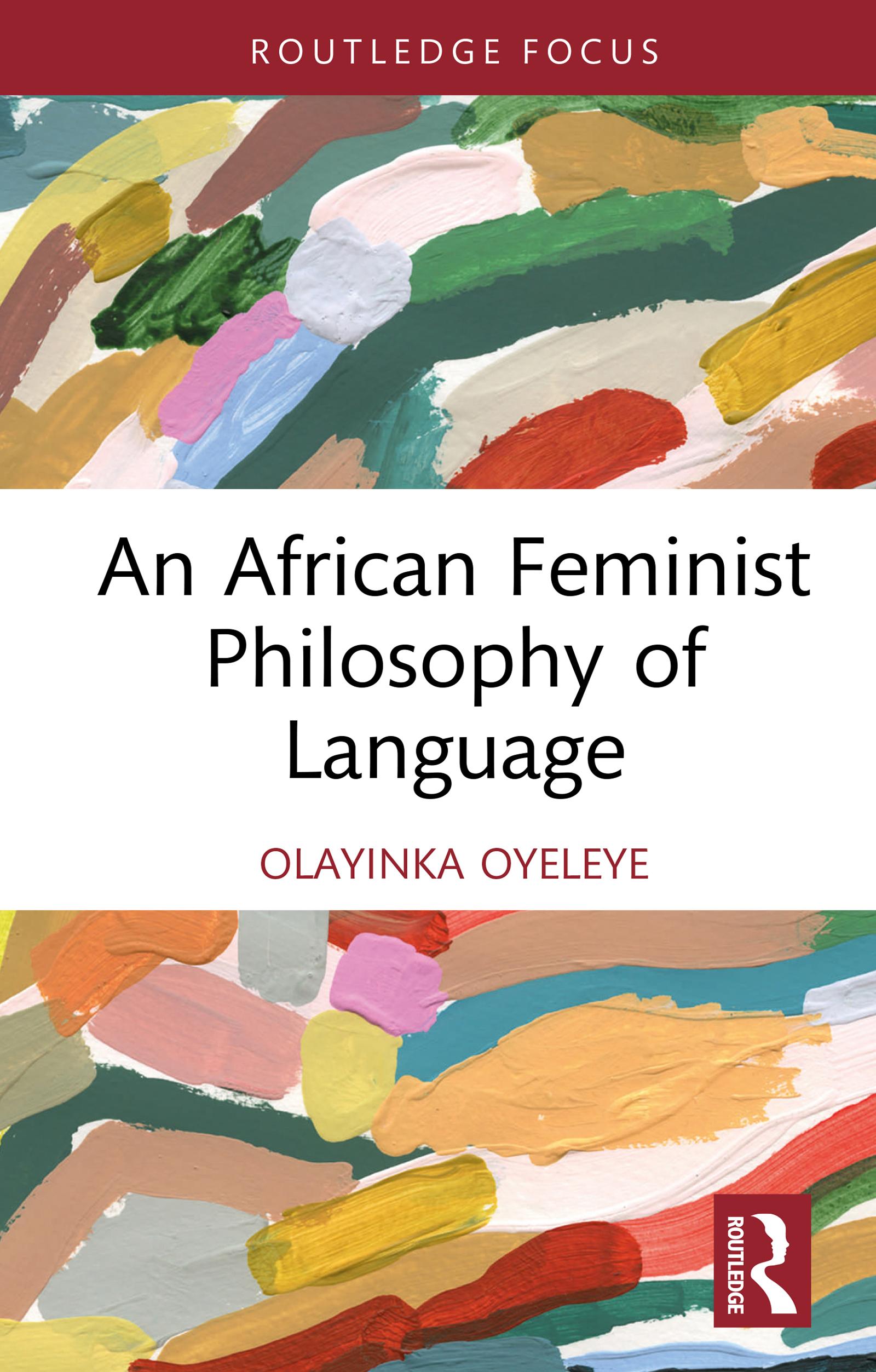
This book calls for the institution of an African feminist philosophy of language, challenging existing debates and encouraging a move away from the Western gaze.
The book begins with an analysis of the philosophical context of African feminism, and a call for the decolonization of epistemological discourse. Oyeleye then goes on to consider how indigenous patriarchies play out in the cultural reality of the Yorùbá in particular, ontologically unpacking the nature of woman as expressed in language, especially in myths and proverbs. Challenging the derogatory language found in proverbs which entrench patriarchal oppression, the author advocates for feminist postproverbials: new proverbs which draw on old traditions but reconstruct the space of woman in a new, egalitarian rhetorical tradition. The author concludes by outlining the conditions necessary for African feminist philosophers to consider language as a decolonizing space which can help to push through the agenda of social change.
This book will be an important resource for researchers from across the fields of gender and women studies, feminist philosophy, philosophy of language, cultural studies, and African studies.
Payez facilement par carte, Klarna, Apple Pay ou Google Pay. Pas satisfait ? Vous avez toujours une garantie de remboursement de 14 jours. En savoir plus dans nos conditions. Si vous avez des questions, envoyez-nous un e-mail à hello@memmo.org.
Memmo facilite tes études, où que tu sois dans le monde. On rassemble tes manuels de cours et des outils d'étude intelligents au même endroit : résumés, quiz, podcasts et flashcards. Et il y a Ted, ton compagnon d'étude qui répond à toutes tes questions. Plus de 50 000 étudiants étudient déjà ici – conçu pour t'aider à apprendre plus vite et à moins stresser.