
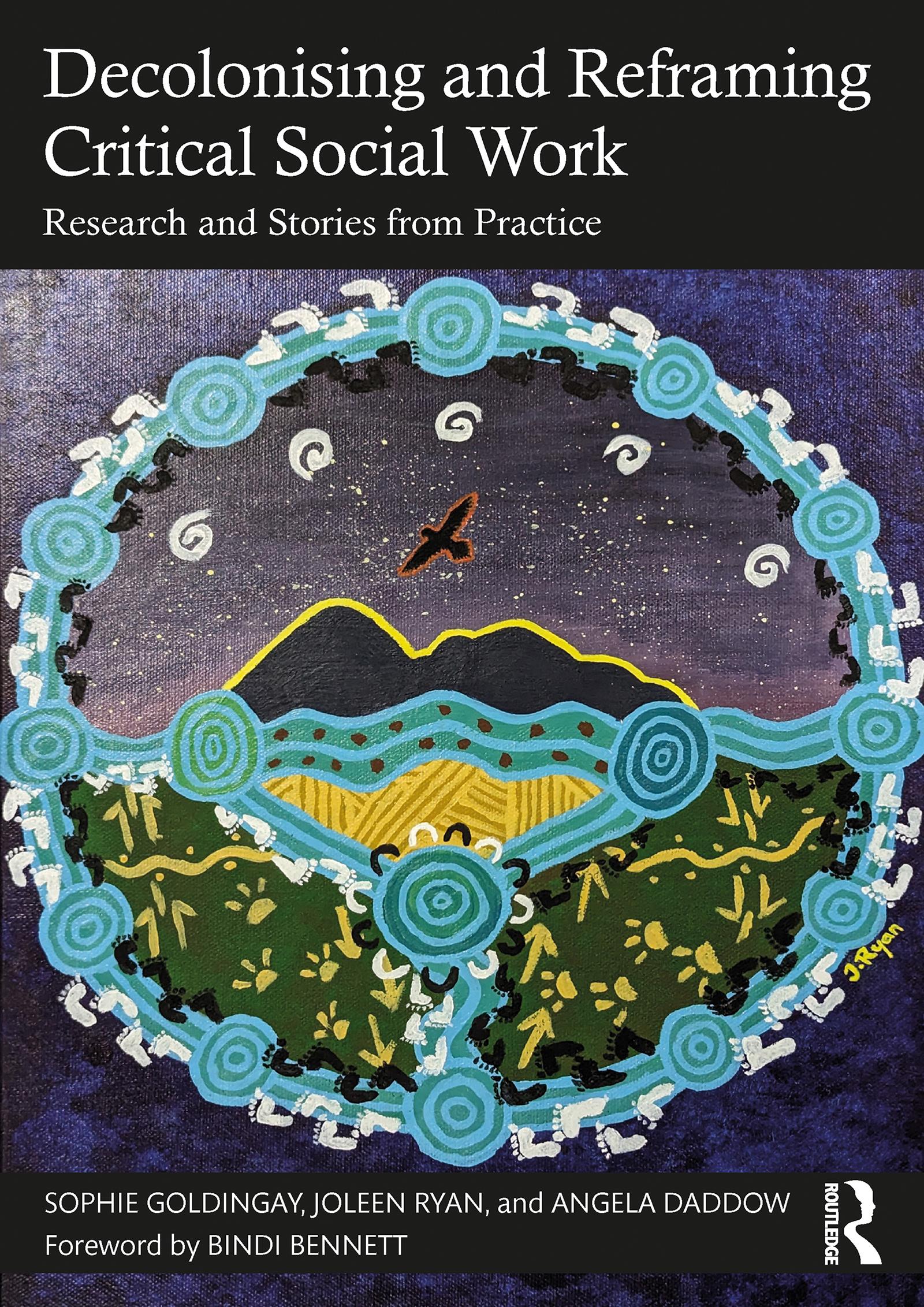
This book problematises and then reshapes critical social work to bring a range of perspectives to what constitutes truly effective and ethical social work practice, moving beyond binary oppositions (where two states or concepts are defined as opposite to each other) to create new words and concepts to be inclusive of a range of identities, practice contexts, and groups or communities of service users.
Currently, critical social work, derived from sociological critical theories proliferated in the 1960s, enjoys dominance as the theory that encompasses the ethical principles of social work in Australia. While on the surface critical social work appears to align with the Australian Association of Social Workers’ (AASW) ethical principles of social justice, professional integrity, and respect for persons, practitioners, and students alike find enacting it can be problematic in complex practice situations.
Reporting original research of cases from the field, the book focuses on the impact of intersectionality and shows new ways to address the nuance of othering and modern-day colonialism.
It will be of interest to researchers, practitioners, and students who are keen to engage with the latest in the field of critical social work and consider implications of this for the development of their own identity.
Payez facilement par carte, Klarna, Apple Pay ou Google Pay. Pas satisfait ? Vous avez toujours une garantie de remboursement de 14 jours. En savoir plus dans nos conditions. Si vous avez des questions, envoyez-nous un e-mail à hello@memmo.org.
Memmo facilite tes études, où que tu sois dans le monde. On rassemble tes manuels de cours et des outils d'étude intelligents au même endroit : résumés, quiz, podcasts et flashcards. Et il y a Ted, ton compagnon d'étude qui répond à toutes tes questions. Plus de 50 000 étudiants étudient déjà ici – conçu pour t'aider à apprendre plus vite et à moins stresser.