
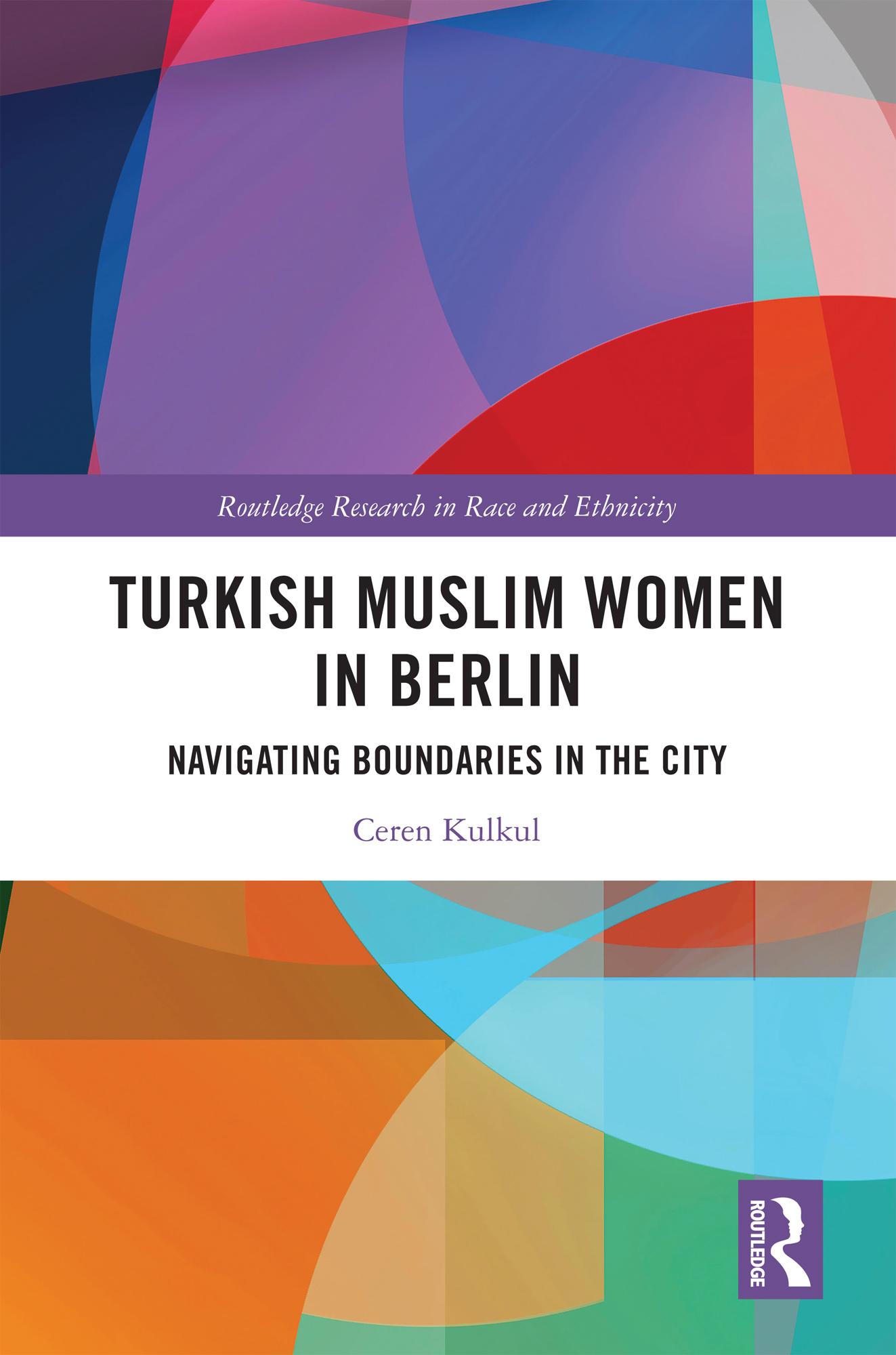
Kulkul presents her ethnographic work with Turkish Muslim women in Berlin as evidence that community is not an entity but is produced by instrumentalizing specific forms of identification and boundary-making.
In examining the role of community in the case of her participants, Kulkul finds that religion and culture are important not for the values they perpetuate, but for their role in forming and sustaining the community. She looks at the importance of boundaries and especially their reciprocity. Social boundaries are a set of codes of exclusion often used against migrants and refugees, while symbolic boundaries are typically understood as the way one defines one’s own group. Kulkul argues that these two types of boundaries tend to trigger each other and thus be mutually reinforcing. At the same time, she presents a picture of everyday life from the perspective of migrants and the children of migrants in a cosmopolitan European city – Berlin.
A valuable read for scholars of migration and culture, which will especially interest scholars focused on Europe.
Payez facilement par carte, Klarna, Apple Pay ou Google Pay. Pas satisfait ? Vous avez toujours une garantie de remboursement de 14 jours. En savoir plus dans nos conditions. Si vous avez des questions, envoyez-nous un e-mail à hello@memmo.org.
Memmo facilite tes études, où que tu sois dans le monde. On rassemble tes manuels de cours et des outils d'étude intelligents au même endroit : résumés, quiz, podcasts et flashcards. Et il y a Ted, ton compagnon d'étude qui répond à toutes tes questions. Plus de 50 000 étudiants étudient déjà ici – conçu pour t'aider à apprendre plus vite et à moins stresser.