
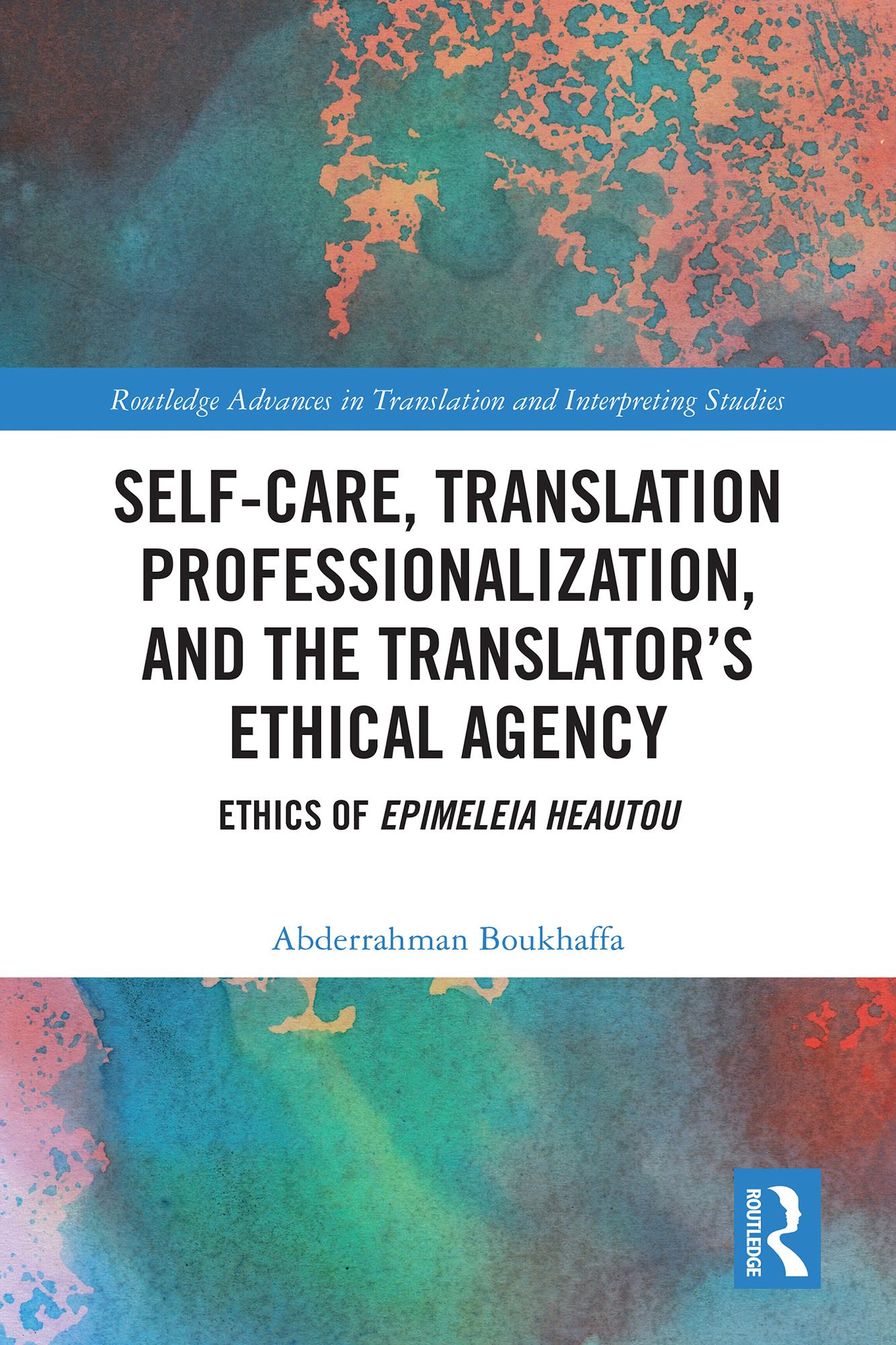
This book draws on an interdisciplinary approach to investigate the impact of codes of ethics as prescribed in translator organizations, proposing alternative ethical pathways grounded in self-care ethics to enhance translators’ symbolic recognition and ethical agency.
The volume seeks to provide a counterpoint to existing views in translation studies research on ethics by building on work in sociology and philosophical genealogy, particularly Foucault’s notion of Epimeleia Heautou, to establish a framework of self-care ethics. Featuring analyses of various codes of ethics across different professional associations, the book offers a critical examination of the potential impact of codified ethics on translator autonomy and symbolic status and in turn, their broader social and planetary responsibilities within their roles as translators beyond the translation community. In setting out an alternative charter of ethics which promotes a culture of the self within larger institutions and critical pedagogy within translator education programs, the volume charts new directions in emergent debates on ethics in translation practice.
This book will appeal to scholars in translation and interpreting studies, particularly those interested in ethics and sociological and philosophical approaches within the discipline.
Payez facilement par carte, Klarna, Apple Pay ou Google Pay. Pas satisfait ? Vous avez toujours une garantie de remboursement de 14 jours. En savoir plus dans nos conditions. Si vous avez des questions, envoyez-nous un e-mail à hello@memmo.org.
Memmo facilite tes études, où que tu sois dans le monde. On rassemble tes manuels de cours et des outils d'étude intelligents au même endroit : résumés, quiz, podcasts et flashcards. Et il y a Ted, ton compagnon d'étude qui répond à toutes tes questions. Plus de 50 000 étudiants étudient déjà ici – conçu pour t'aider à apprendre plus vite et à moins stresser.