
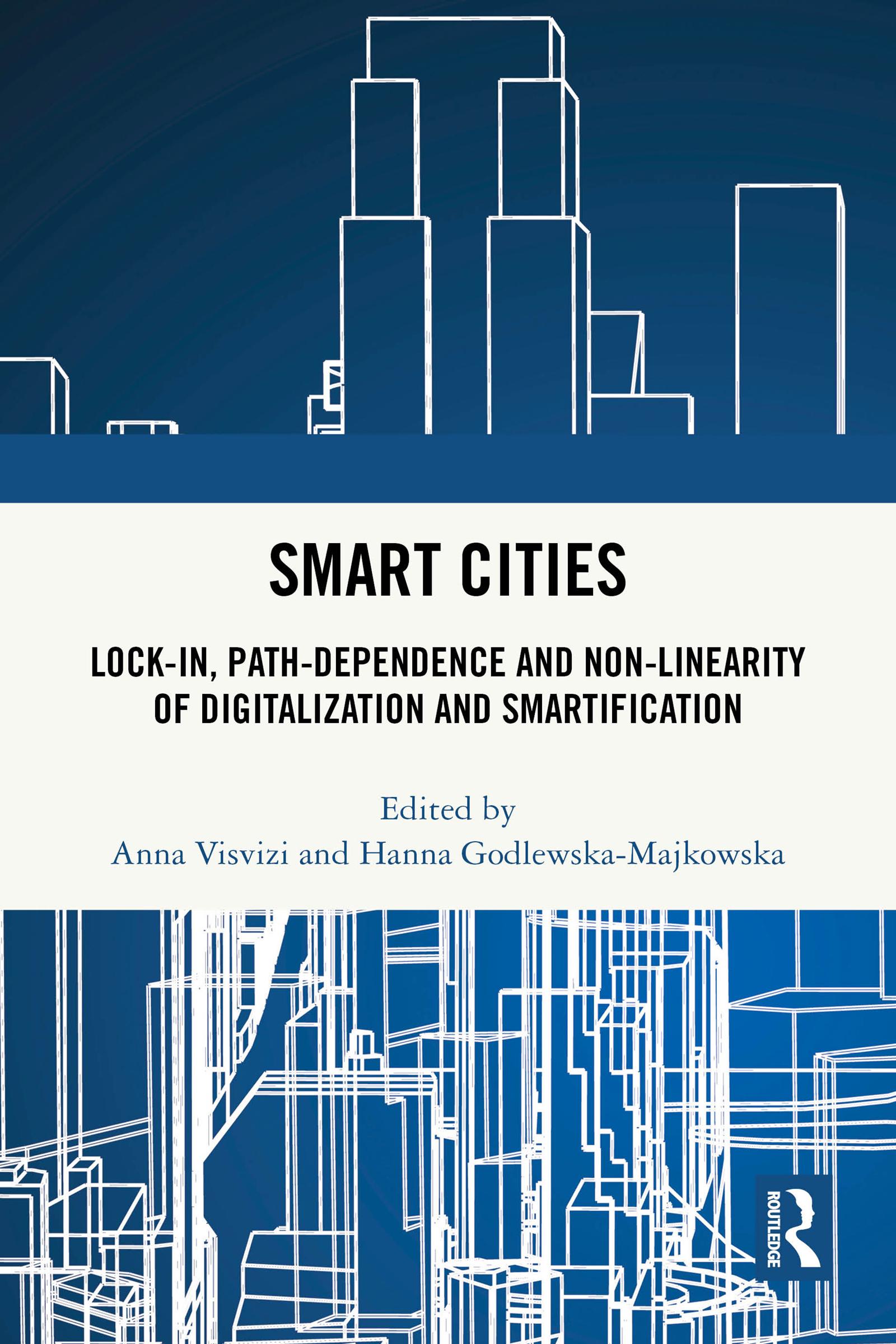
This book seeks to identify and to examine factors and mechanisms underlying the growth and development of smart cities.
It is commonplace to discuss smart cities through the lens of advances in ICT. The resulting overemphasis on what is technologically possible downplays what is politically, socially and economically feasible. This book, by analysing the smart city through a variety of perspectives, offers a more comprehensive insight into and understanding of the complex and the open-ended nature of the growth and development of a smart city. A solid conceptual framework is developed and employed throughout the chapters, and a selection of case studies from Europe, Asia, and the Arab Peninsula grants the readers a hands-on perspective of the matters discussed.
The chapters included in this book address a set of questions, including:
- How do the twin-processes of digitalization and smartification unfold in the context of the smart city agenda? How do these processes relate to the concepts of smart city 1.0, 2.0., 3.0. and 4.0?
- In which ways have the spatial aspects of city functioning been influenced by the intrusion of ICT? In which ways do the same processes contribute to the attainment of the UN Sustainable Development Goals (SDGs)?
- What are the implications of smartification and the emergence of smart organizations (public, private, and voluntary) for the spatial development of smart cities?
- Do ICT and its application in the city space boost the processes of revitalization and how does ICT influence the process of gentrification?
- To what extent and how does the intrusion of ICT-enhanced tools and applications in the city space impact on a city’s relationship with its broader territorially defined context?
- Are the administrative borders and divisions inherent in the fabric of a city becoming less/more porous? How should urban sprawl be conceived in the context of the smart city debate?
This book will have a broad appeal to academics, students, and policy makers with interests in urban planning, sustainable development, cities, economics, technology, sociology, urban studies, digitalization, SDGs, wellbeing, and resilience.
Payez facilement par carte, Klarna, Apple Pay ou Google Pay. Pas satisfait ? Vous avez toujours une garantie de remboursement de 14 jours. En savoir plus dans nos conditions. Si vous avez des questions, envoyez-nous un e-mail à hello@memmo.org.
Memmo facilite tes études, où que tu sois dans le monde. On rassemble tes manuels de cours et des outils d'étude intelligents au même endroit : résumés, quiz, podcasts et flashcards. Et il y a Ted, ton compagnon d'étude qui répond à toutes tes questions. Plus de 50 000 étudiants étudient déjà ici – conçu pour t'aider à apprendre plus vite et à moins stresser.