
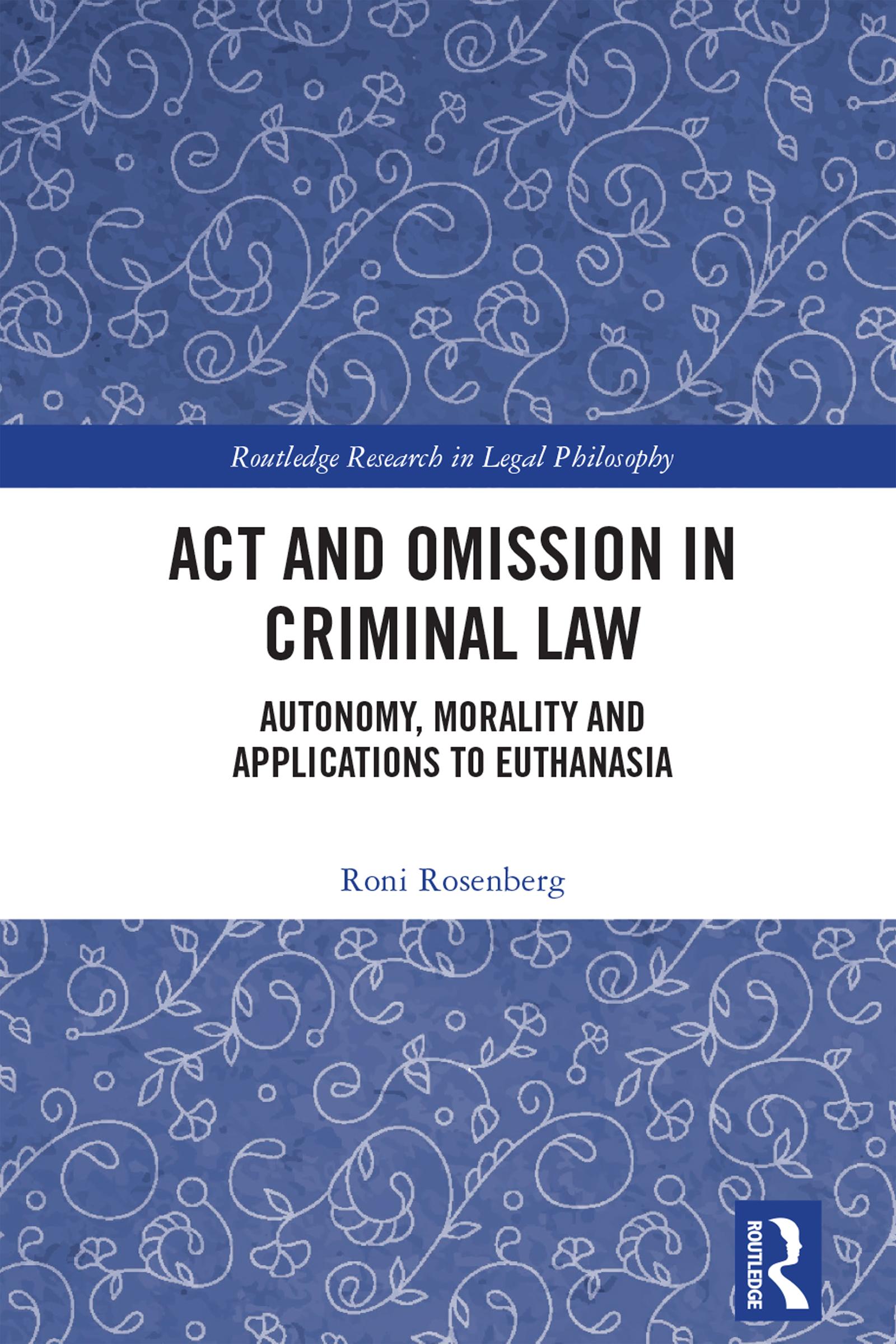
This book offers an innovative perspective on the critical distinction between acts and omissions in criminal law, a distinction that runs like a defining thread through all types of criminal offenses.
While any act that positively causes a prohibited harm is sufficient for a conviction, an omission that causes the very same harm warrants a conviction only when there is a legal duty to act. This fundamental distinction between acts and omissions is not just relevant to criminal law, but it is also deeply rooted in our moral thinking. Thus, it is commonly argued that the difference between acts and omissions is also applicable to the intuitive moral distinction between active euthanasia, forbidden in most countries, and passive euthanasia, permitted in many countries under certain circumstances. Hence, the significance of this book is threefold: First, it offers a comprehensive, coherent, and systematic discussion of the intersections between the philosophical-moral and the legal-criminal aspects of this fundamental topic. Second, it offers a novel rationale for the distinction between acts and omissions, based on the principle of autonomy. Finally, it demonstrates the influences of the theoretical discussion, on the most significant practical questions.
This book will be of interest to researchers, academics and policy-makers working in the areas of criminal law, moral philosophy, and bioethics.
Payez facilement par carte, Klarna, Apple Pay ou Google Pay. Pas satisfait ? Vous avez toujours une garantie de remboursement de 14 jours. En savoir plus dans nos conditions. Si vous avez des questions, envoyez-nous un e-mail à hello@memmo.org.
Memmo facilite tes études, où que tu sois dans le monde. On rassemble tes manuels de cours et des outils d'étude intelligents au même endroit : résumés, quiz, podcasts et flashcards. Et il y a Ted, ton compagnon d'étude qui répond à toutes tes questions. Plus de 50 000 étudiants étudient déjà ici – conçu pour t'aider à apprendre plus vite et à moins stresser.