
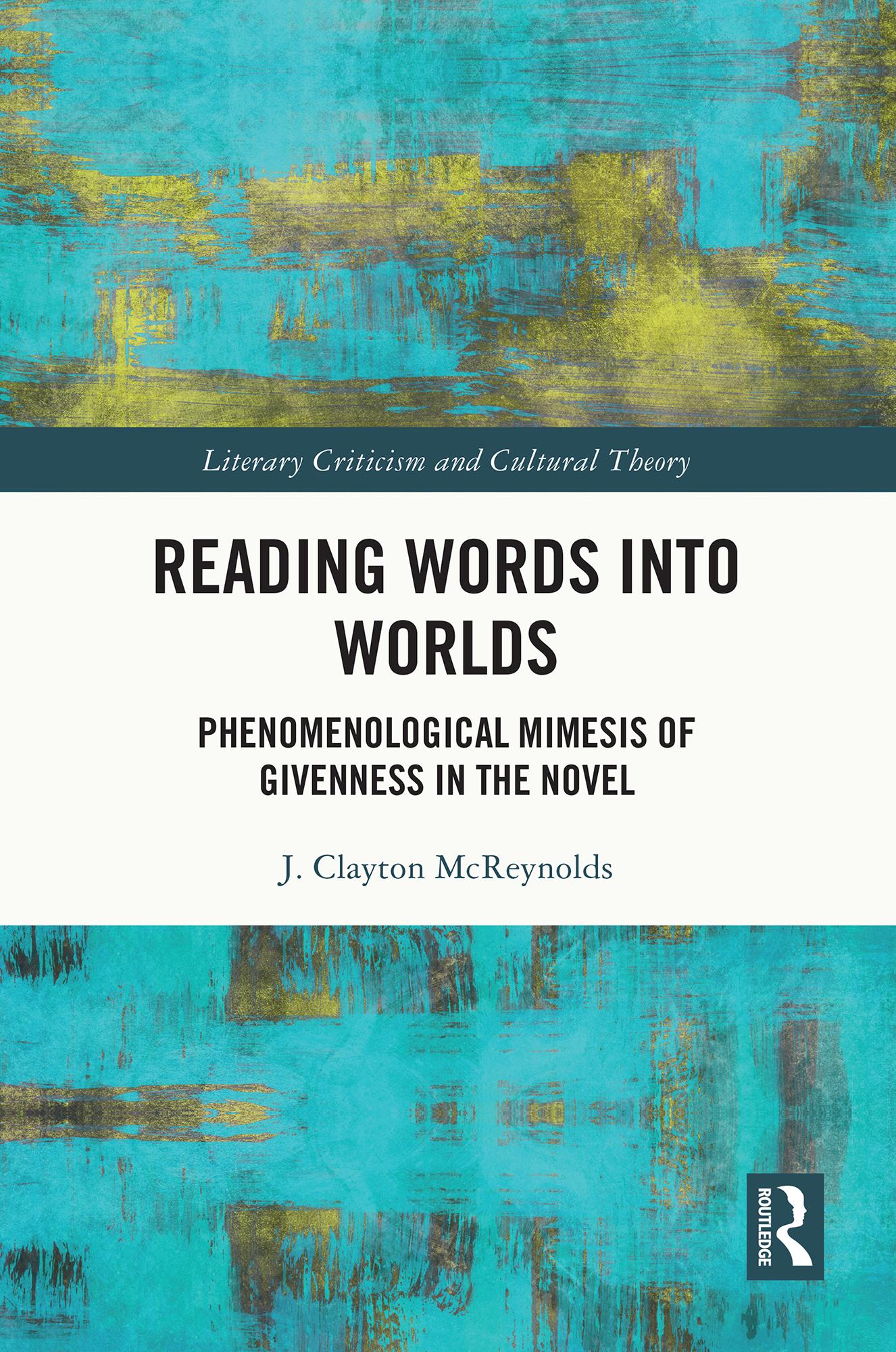
Reading Words into Worlds asks how it is that reading a novel can feel in some ways like being-in-a-world. The book explores how novels give themselves to readers in ways that mimetically resemble our phenomenological reception of given beings in reality. McReynolds refers to this process as phenomenological mimesis of givenness, and he draws on the phenomenological philosophy of Husserl, Heidegger, and Jean-Luc Marion to explore how masterful novels can make reading ink marks on a page feel like seeing things, feeling things, and meeting (even loving) others. McReynolds blends rigorous phenomenological study with a personable style, first laying out his theory in detail and then applying that theory through close studies of his reading experiences of four British realist masterpieces: Defoe’s Robinson Crusoe, Austen’s Northanger Abbey, Eliot’s Middlemarch, and Hardy’s Jude the Obscure. Ultimately, this book offers a grounded phenomenology of novel-reading, illuminating what gives novels such power to not only thrill readers—but to change them.
Payez facilement par carte, Klarna, Apple Pay ou Google Pay. Pas satisfait ? Vous avez toujours une garantie de remboursement de 14 jours. En savoir plus dans nos conditions. Si vous avez des questions, envoyez-nous un e-mail à hello@memmo.org.
Memmo facilite tes études, où que tu sois dans le monde. On rassemble tes manuels de cours et des outils d'étude intelligents au même endroit : résumés, quiz, podcasts et flashcards. Et il y a Ted, ton compagnon d'étude qui répond à toutes tes questions. Plus de 50 000 étudiants étudient déjà ici – conçu pour t'aider à apprendre plus vite et à moins stresser.