
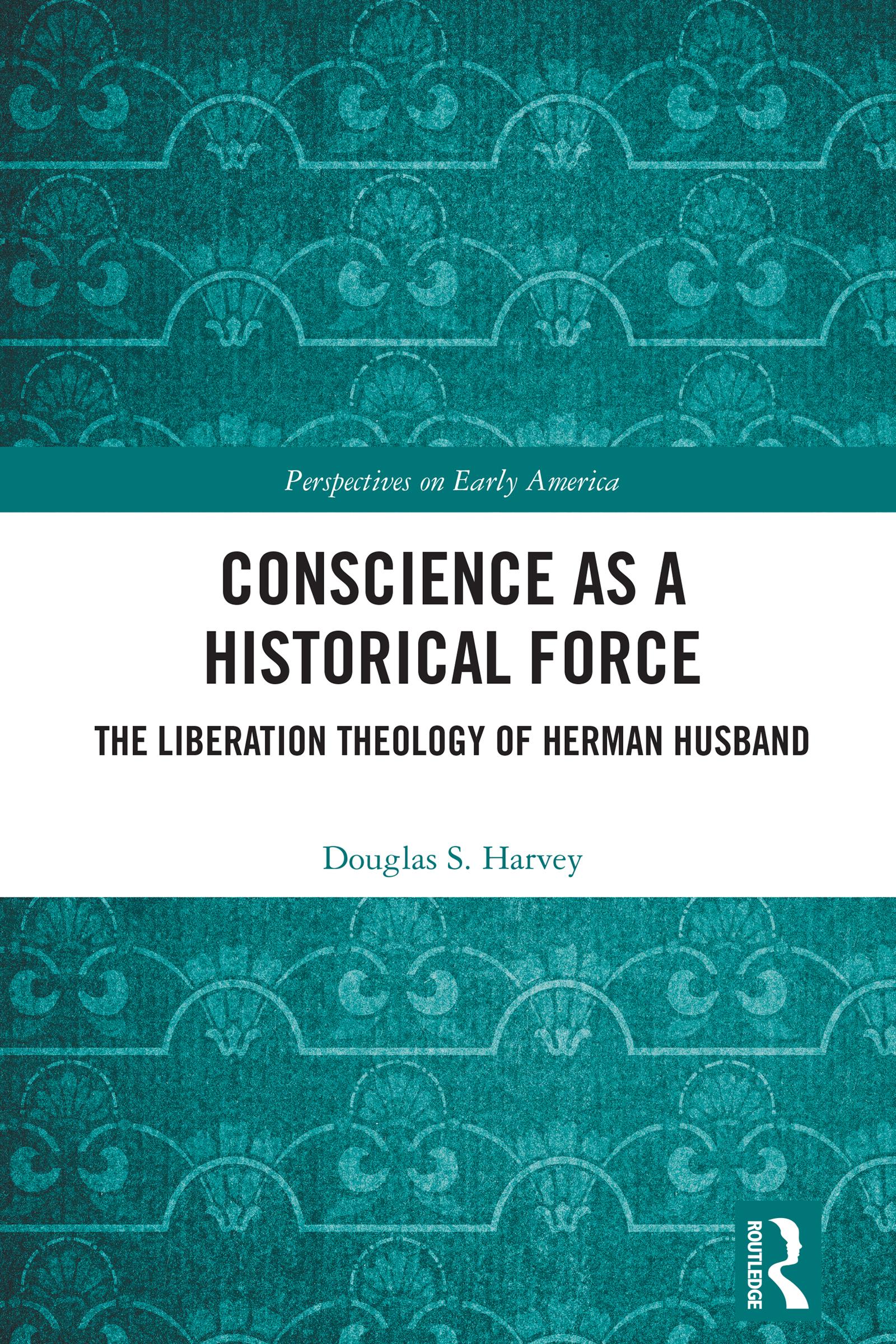
Conscience as a Historical Force is the first true analysis of the life and thought of the radically democratic eighteenth-century backcountry figure of Herman Husband (1724–1795) and his heavily metaphorical political and religious writings during the “Age of Revolution.”
This book addresses the influence of religion in the American revolutionary period and locates the events of Herman Husband’s life in the broader Atlantic context of the social, economic, and political transition from feudalism to capitalism. Husband’s metaphorical reading of the Bible reveals the timeless nature of his message and its relevance today. Other studies of Herman Husband fail in this regard even though, this book argues, this is the most valuable lesson of his life. The debate over the importance of religion in the American Revolution has neglected its connection with both the English radicals of the seventeenth century and continental religious radicals dating back further still. Essentially, the “antinomian” movement, where individuals refused to acknowledge any power greater than that of their own conscience, was Atlantic in scope and dates to the origins of Christianity itself.
With a chronological approach, this study is of great use to students and scholars interested in the politics and religion of eighteenth-century America.
Payez facilement par carte, Klarna, Apple Pay ou Google Pay. Pas satisfait ? Vous avez toujours une garantie de remboursement de 14 jours. En savoir plus dans nos conditions. Si vous avez des questions, envoyez-nous un e-mail à hello@memmo.org.
Memmo facilite tes études, où que tu sois dans le monde. On rassemble tes manuels de cours et des outils d'étude intelligents au même endroit : résumés, quiz, podcasts et flashcards. Et il y a Ted, ton compagnon d'étude qui répond à toutes tes questions. Plus de 50 000 étudiants étudient déjà ici – conçu pour t'aider à apprendre plus vite et à moins stresser.