
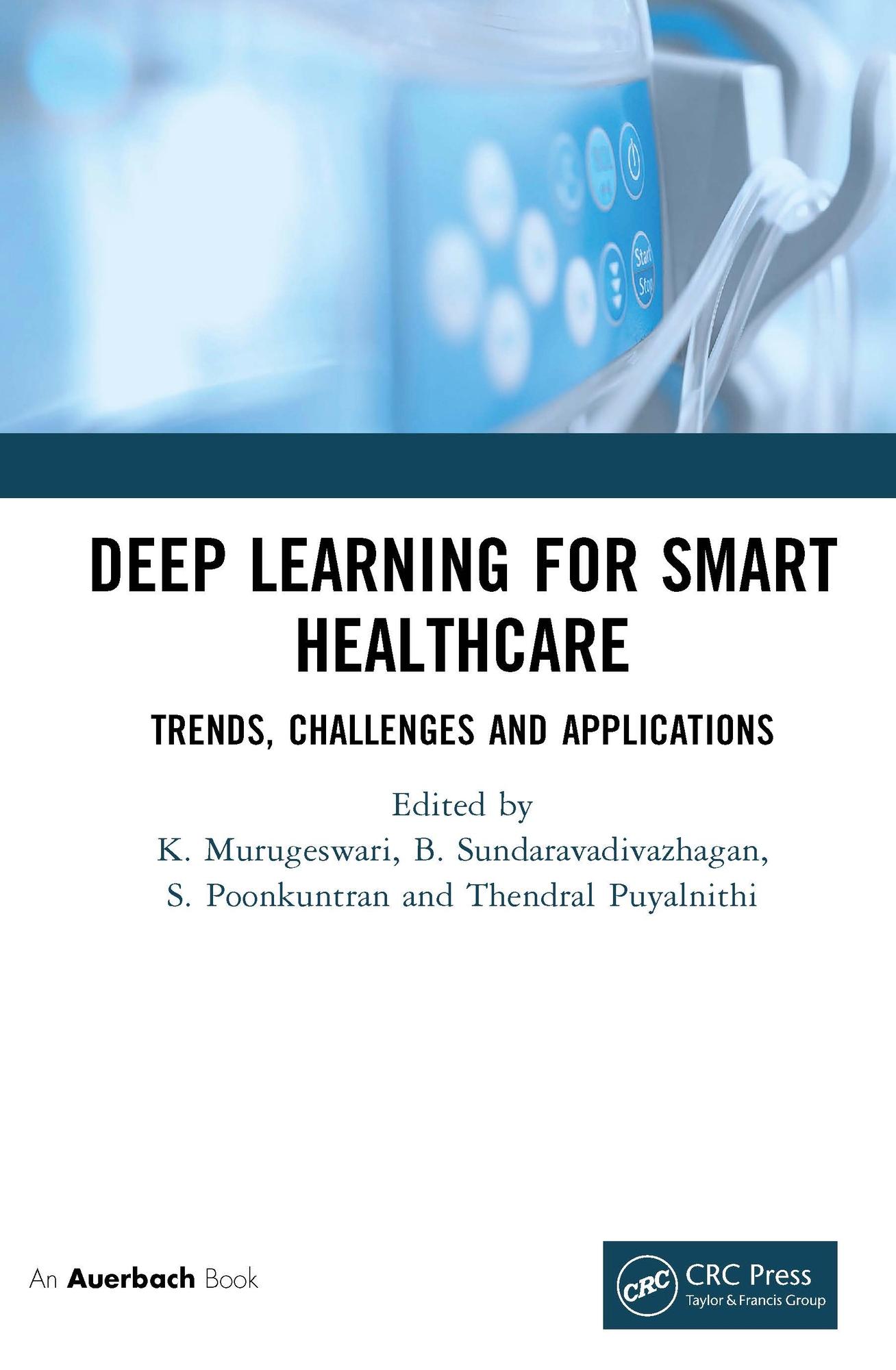
Deep learning can provide more accurate results compared to machine learning. It uses layered algorithmic architecture to analyze data. It produces more accurate results since learning from previous results enhances its ability. The multi-layered nature of deep learning systems has the potential to classify subtle abnormalities in medical images, clustering patients with similar characteristics into risk-based cohorts, or highlighting relationships between symptoms and outcomes within vast quantities of unstructured data.
Exploring this potential, Deep Learning for Smart Healthcare: Trends, Challenges and Applications is a reference work for researchers and academicians who are seeking new ways to apply deep learning algorithms in healthcare, including medical imaging and healthcare data analytics. It covers how deep learning can analyze a patient’s medical history efficiently to aid in recommending drugs and dosages. It discusses how deep learning can be applied to CT scans, MRI scans and ECGs to diagnose diseases. Other deep learning applications explored are extending the scope of patient record management, pain assessment, new drug design and managing the clinical trial process.
Bringing together a wide range of research domains, this book can help to develop breakthrough applications for improving healthcare management and patient outcomes.
Payez facilement par carte, Klarna, Apple Pay ou Google Pay. Pas satisfait ? Vous avez toujours une garantie de remboursement de 14 jours. En savoir plus dans nos conditions. Si vous avez des questions, envoyez-nous un e-mail à hello@memmo.org.
Memmo facilite tes études, où que tu sois dans le monde. On rassemble tes manuels de cours et des outils d'étude intelligents au même endroit : résumés, quiz, podcasts et flashcards. Et il y a Ted, ton compagnon d'étude qui répond à toutes tes questions. Plus de 50 000 étudiants étudient déjà ici – conçu pour t'aider à apprendre plus vite et à moins stresser.