
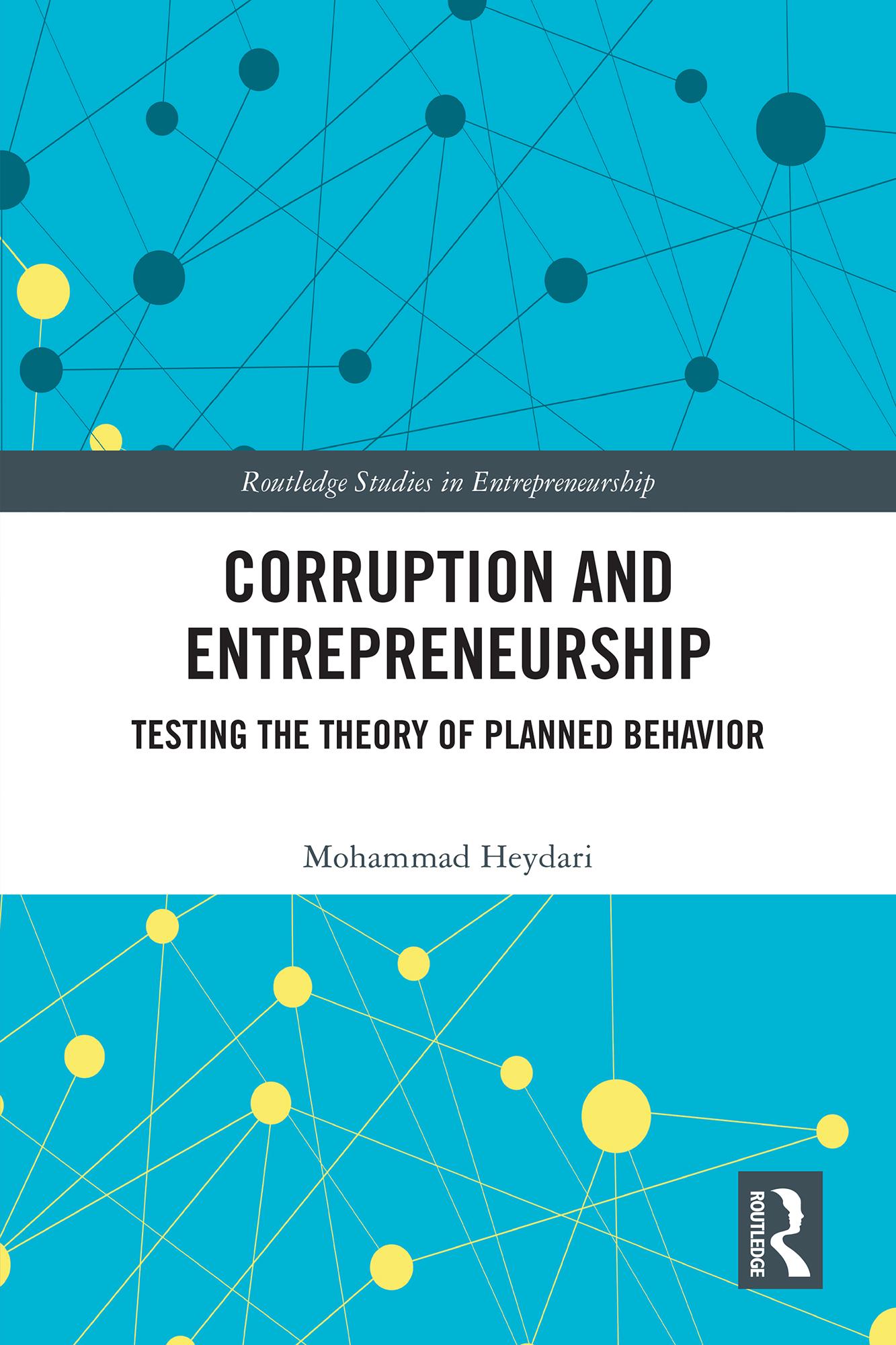
This book examines corruption as a collective behavior problem for entrepreneurs. In particular, it considers Azjen’s theory of planned behavior (TPB) to explain perceived corruption and its effects on entrepreneurship.
Heydari argues that behavioral intentions are shaped by variables such as attitude, subjective norms and perceived behavioral control. He proposes the novel Heydari Behavioral Synthesis Theory (HBST) model and applies it to two case studies to highlight the institutional, individual and societal factors that may inhibit entrepreneurial behavior. He concludes that corruption may persist not just because of difficulties in monitoring and prosecuting, but because it is systemically pervasive and discourages individual countermeasures. He closes by looking at anti-corruption policies and outlining future research directions.
Arguing that widespread corruption may be theoretically mischaracterized in the literature, this book is of interest to policy-makers, researchers and postgraduate students in the fields of management science, industrial and organizational psychology, entrepreneurship and corruption studies.
Payez facilement par carte, Klarna, Apple Pay ou Google Pay. Pas satisfait ? Vous avez toujours une garantie de remboursement de 14 jours. En savoir plus dans nos conditions. Si vous avez des questions, envoyez-nous un e-mail à hello@memmo.org.
Memmo facilite tes études, où que tu sois dans le monde. On rassemble tes manuels de cours et des outils d'étude intelligents au même endroit : résumés, quiz, podcasts et flashcards. Et il y a Ted, ton compagnon d'étude qui répond à toutes tes questions. Plus de 50 000 étudiants étudient déjà ici – conçu pour t'aider à apprendre plus vite et à moins stresser.