
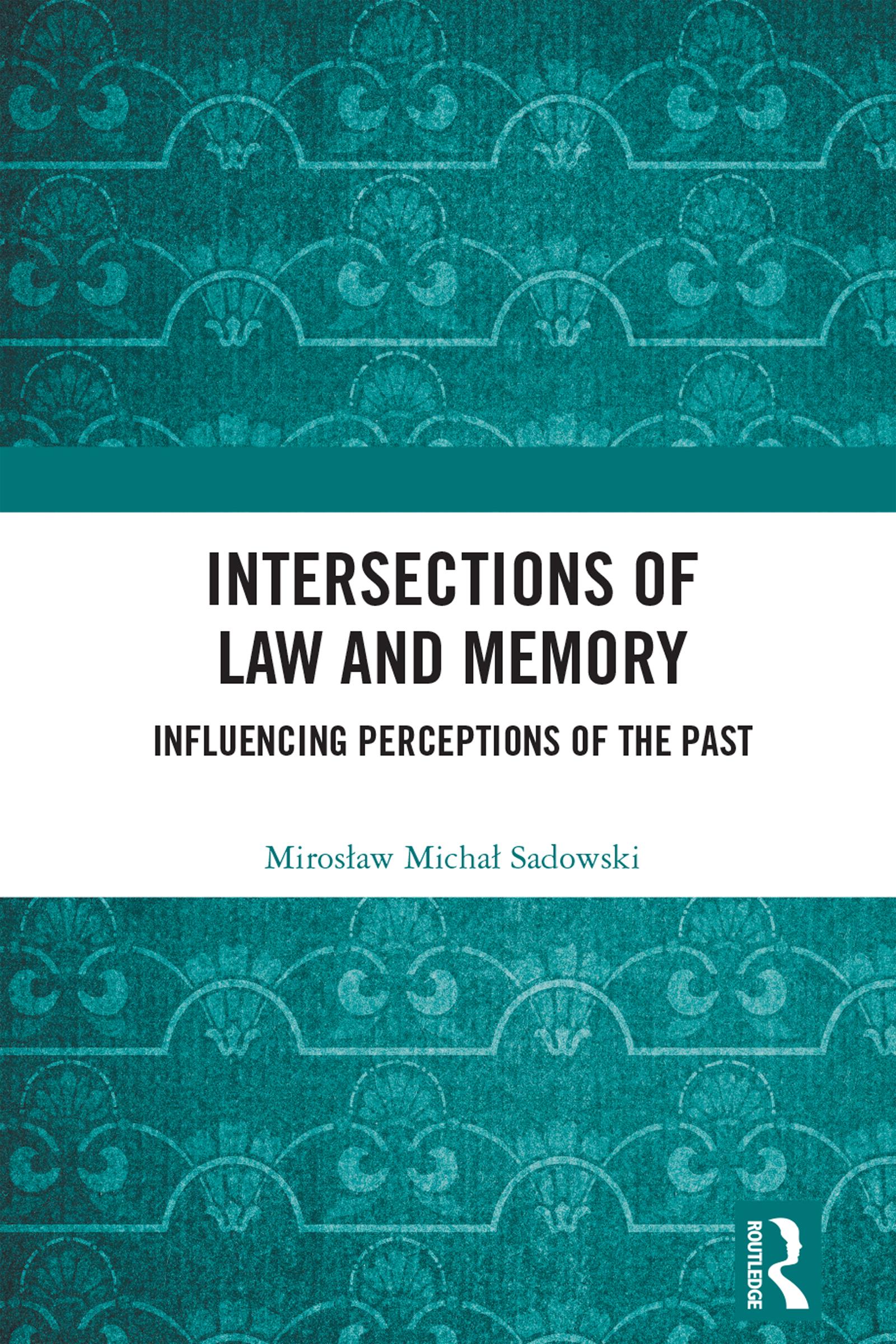
This book elaborates a new framework for considering and understanding the relationship between law and memory.
How can law influence collective memory? What are the mechanisms law employs to influence social perceptions of the past? And how successful is law in its attempts to rewrite narratives about the past? As the field of memory studies has grown, this book takes a step back from established transitional justice narratives, returning to the core sociological, philosophical and legal theoretical issues that underpin this field. The book then goes on to propose a new approach to the relationship between law and collective memory based on a conception of ‘legal institutions of memory’. It then elaborates the functioning of such institutions through a range of examples – taken from Japan, Iraq, Brazil, Portugal, Rwanda and Poland – that move from the work of international tribunals and truth commissions to more explicit memory legislation. The book concludes with a general assessment of the contemporary intersections of law and memory, and their legal institutionalisation.
This book will be of interest to scholars with relevant interests in the sociology of law, legal theory and international law, as well as in sociology and politics.
Payez facilement par carte, Klarna, Apple Pay ou Google Pay. Pas satisfait ? Vous avez toujours une garantie de remboursement de 14 jours. En savoir plus dans nos conditions. Si vous avez des questions, envoyez-nous un e-mail à hello@memmo.org.
Memmo facilite tes études, où que tu sois dans le monde. On rassemble tes manuels de cours et des outils d'étude intelligents au même endroit : résumés, quiz, podcasts et flashcards. Et il y a Ted, ton compagnon d'étude qui répond à toutes tes questions. Plus de 50 000 étudiants étudient déjà ici – conçu pour t'aider à apprendre plus vite et à moins stresser.