
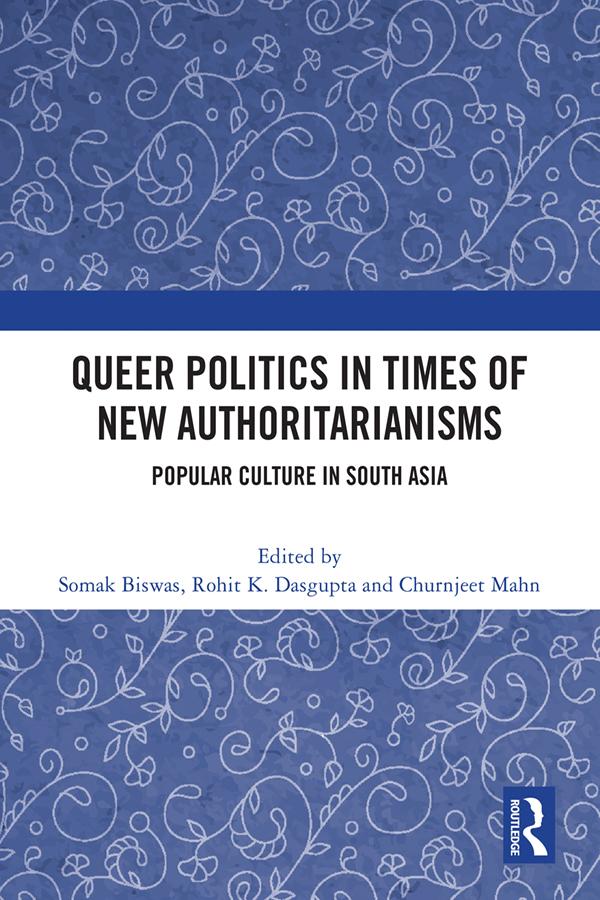
Queerness remains a central fault line in contemporary South Asia. Colonial-era ‘anti-sodomy’ laws, codified in Article 377 of the penal codes in India, Bangladesh and Pakistan, or Article 365 in Sri Lanka, exemplify the shared imperial lineages of the region as also their long postcolonial afterlives. Across South Asia and the world, new authoritarianisms have reignited old fault lines around sexuality. New media technologies have increasingly connected diasporic space with mainland South Asia, globalising queer networks. Yet, these trajectories are necessarily discontinuous.
In the last two decades whilst there has been an explosion of LGBTQ+ visibility most notably in South Asian film, television and new media, this visibility has come with mainstream ideological agendas which do not especially represent the diversity of queer lives in South Asia along key identities of caste, class, religion and region. This book seeks to encourage critical thinking by suggesting ways in which notions of culture, neoliberalism, nationalism and queerness in the context of new authoritarianisms are disentangled. The chapters in this volume take up these questions and offer critical imaginings of sexual politics and its imbrication with popular culture and authoritarian politics within contemporary South Asia.
The chapters in this book were originally published as a special issue of South Asian Popular Culture.
Payez facilement par carte, Klarna, Apple Pay ou Google Pay. Pas satisfait ? Vous avez toujours une garantie de remboursement de 14 jours. En savoir plus dans nos conditions. Si vous avez des questions, envoyez-nous un e-mail à hello@memmo.org.
Memmo facilite tes études, où que tu sois dans le monde. On rassemble tes manuels de cours et des outils d'étude intelligents au même endroit : résumés, quiz, podcasts et flashcards. Et il y a Ted, ton compagnon d'étude qui répond à toutes tes questions. Plus de 50 000 étudiants étudient déjà ici – conçu pour t'aider à apprendre plus vite et à moins stresser.