
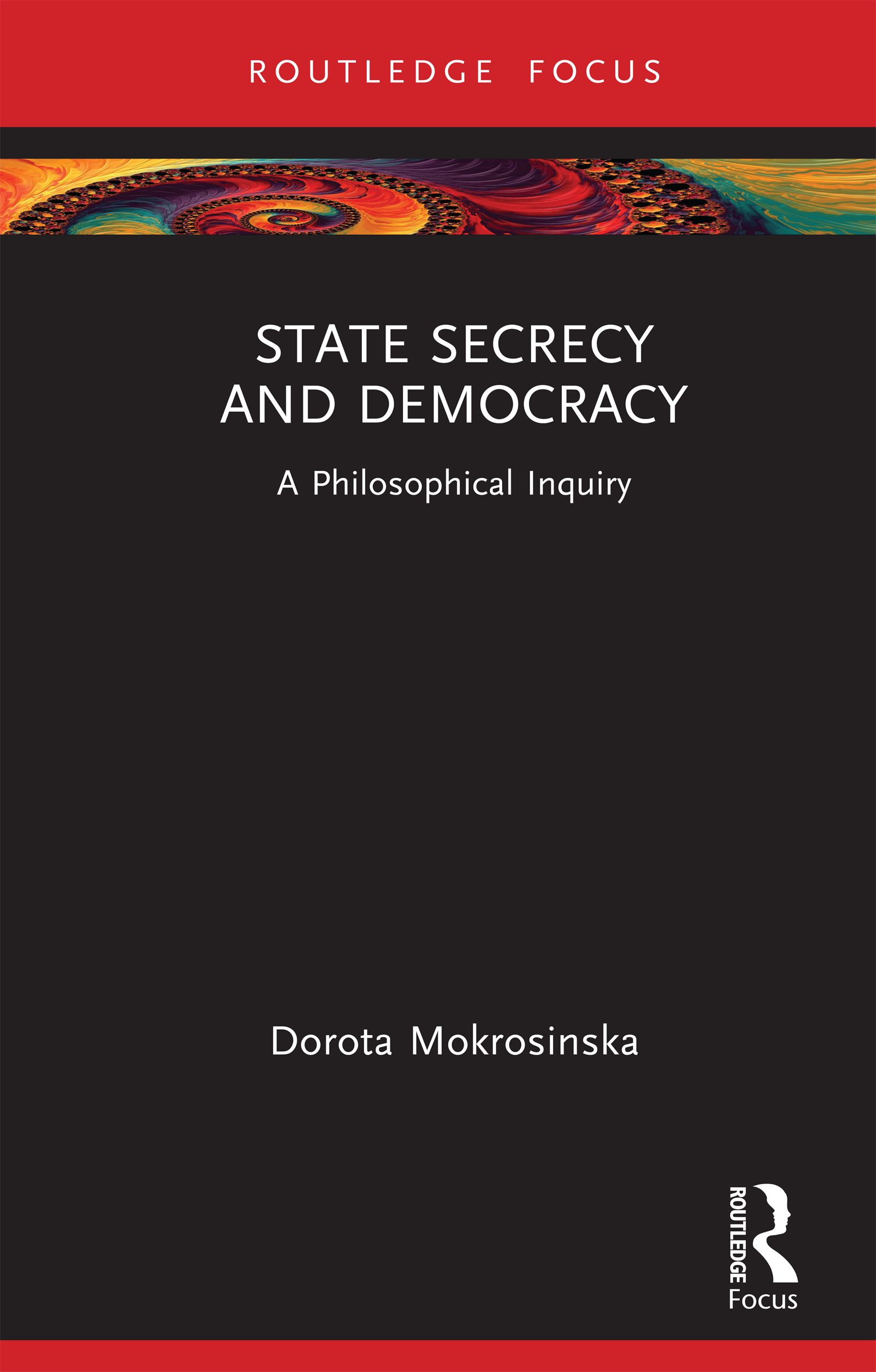
In the wake of controversial disclosures of classified government information by WikiLeaks and Edward Snowden, questions about the democratic status of secret uses of political power are rarely far from the headlines. Despite an increase in initiatives aimed at enhancing government transparency – such as freedom of information or sunshine laws – secrecy persists in both the foreign and domestic policy of democratic states, in the form of classified intelligence programs, espionage, secret military operations, diplomatic discretion, closed-door political bargaining, and bureaucratic opacity.
This book explores whether the state’s claim to restrict access to information can be justified. Dorota Mokrosinska answers this question with a qualified "yes," arguing that secrecy in exercising executive and legislative power can be seen as a legitimate exercise of democratic authority rather than as its justified suspension.
Past and recent examples of state secrecy are used throughout the book, including the Manhattan Project, decision-making leading to the Iraq War, the extraordinary renditions programs and secret detention sites in Eastern Europe, collaboration between international secret services, and the WikiLeaks and Snowden disclosures.
State Secrecy and Democracy: A Philosophical Inquiry is essential reading for those in political philosophy, ethics, politics, international relations and security studies, and law.
Payez facilement par carte, Klarna, Apple Pay ou Google Pay. Pas satisfait ? Vous avez toujours une garantie de remboursement de 14 jours. En savoir plus dans nos conditions. Si vous avez des questions, envoyez-nous un e-mail à hello@memmo.org.
Memmo facilite tes études, où que tu sois dans le monde. On rassemble tes manuels de cours et des outils d'étude intelligents au même endroit : résumés, quiz, podcasts et flashcards. Et il y a Ted, ton compagnon d'étude qui répond à toutes tes questions. Plus de 50 000 étudiants étudient déjà ici – conçu pour t'aider à apprendre plus vite et à moins stresser.