
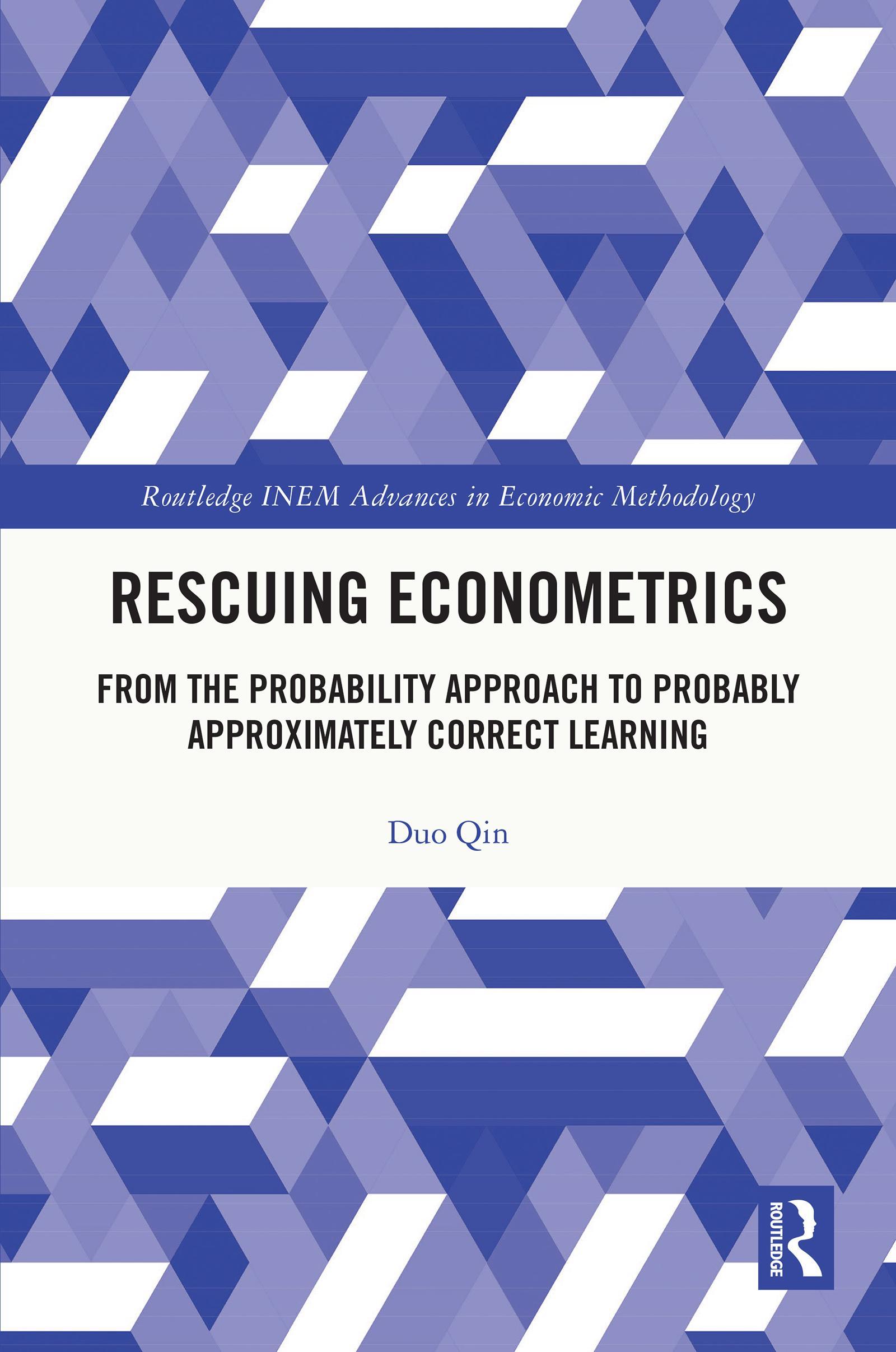
Haavelmo’s 1944 monograph, The Probability Approach in Econometrics, is widely acclaimed as the manifesto of econometrics. This book challenges Haavelmo’s probability approach, shows how its use is delivering defective and inefficient results, and argues for a paradigm shift in econometrics towards a full embrace of machine learning, with its attendant benefits.
Machine learning has only come into existence over recent decades, whereas the universally accepted and current form of econometrics has developed over the past century. A comparison between the two is, however, striking. The practical achievements of machine learning significantly outshine those of econometrics, confirming the presence of widespread inefficiencies in current econometric research. The relative efficiency of machine learning is based on its theoretical foundation, and particularly on the notion of Probably Approximately Correct (PAC) learning. Careful examination reveals that PAC learning theory delivers the goals of applied economic modelling research far better than Haavelmo’s probability approach. Econometrics should therefore renounce its outdated foundation, and rebuild itself upon PAC learning theory so as to unleash its pent-up research potential. The book is catered for applied economists, econometricians, economists specialising in the history and methodology of economics, advanced students, philosophers of social sciences.
Payez facilement par carte, Klarna, Apple Pay ou Google Pay. Pas satisfait ? Vous avez toujours une garantie de remboursement de 14 jours. En savoir plus dans nos conditions. Si vous avez des questions, envoyez-nous un e-mail à hello@memmo.org.
Memmo facilite tes études, où que tu sois dans le monde. On rassemble tes manuels de cours et des outils d'étude intelligents au même endroit : résumés, quiz, podcasts et flashcards. Et il y a Ted, ton compagnon d'étude qui répond à toutes tes questions. Plus de 50 000 étudiants étudient déjà ici – conçu pour t'aider à apprendre plus vite et à moins stresser.