
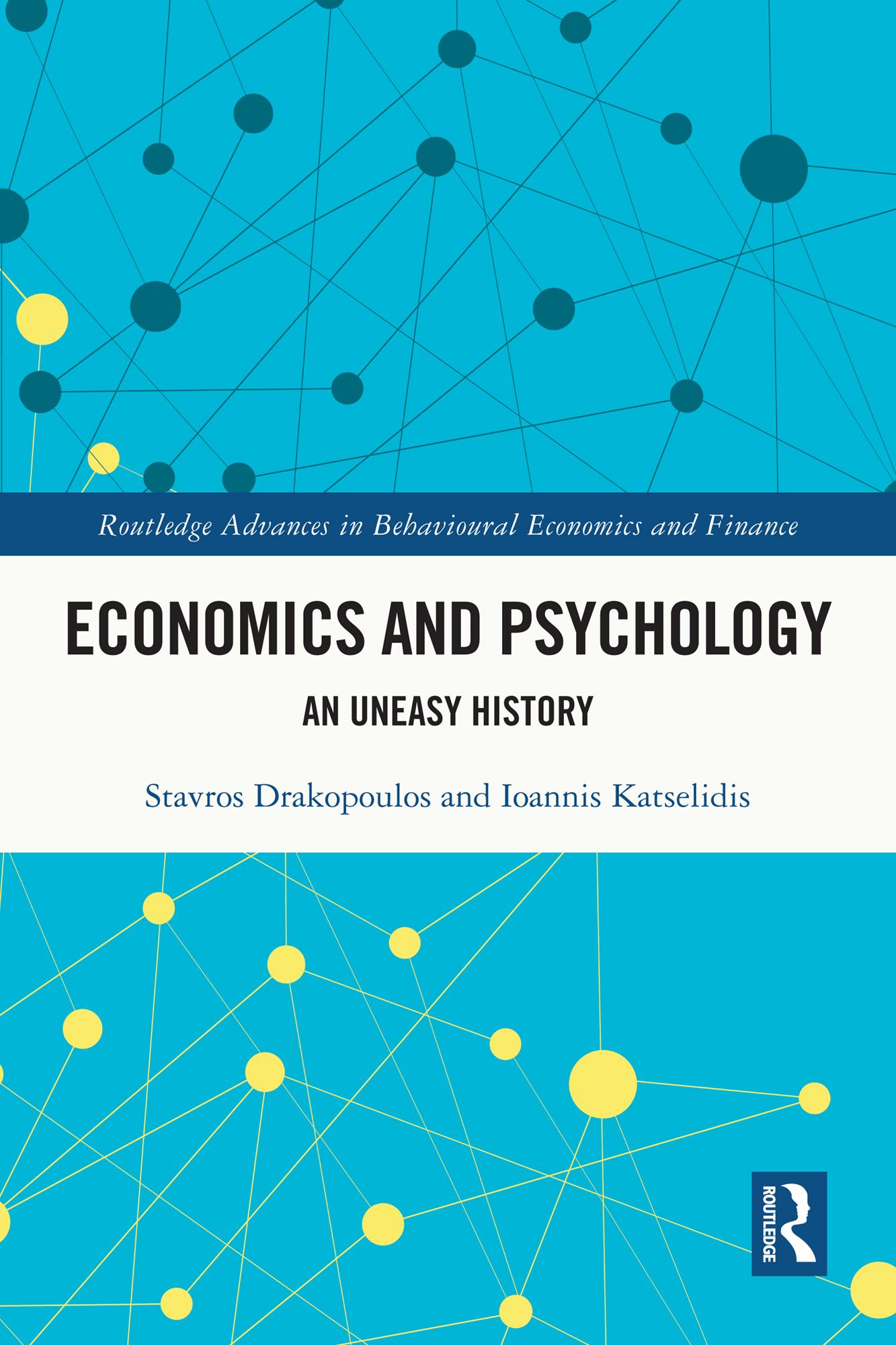
With the rise of modern behavioural economics and increasing interest in subjective well-being research, the question of the relationship between economics and psychology has again been brought to the fore. Drawing on the history of economic thought, this book explores the historical relationship between the two disciplines. The book opens with a description of the primary philosophical foundations for early arguments supporting the interplay between economics and psychology. Both classical economists and other prominent pre-marginalists writers are examined in this context. The ensuing discussion explores the marginalist revolution and how well-known economists like Jevons and Edgeworth, influenced by pre-marginalist writers, incorporated ideas and findings from psychology. The book then describes how, following the so-called “Paretian turn”, early neoclassical economists attempted to expel psychological concepts from economic analysis. Combined with the increasing formalization, the influence of the classical physics scientific ideal, and the impact of positivism, this methodological stance became dominant in modern mainstream economics. In contrast, non-mainstream traditions continued to acknowledge the significance of psychology in their economic analysis. This tradition includes inter alia the so-called old behavioural economics, mainly of Herbert Simon and George Katona. The revival of psychology in economics came mainly with the emergence and development of new behavioural economics as a distinct branch during the last few decades. The trend was further assisted by the emergence of the economics of subjective well-being. Finally, the book briefly explores the state of the current debate concerning the relationship between economics and psychology. This book will be invaluable reading to anyone interested in the history of the study of economics and psychology, as well as of great interest to students and scholars of history of economic thought, psychological economics, behavioural economics and the history and philosophy of social sciences.
Payez facilement par carte, Klarna, Apple Pay ou Google Pay. Pas satisfait ? Vous avez toujours une garantie de remboursement de 14 jours. En savoir plus dans nos conditions. Si vous avez des questions, envoyez-nous un e-mail à hello@memmo.org.
Memmo facilite tes études, où que tu sois dans le monde. On rassemble tes manuels de cours et des outils d'étude intelligents au même endroit : résumés, quiz, podcasts et flashcards. Et il y a Ted, ton compagnon d'étude qui répond à toutes tes questions. Plus de 50 000 étudiants étudient déjà ici – conçu pour t'aider à apprendre plus vite et à moins stresser.