
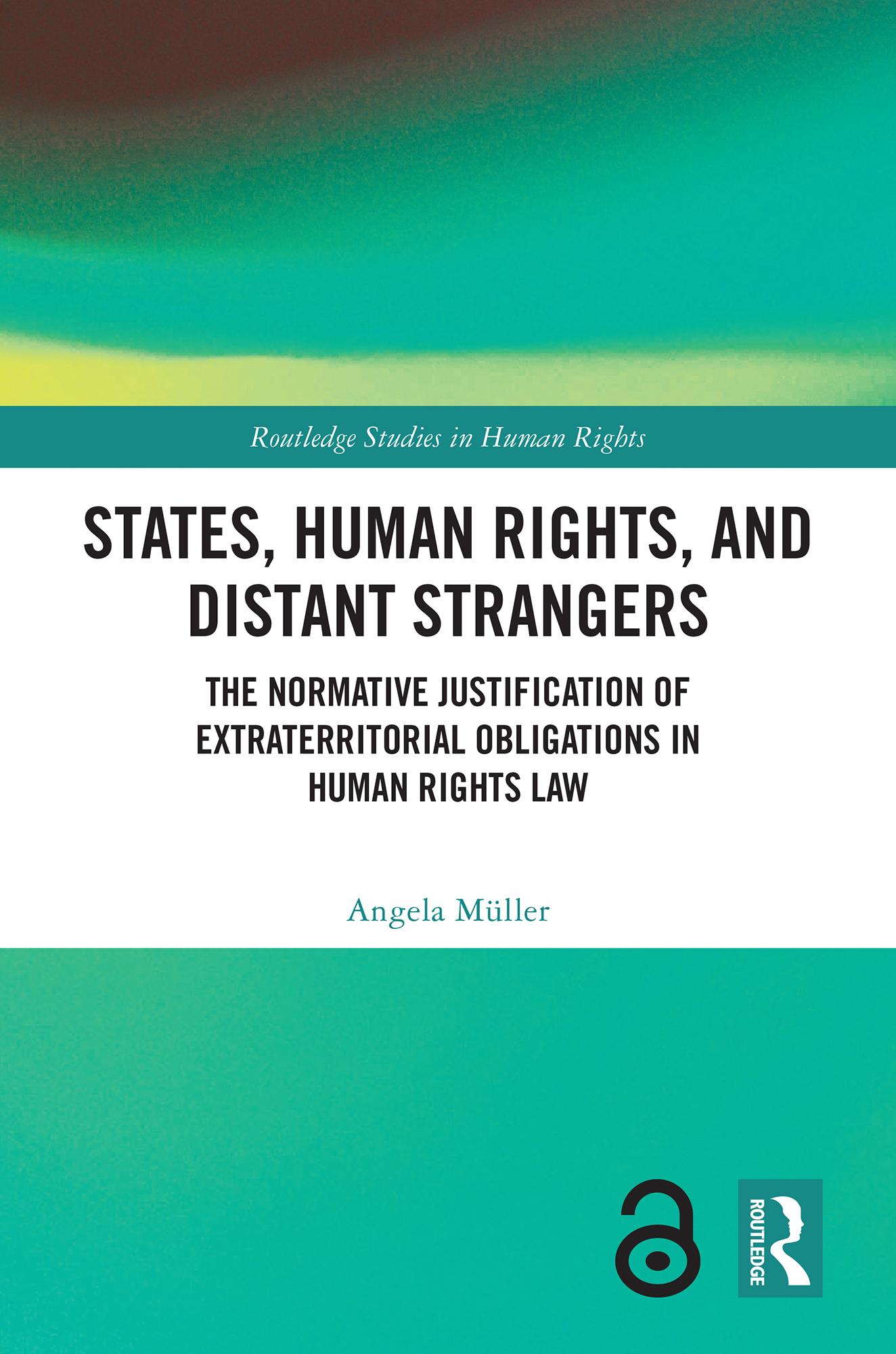
This book combines legal and philosophical perspectives to address the question of whether states are bound by human rights when they act with effects on people abroad—states’ extraterritorial human rights obligations. Taking an innovative approach, it begins with a profound legal analysis of the issue at national, supranational, and international levels and then engages in depth with counterarguments against extraterritorially applying human rights, on the basis of which it develops its own ethical justificatory theory of extraterritorial human rights obligations. The book closes the circle by showing what the practical implications of this theory for the interpretation (and possible evolvement) of human rights law would be. In a world where critiques of, and resistance to, the general idea of universal human rights are on rise, the book contributes to closing the gap between judicial and normative perspectives on extraterritorial human rights obligations by inquiring into the ethical underpinnings of this topical legal challenge.
This book will be of key interest to scholars and students in human rights, international law, and more broadly in political philosophy, philosophy of law, and international relations.
The Open Access version of this book, available at www.taylorfrancis.com, has been made available under a Creative Commons Attribution 4.0 license.
Payez facilement par carte, Klarna, Apple Pay ou Google Pay. Pas satisfait ? Vous avez toujours une garantie de remboursement de 14 jours. En savoir plus dans nos conditions. Si vous avez des questions, envoyez-nous un e-mail à hello@memmo.org.
Memmo facilite tes études, où que tu sois dans le monde. On rassemble tes manuels de cours et des outils d'étude intelligents au même endroit : résumés, quiz, podcasts et flashcards. Et il y a Ted, ton compagnon d'étude qui répond à toutes tes questions. Plus de 50 000 étudiants étudient déjà ici – conçu pour t'aider à apprendre plus vite et à moins stresser.