
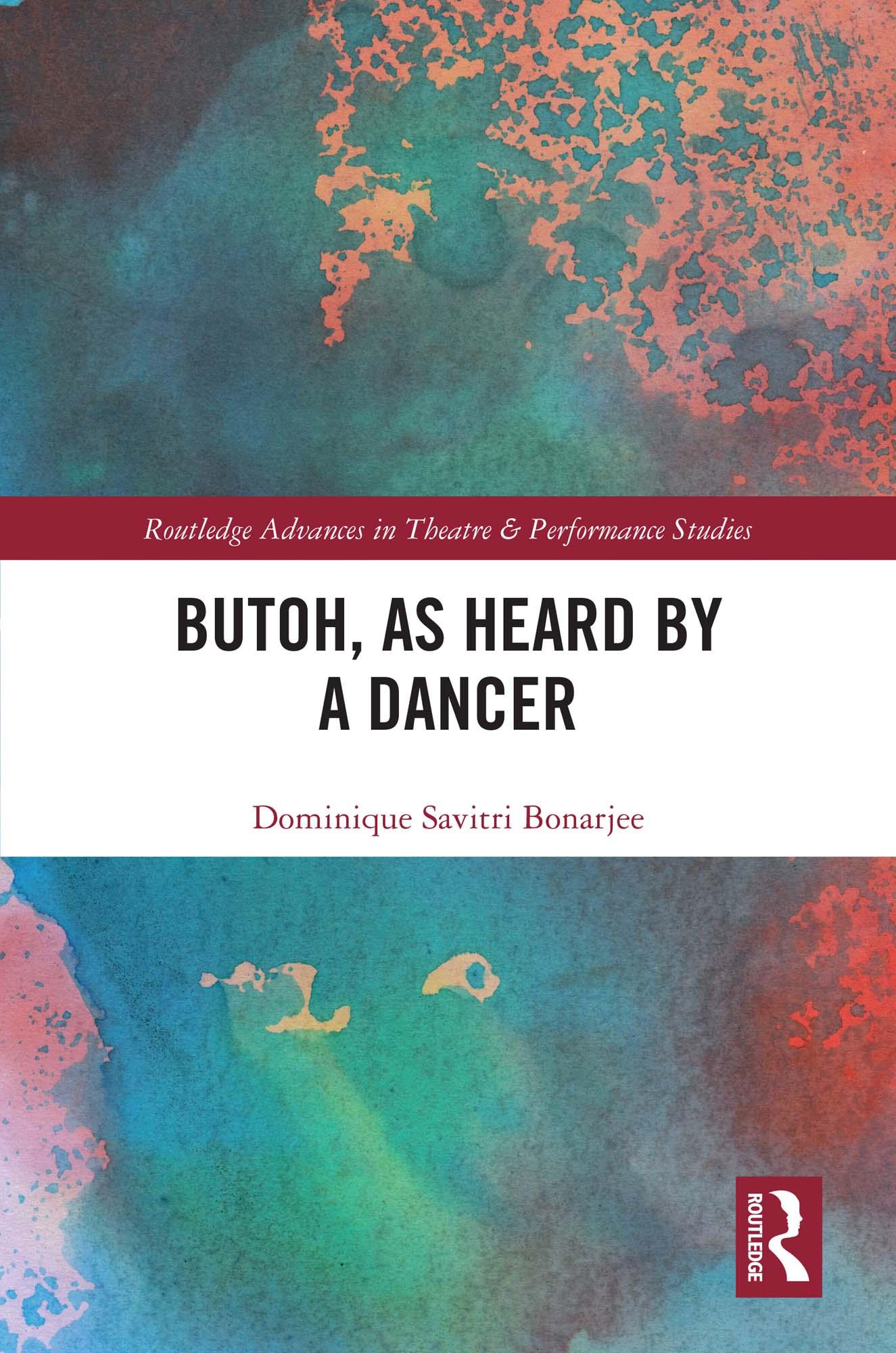
This book explores the origins of Butoh in post-war Japan through orality and transmission, in conjunction with an embodied research approach.
The book is a gathering of seminal artistic voices – Yoshito Ohno, Natsu Nakajima, Yukio Waguri, Moe Yamamoto, Masaki Iwana, Ko Murobushi, Yukio Suzuki, Takao Kawaguchi, Yuko Kaseki, and the philosopher, Kuniichi Uno. These conversations happened during an extended research trip I made to Japan to understand the context and circumstances that engendered Butoh. Alongside these exchanges are my reflections on Butoh’s complex history. These are primarily informed by my pedagogical and performance encounters with the artists I met during this time, rather than a theoretical analysis. Through the words of these dancers, I investigate Butoh’s tendency to evade categorization. Butoh’s artistic legacy of bodily rebellion, plurality of authorship, and fluidity of form seems prescient and feels more relevant in contemporary times than ever before.
This book is intended as a practitioner's guide for dancers, artists, students, and scholars with an interest in non-Western dance and dance history, postmodern performance, and Japanese arts and culture.
Payez facilement par carte, Klarna, Apple Pay ou Google Pay. Pas satisfait ? Vous avez toujours une garantie de remboursement de 14 jours. En savoir plus dans nos conditions. Si vous avez des questions, envoyez-nous un e-mail à hello@memmo.org.
Memmo facilite tes études, où que tu sois dans le monde. On rassemble tes manuels de cours et des outils d'étude intelligents au même endroit : résumés, quiz, podcasts et flashcards. Et il y a Ted, ton compagnon d'étude qui répond à toutes tes questions. Plus de 50 000 étudiants étudient déjà ici – conçu pour t'aider à apprendre plus vite et à moins stresser.